 Bird Album
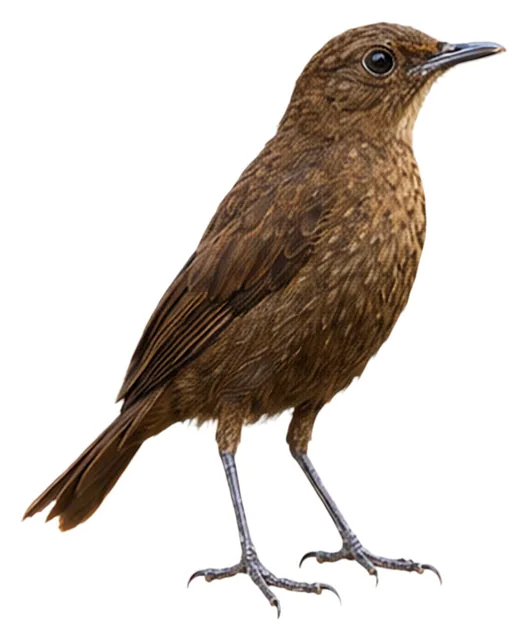
Ant-eating Chat
Myrmecocichla formicivora (Wilkes, 1817)
42 gWeight
The ant-eating chat or southern anteater-chat (Myrmecocichla formicivora) is a species of bird in the family Muscicapidae.
Busiest months: October–November · Most records: South Africa, Namibia, Botswana
Where and when it's recorded

Ant-eating Chat has been recorded at 59 of the 8,171 birding hotspots we track, in 4 countries and regions.
Records by month Southern Hemisphere
Where it's recorded most
- Suikerbosrand NRSouth Africa364 records
- Benfontein NRSouth Africa298 records
- Rietvlei NRSouth Africa293 records
More places
- Wakkerstroom areaSouth Africa285 records
- Karoo NPSouth Africa146 records
- Wakkerstroom Wetland NRSouth Africa80 records
- Etosha NP – Okaukuejo CampNamibia46 records
- Madikwe GRSouth Africa45 records
- Augrabies Falls NPSouth Africa39 records
- Etosha NP – Namutoni CampNamibia37 records
Countries and regions with the most records
eBird records via GBIF up to 2024-12-31. A record means someone listed it; more records partly mean more birders, not more birds.
About
The ant-eating chat or southern anteater-chat (Myrmecocichla formicivora) is a species of bird in the family Muscicapidae.
Excerpt from Wikipedia, CC BY-SA 4.0 · authors · Read more on Wikipedia
Questions
How big is the Ant-eating Chat?
The Ant-eating Chat weighs around 42 g.
Where does the Ant-eating Chat live?
Its breeding range: Africa: southern Angola, Namibia and Botswana to southern South Africa. It is most often recorded in South Africa, Namibia and Botswana.
When is the best time to see the Ant-eating Chat?
At the hotspots we track, it is recorded most in October and November (Southern Hemisphere).
Is the Ant-eating Chat endangered?
The IUCN Red List classifies the Ant-eating Chat as Least Concern.
What does the Ant-eating Chat eat?
Main food: Insects & other invertebrates.
What family is the Ant-eating Chat in?
It belongs to the family Chats, Old World Flycatchers (Muscicapidae), order Passerines (Passeriformes).
At a glance
- Weight
- 42 g
- Habitat
- Grassland
- Diet
- Insects & other invertebrates
- Lifestyle
- Varied
- Migration
- Resident (barely migrates)
- Conservation
- Least Concern
More measurements
- Wing
- 96 mm
- Tail
- 57 mm
- Bill
- 22 mm
- Tarsus
- 33 mm
Averages from the AVONET dataset; length from field guides where available.
Range
Africa: southern Angola, Namibia and Botswana to southern South Africa
Breeding range, IOC World Bird List 15.2
Classification
- Order
- Passerines Passeriformes
- Family
- Chats, Old World Flycatchers Muscicapidae
- Genus
- Myrmecocichla
Other birds in the genus Myrmecocichla
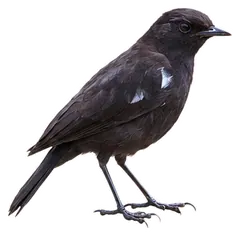 Anteater ChatMyrmecocichla aethiops
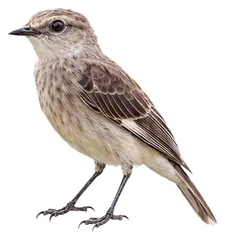 Congo Moor ChatMyrmecocichla tholloni
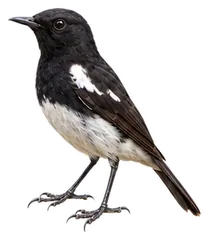 Mountain ChatMyrmecocichla monticola
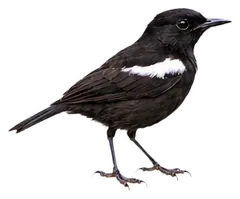 Sooty ChatMyrmecocichla nigra
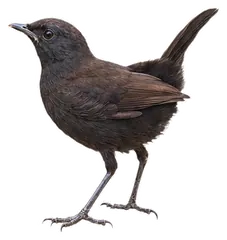 Rüppell's Black ChatMyrmecocichla melaena
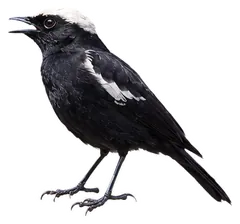 Ruaha ChatMyrmecocichla collaris
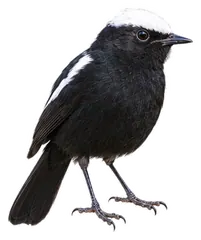 Arnot's ChatMyrmecocichla arnotti
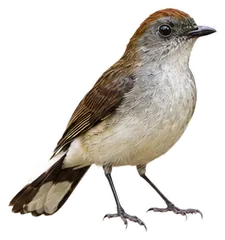 White-tailed AletheAlethe diademata
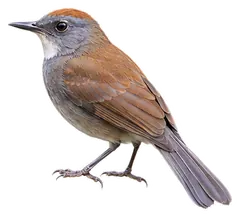 Fire-crested AletheAlethe castanea
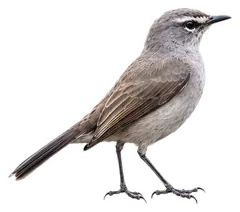 Karoo Scrub RobinTychaedon coryphoeus
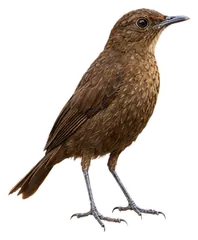
Download illustration
Free to use with credit: “Illustration: Bird Album (birdalbum.com)”. Drawn by AI from a reference photo by Didier Buysse. ↗
Heard it but can't see it? Mingji identifies birds by sound and photo, on your phone.
In other languages
- EnglishAnt-eating Chat
- 简体中文南方蚁䳭
- 繁體中文南方蟻䳭
- 日本語ハジロアリヒタキ
- DeutschTermitenschmätzer
- FrançaisTraquet fourmilier
- EspañolZorzal hormiguero meridional
- Portuguêschasco-formigueiro-meridional
- ItalianoSassicolo formichiero meridionale
- NederlandsKaapse Miertapuit
- РусскийЮжная термитница
- Svenskasydlig termitskvätta
- DanskGråbrun Myrepikker
- Polskismolarek łuskowany