 Bird Album
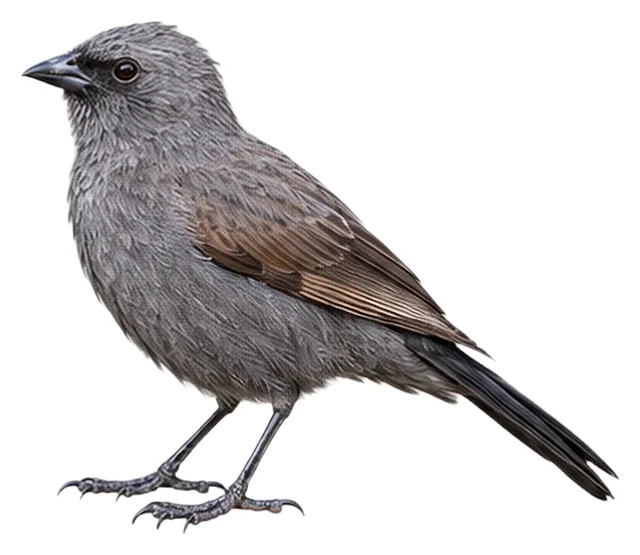
Apostlebird
Struthidea cinerea Gould, 1837
132 gWeight
The apostlebird (Struthidea cinerea), also known as the grey jumper, lousy jack or happy family, is a quick-moving, gray or black bird about 33 cm (13 in) long.
Busiest months: September–October · Most records: Australia
Where and when it's recorded

Apostlebird has been recorded at 24 of the 8,171 birding hotspots we track, in 1 country or region.
Records by month Southern Hemisphere
Where it's recorded most
- Bowra Wildlife SanctuaryAustralia2,446 records
- Hattah-Kulkyne National ParkAustralia727 records
- Mosquito Creek RdAustralia680 records
More places
- Cumberland DamAustralia594 records
- Anstead Bushland ReserveAustralia409 records
- DanthoniaAustralia389 records
- Gluepot ReserveAustralia105 records
- Lake Cargelligo Wastewater Treatment PlantAustralia66 records
- Katherine Wastewater Treatment PlantAustralia45 records
- Fivebough WetlandsAustralia13 records
Countries and regions with the most records
eBird records via GBIF up to 2024-12-31. A record means someone listed it; more records partly mean more birders, not more birds.
About
The apostlebird (Struthidea cinerea), also known as the grey jumper, lousy jack or happy family, is a quick-moving, gray or black bird about 33 cm (13 in) long. It is a native to Australia where it roams woodlands, eating insects and seeds at, or near, ground level. Apostlebirds often travel in groups of about 12; for this reason, they were named after the 12 Biblical apostles.
Excerpt from Wikipedia, CC BY-SA 4.0 · authors · Read more on Wikipedia
Questions
How big is the Apostlebird?
The Apostlebird weighs around 132 g.
Where does the Apostlebird live?
Its breeding range: Australasia: north-central and east-central Australia. It is most often recorded in Australia.
When is the best time to see the Apostlebird?
At the hotspots we track, it is recorded most in September and October (Southern Hemisphere).
Is the Apostlebird endangered?
The IUCN Red List classifies the Apostlebird as Least Concern.
What does the Apostlebird eat?
Main food: Omnivore.
What family is the Apostlebird in?
It belongs to the family Australian Mudnesters (Corcoracidae), order Passerines (Passeriformes).
At a glance
- Weight
- 132 g
- Habitat
- Shrubland
- Diet
- Omnivore
- Lifestyle
- Active on the ground
- Migration
- Resident (barely migrates)
- Conservation
- Least Concern
More measurements
- Wing
- 147 mm
- Tail
- 154 mm
- Bill
- 25 mm
- Tarsus
- 39 mm
Averages from the AVONET dataset; length from field guides where available.
Range
Australasia: north-central and east-central Australia
Breeding range, IOC World Bird List 15.2
Classification
- Order
- Passerines Passeriformes
- Family
- Australian Mudnesters Corcoracidae
- Genus
- Struthidea
More from the family Australian Mudnesters
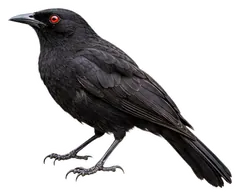 White-winged ChoughCorcorax melanorhamphos
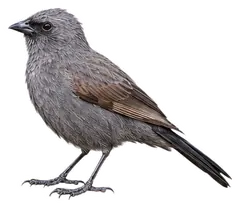
Download illustration
Free to use with credit: “Illustration: Bird Album (birdalbum.com)”. Drawn by AI from reference photos. ↗
Heard it but can't see it? Mingji identifies birds by sound and photo, on your phone.