 Bird Album
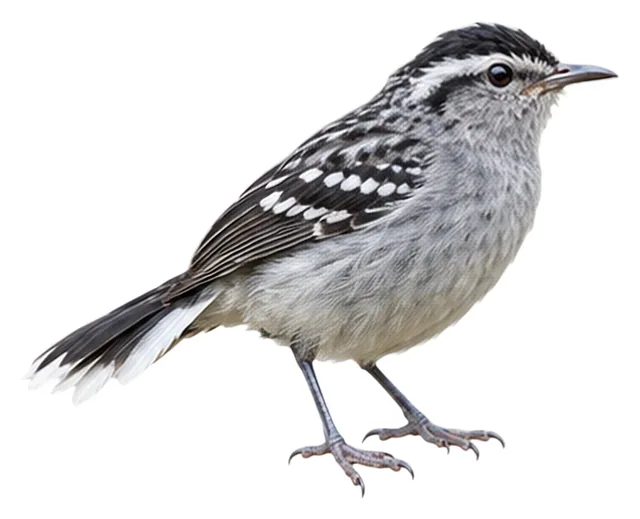
Ash-throated Antwren
Herpsilochmus parkeri Davis, TJ & O'Neill, 1986
12–13 cmLength12 gWeight
The ash-throated antwren (Herpsilochmus parkeri) is a Vulnerable species of bird in subfamily Thamnophilinae of family Thamnophilidae, the "typical antbirds".
Busiest months: August · Most records: Peru
Where and when it's recorded

Ash-throated Antwren has been recorded at 6 of the 8,171 birding hotspots we track, in 1 country or region.
Records by month Southern Hemisphere
Where it's recorded most
- Waqanki/Quebrada Mishquiyaquillo – Senda CrestaPeru53 records
- Bosque de Protección Alto Mayo – Llanteria/Afluente vicinityPeru40 records
- Waqanki/Quebrada MishquiyaquilloPeru25 records
More places
- Morro de CalzadaPeru4 records
- Reserva Arena BlancaPeru1 record
- Flor de Café/PlataformaPeru1 record
Countries and regions with the most records
eBird records via GBIF up to 2024-12-31. A record means someone listed it; more records partly mean more birders, not more birds.
About
The ash-throated antwren (Herpsilochmus parkeri) is a Vulnerable species of bird in subfamily Thamnophilinae of family Thamnophilidae, the "typical antbirds". It is endemic to Peru.
Excerpt from Wikipedia, CC BY-SA 4.0 · authors · Read more on Wikipedia
Questions
How big is the Ash-throated Antwren?
The Ash-throated Antwren is about 12–13 cm long and weighs around 12 g.
Where does the Ash-throated Antwren live?
Its breeding range: South America: north-central Peru. It is most often recorded in Peru.
When is the best time to see the Ash-throated Antwren?
At the hotspots we track, it is recorded most in August (Southern Hemisphere).
Is the Ash-throated Antwren endangered?
The IUCN Red List classifies the Ash-throated Antwren as Vulnerable.
What does the Ash-throated Antwren eat?
Main food: Insects & other invertebrates.
What family is the Ash-throated Antwren in?
It belongs to the family Antbirds (Thamnophilidae), order Passerines (Passeriformes).
At a glance
- Length
- 12–13 cm
- Weight
- 12 g
- Habitat
- Forest
- Diet
- Insects & other invertebrates
- Lifestyle
- Perches in trees
- Migration
- Resident (barely migrates)
- Conservation
- Vulnerable
More measurements
- Wing
- 54 mm
- Tail
- 58 mm
- Bill
- 17 mm
- Tarsus
- 19 mm
Averages from the AVONET dataset; length from field guides where available.
Range
South America: north-central Peru
Breeding range, IOC World Bird List 15.2
Classification
- Order
- Passerines Passeriformes
- Family
- Antbirds Thamnophilidae
- Genus
- Herpsilochmus
Other birds in the genus Herpsilochmus
 Bahia AntwrenHerpsilochmus pileatus
 Black-capped AntwrenHerpsilochmus atricapillus
 Aripuana AntwrenHerpsilochmus stotzi
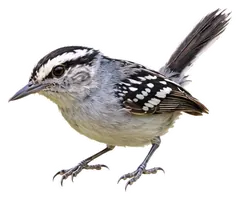 Predicted AntwrenHerpsilochmus praedictus
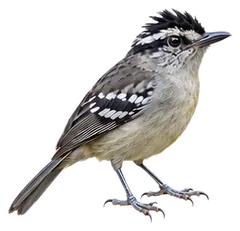 Creamy-bellied AntwrenHerpsilochmus motacilloides
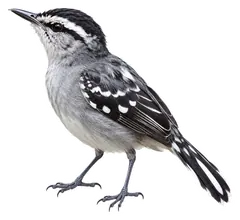 Spot-tailed AntwrenHerpsilochmus sticturus
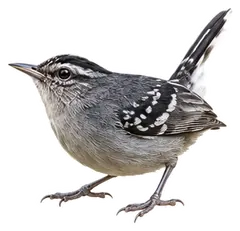 Dugand's AntwrenHerpsilochmus dugandi
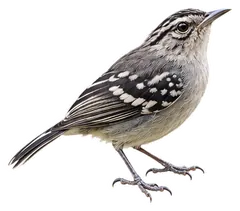 Todd's AntwrenHerpsilochmus stictocephalus
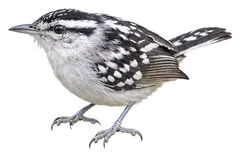 Spot-backed AntwrenHerpsilochmus dorsimaculatus
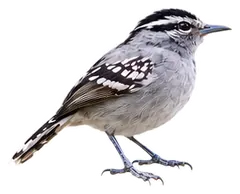 Roraiman AntwrenHerpsilochmus roraimae
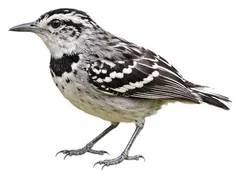 Pectoral AntwrenHerpsilochmus pectoralis
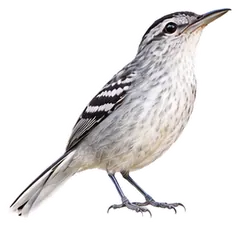 Large-billed AntwrenHerpsilochmus longirostris
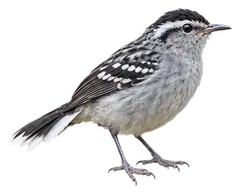
Download illustration
Free to use with credit: “Illustration: Bird Album (birdalbum.com)”. Drawn by AI from a reference photo by Nick Athanas. ↗
Heard it but can't see it? Mingji identifies birds by sound and photo, on your phone.
In other languages
- EnglishAsh-throated Antwren
- 简体中文灰喉蚁鹩
- 繁體中文灰喉蟻鳥
- 日本語ノドアカマユアリサザイ
- DeutschGraukehl-Ameisenfänger
- FrançaisGrisin de Parker
- EspañolTiluchí de Parker
- Portuguêschorozinho-de-garganta-cinza
- ItalianoScricciolo formichiero golacenere
- NederlandsGrijskeelmiersluiper
- РусскийСерогорлый эсперито
- Svenskagråstrupig myrvireo
- DanskAskestrubet Myresmutte
- Polskimrówczynek maskowy