 Bird Album
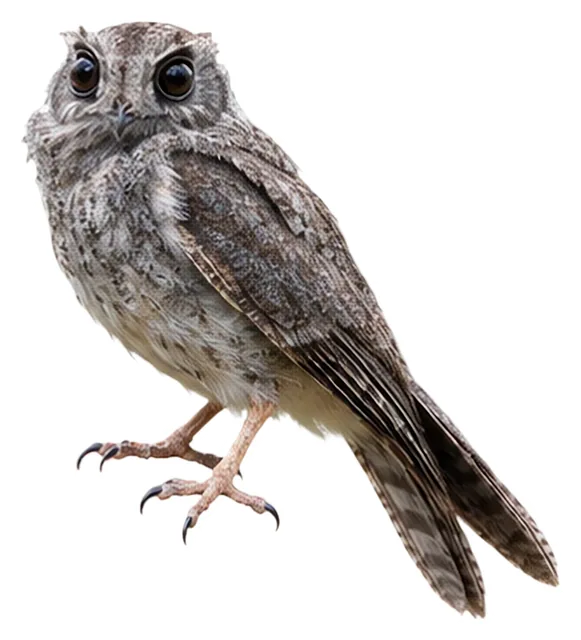
Australian Owlet-nightjar
Aegotheles cristatus (Shaw, 1790)
21–25 cmLength43 gWeight
The Australian owlet-nightjar (Aegotheles cristatus) is a nocturnal bird found in open woodland across Australia and in southern New Guinea.
Busiest months: January and October · Most records: Australia, Papua New Guinea
Where and when it's recorded

Australian Owlet-nightjar has been recorded at 94 of the 8,171 birding hotspots we track, in 2 countries and regions.
Records by month Southern Hemisphere
Where it's recorded most
- Crusoe Reservoir and No. 7 ParkAustralia429 records
- Kumbartcho SanctuaryAustralia373 records
- Mt Ainslie Nature Reserve – Campbell ParkAustralia369 records
More places
- Bowra Wildlife SanctuaryAustralia365 records
- Australian National Botanic GardensAustralia212 records
- Gluepot ReserveAustralia200 records
- Goschen Bushland ReserveAustralia192 records
- Broome Bird ObservatoryAustralia185 records
- Hattah-Kulkyne National ParkAustralia178 records
- Terrick Terrick National ParkAustralia160 records
Countries and regions with the most records
eBird records via GBIF up to 2024-12-31. A record means someone listed it; more records partly mean more birders, not more birds.
About
The Australian owlet-nightjar (Aegotheles cristatus) is a nocturnal bird found in open woodland across Australia and in southern New Guinea. It is the smallest nocturnal bird found in Australia, making it prone to predation. It is colloquially known as the moth owl or fairy owl and Jarlajirrpi by the Warlpiri people.
Excerpt from Wikipedia, CC BY-SA 4.0 · authors · Read more on Wikipedia
Questions
How big is the Australian Owlet-nightjar?
The Australian Owlet-nightjar is about 21–25 cm long and weighs around 43 g.
Where does the Australian Owlet-nightjar live?
Its breeding range: Australasia: south-central, southeastern New Guinea, Australia and Tasmania. It is most often recorded in Australia and Papua New Guinea.
When is the best time to see the Australian Owlet-nightjar?
At the hotspots we track, it is recorded most in January and October (Southern Hemisphere).
Is the Australian Owlet-nightjar endangered?
The IUCN Red List classifies the Australian Owlet-nightjar as Least Concern.
What does the Australian Owlet-nightjar eat?
Main food: Insects & other invertebrates.
What family is the Australian Owlet-nightjar in?
It belongs to the family Owlet-nightjars (Aegothelidae), order Aegotheliformes.
At a glance
- Length
- 21–25 cm
- Weight
- 43 g
- Habitat
- Woodland
- Diet
- Insects & other invertebrates
- Lifestyle
- Perches in trees
- Migration
- Resident (barely migrates)
- Conservation
- Least Concern
More measurements
- Wing
- 136 mm
- Tail
- 121 mm
- Bill
- 14 mm
- Tarsus
- 24 mm
Averages from the AVONET dataset; length from field guides where available.
Range
Australasia: south-central, southeastern New Guinea, Australia and Tasmania
Breeding range, IOC World Bird List 15.2
Classification
- Order
- Aegotheliformes
- Family
- Owlet-nightjars Aegothelidae
- Genus
- Aegotheles
Other birds in the genus Aegotheles
 Feline Owlet-nightjarAegotheles insignis
 Starry Owlet-nightjarAegotheles tatei
 Moluccan Owlet-nightjarAegotheles crinifrons
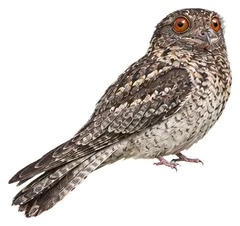 Wallace's Owlet-nightjarAegotheles wallacii
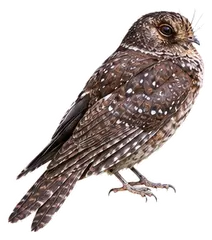 Mountain Owlet-nightjarAegotheles albertisi
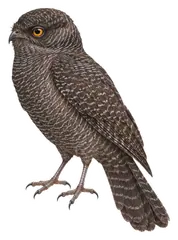 New Caledonian Owlet-nightjarAegotheles savesi
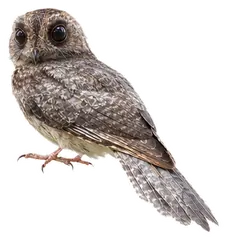 Barred Owlet-nightjarAegotheles bennettii
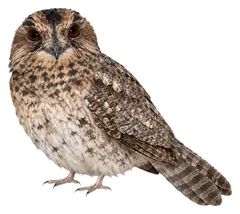 Vogelkop Owlet-nightjarAegotheles affinis
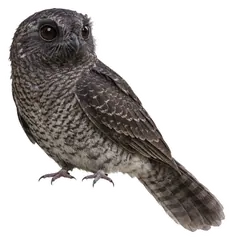 Karimui Owlet-nightjarAegotheles terborghi
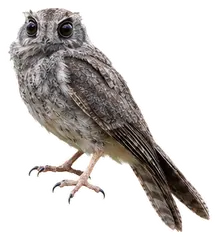
Download illustration
Free to use with credit: “Illustration: Bird Album (birdalbum.com)”. Drawn by AI from a reference photo by riperedtomato. ↗
Heard it but can't see it? Mingji identifies birds by sound and photo, on your phone.
In other languages
- EnglishAustralian Owlet-nightjar
- 简体中文澳洲裸鼻夜鹰
- 繁體中文澳洲裸鼻鴟
- 日本語オーストラリアズクヨタカ
- DeutschBaumhöhlenschwalm
- FrançaisÉgothèle d’Australie
- EspañolEgotelo australiano
- Portuguêsegotelo-australiano
- ItalianoEgotele australiano
- NederlandsAustralische Dwergnachtzwaluw
- РусскийАвстралийский совиный козодой
- Svenskaaustralisk uggleskärra
- DanskAustralsk Uglesvale
- Polskisownik australijski