 Bird Album
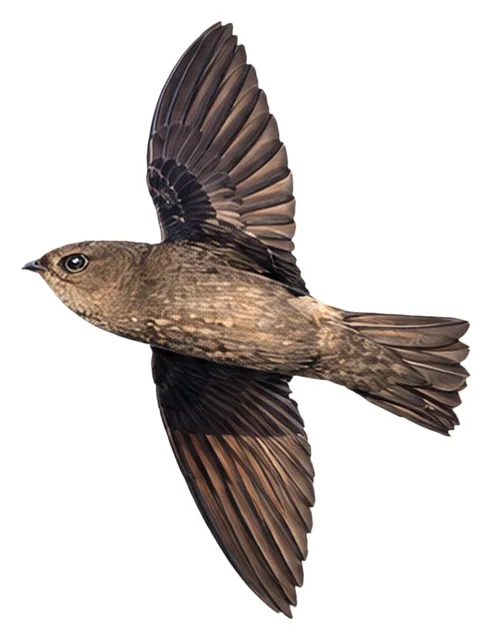
Band-rumped Swift
Chaetura spinicaudus (Temminck, 1839)
10–13 cmLength16 gWeight
The band-rumped swift (Chaetura spinicaudus) is a species of bird in subfamily Apodinae of the swift family Apodidae.
Busiest months: January–March and October–November · Most records: Panama, Trinidad & Tobago, Guyana
Where and when it's recorded

Band-rumped Swift has been recorded at 181 of the 8,171 birding hotspots we track, in 9 countries and regions.
Records by month Northern Hemisphere
Where it's recorded most
- Canopy TowerPanama3,144 records
- Asa Wright Nature CenterTrinidad & Tobago1,209 records
- Pipeline Road (Camino del Oleoducto)Panama737 records
More places
- Panama Rainforest Discovery CenterPanama674 records
- Summit PondsPanama569 records
- Atta Lodge / Iwokrama Canopy WalkwayGuyana520 records
- Pipeline Road – Parque Nacional SoberaníaPanama442 records
- Ammo Dump PondsPanama344 records
- Parque Municipal SummitPanama319 records
- Iwokrama River LodgeGuyana311 records
Countries and regions with the most records
eBird records via GBIF up to 2024-12-31. A record means someone listed it; more records partly mean more birders, not more birds.
About
The band-rumped swift (Chaetura spinicaudus) is a species of bird in subfamily Apodinae of the swift family Apodidae. It is found from Panama south through Colombia into Ecuador, east from Venezuela into the Guianas and Brazil, and on Trinidad.
Excerpt from Wikipedia, CC BY-SA 4.0 · authors · Read more on Wikipedia
Questions
How big is the Band-rumped Swift?
The Band-rumped Swift is about 10–13 cm long and weighs around 16 g.
Where does the Band-rumped Swift live?
Its breeding range: Middle America, South America: Panama to central Brazil. It is most often recorded in Panama, Trinidad & Tobago and Guyana.
When is the best time to see the Band-rumped Swift?
At the hotspots we track, it is recorded most in January, February, March, October and November (Northern Hemisphere).
Is the Band-rumped Swift endangered?
The IUCN Red List classifies the Band-rumped Swift as Least Concern.
What does the Band-rumped Swift eat?
Main food: Insects & other invertebrates.
What family is the Band-rumped Swift in?
It belongs to the family Swifts (Apodidae), order Apodiformes.
At a glance
- Length
- 10–13 cm
- Weight
- 16 g
- Habitat
- Forest
- Diet
- Insects & other invertebrates
- Lifestyle
- Feeds in the air
- Migration
- Resident (barely migrates)
- Conservation
- Least Concern
More measurements
- Wing
- 104 mm
- Tail
- 41 mm
- Bill
- 8 mm
- Tarsus
- 10 mm
Averages from the AVONET dataset; length from field guides where available.
Range
Middle America, South America: Panama to central Brazil
Breeding range, IOC World Bird List 15.2
Classification
- Order
- Apodiformes
- Family
- Swifts Apodidae
- Genus
- Chaetura
Other birds in the genus Chaetura
 Grey-rumped SwiftChaetura cinereiventris
 Lesser Antillean SwiftChaetura martinica
 Costa Rican SwiftChaetura fumosa
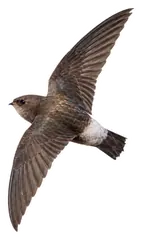 Pale-rumped SwiftChaetura egregia
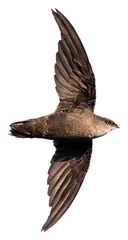 Chimney SwiftChaetura pelagica
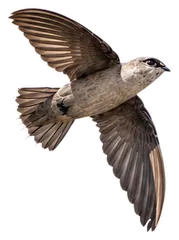 Vaux's SwiftChaetura vauxi
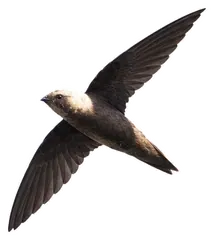 Chapman's SwiftChaetura chapmani
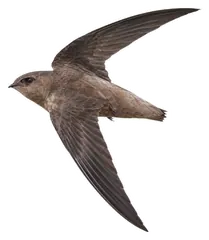 Ashy-tailed SwiftChaetura andrei
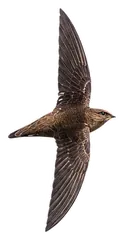 Sick's SwiftChaetura meridionalis
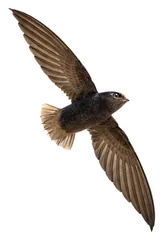 Short-tailed SwiftChaetura brachyura
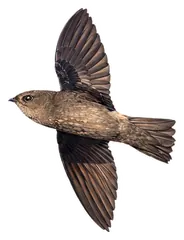
Download illustration
Free to use with credit: “Illustration: Bird Album (birdalbum.com)”. Drawn by AI from a reference photo by Lars Petersson. ↗
Heard it but can't see it? Mingji identifies birds by sound and photo, on your phone.
In other languages
- EnglishBand-rumped Swift
- 简体中文斑腰雨燕
- 繁體中文斑腰刺尾雨燕
- 日本語シロオビハリオアマツバメ
- DeutschDornensegler
- FrançaisMartinet spinicaude
- EspañolVencejo lomiblanco
- Portuguêsandorinhão-de-sobre-branco
- ItalianoRondone codafasciata
- NederlandsWitbandgierzwaluw
- РусскийБелогузый иглохвост
- Svenskabandgumpseglare
- DanskLysbuget Tornhalesejler
- Polskikominiarczyk przepasany