 Bird Album
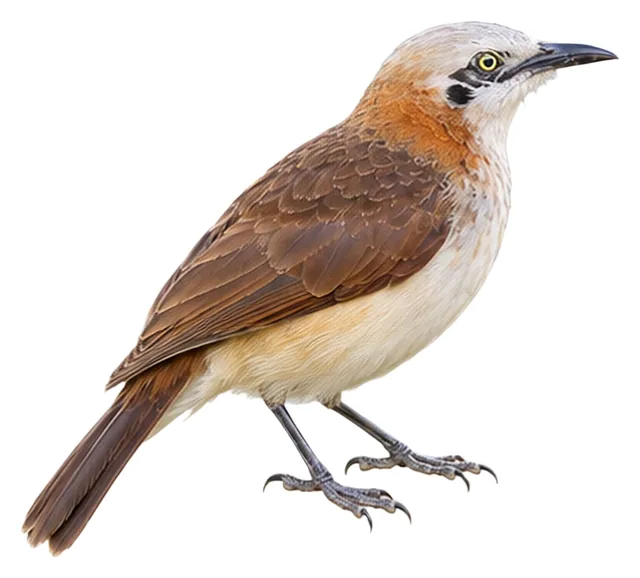
Bare-cheeked Babbler
Turdoides gymnogenys (Hartlaub, 1865)
23–25 cmLength77 gWeight
The bare-cheeked babbler (Turdoides gymnogenys) is a passerine bird in the family Leiothrichidae and is native to arid savannas of southwestern Africa, specifically northwestern Namibia and southwestern Angola.
Busiest months: November · Most records: Namibia, Angola
Where and when it's recorded

Bare-cheeked Babbler has been recorded at 9 of the 8,171 birding hotspots we track, in 2 countries and regions.
Records by month Southern Hemisphere
Where it's recorded most
- Etosha NP – Halali CampNamibia486 records
- Hobatere – LodgeNamibia143 records
- Kunene River LodgeNamibia110 records
More places
- Etosha NP – Okaukuejo CampNamibia12 records
- Etosha NP – Namutoni CampNamibia6 records
- TundavalaAngola1 record
- Okonjima Nature ReserveNamibia1 record
- Spitzkoppe Nature ReserveNamibia1 record
- Ondudu LodgeNamibia1 record
Countries and regions with the most records
eBird records via GBIF up to 2024-12-31. A record means someone listed it; more records partly mean more birders, not more birds.
About
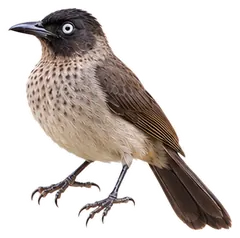
The bare-cheeked babbler (Turdoides gymnogenys) is a passerine bird in the family Leiothrichidae and is native to arid savannas of southwestern Africa, specifically northwestern Namibia and southwestern Angola. It is known for its brown feathers and the bare skin on its cheeks. The species is listed as Least Concern by the International Union for Conservation of Nature and is a commonly found local bird.
Excerpt from Wikipedia, CC BY-SA 4.0 · authors · Read more on Wikipedia
Questions
How big is the Bare-cheeked Babbler?
The Bare-cheeked Babbler is about 23–25 cm long and weighs around 77 g.
Where does the Bare-cheeked Babbler live?
Its breeding range: Africa: Angola and Namibia. It is most often recorded in Namibia and Angola.
When is the best time to see the Bare-cheeked Babbler?
At the hotspots we track, it is recorded most in November (Southern Hemisphere).
Is the Bare-cheeked Babbler endangered?
The IUCN Red List classifies the Bare-cheeked Babbler as Least Concern.
What does the Bare-cheeked Babbler eat?
Main food: Insects & other invertebrates.
What family is the Bare-cheeked Babbler in?
It belongs to the family Laughingthrushes & Allies (Leiothrichidae), order Passerines (Passeriformes).
At a glance
- Length
- 23–25 cm
- Weight
- 77 g
- Habitat
- Shrubland
- Diet
- Insects & other invertebrates
- Lifestyle
- Varied
- Migration
- Resident (barely migrates)
- Conservation
- Least Concern
More measurements
- Wing
- 109 mm
- Tail
- 101 mm
- Bill
- 25 mm
- Tarsus
- 32 mm
Averages from the AVONET dataset; length from field guides where available.
Range
Africa: Angola and Namibia
Breeding range, IOC World Bird List 15.2
Classification
- Order
- Passerines Passeriformes
- Family
- Laughingthrushes & Allies Leiothrichidae
- Genus
- Turdoides
Other birds in the genus Turdoides
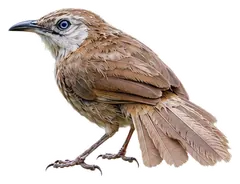 Spiny BabblerTurdoides nipalensis
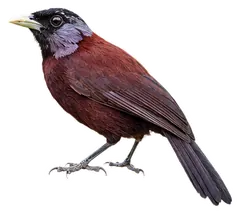 Capuchin BabblerTurdoides atripennis
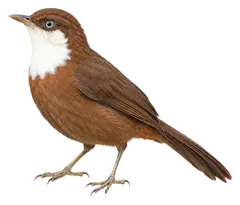 White-throated Mountain BabblerTurdoides gilberti
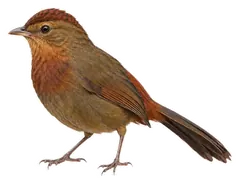 Chapin's BabblerTurdoides chapini
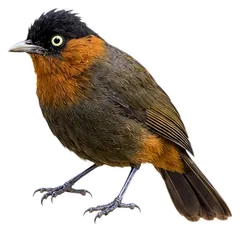 Red-collared BabblerTurdoides rufocinctus
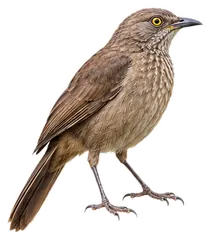 Brown BabblerTurdoides plebejus
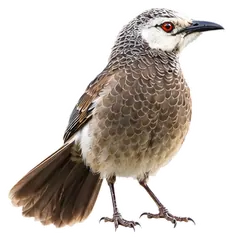 White-rumped BabblerTurdoides leucopygia
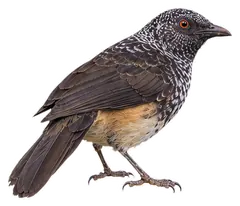 Hinde's BabblerTurdoides hindei
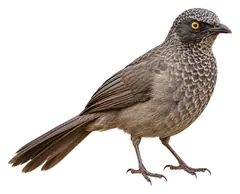 Scaly BabblerTurdoides squamulata
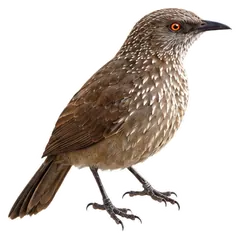 Arrow-marked BabblerTurdoides jardineii
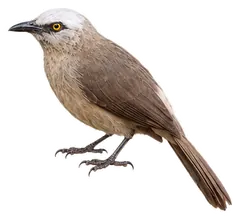 White-headed BabblerTurdoides leucocephala
 Blackcap BabblerTurdoides reinwardtii
Download illustration
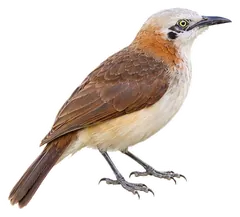
Free to use with credit: “Illustration: Bird Album (birdalbum.com)”. Drawn by AI from a reference photo by Joseph Morlan. ↗
Heard it but can't see it? Mingji identifies birds by sound and photo, on your phone.
In other languages
- EnglishBare-cheeked Babbler
- 简体中文裸颊鸫鹛
- 繁體中文裸頰鶇鶥
- 日本語ハゲシロクロヤブチメドリ
- DeutschNacktwangen-Drosselhäherling
- FrançaisCratérope à joues nues
- EspañolTurdoide caricalvo
- Portuguêszaragateiro-de-faces-nuas
- ItalianoGarrulo guancenude
- NederlandsNaaktwangbabbelaar
- РусскийГолощёкая дроздовка
- Svenskabarkindad skriktrast
- DanskNøgenøjet Larmdrossel
- Polskitymal gołolicy