 Bird Album
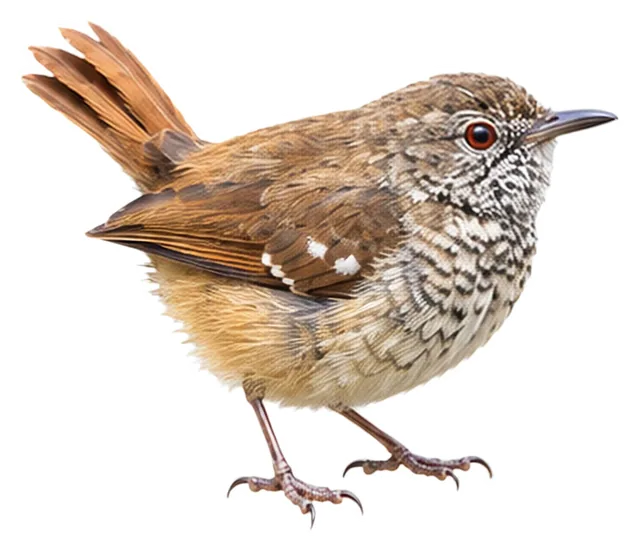
Barred Wren-Warbler
Calamonastes fasciolatus (Smith, A, 1847)
13 gWeight
The barred wren-warbler or southern barred warbler (Calamonastes fasciolatus) is a species of bird in the family Cisticolidae.
Busiest months: November–December · Most records: Namibia, South Africa, Botswana
Where and when it's recorded
Busiest months: November–December · Most records: Namibia, South Africa, Botswana

Barred Wren-Warbler has been recorded at 35 of the 8,276 birding hotspots we track, in 4 countries and regions.
Records by month Southern Hemisphere
Where it's recorded most
- Ondudu LodgeNamibia164 records
- Zaagkuildrift RdSouth Africa151 records
- Polokwane GRSouth Africa137 records
More places
- Avis DamNamibia131 records
- Kgomo-KgomoSouth Africa96 records
- Mkhombo Nature ReserveSouth Africa82 records
- Etosha NP – Okaukuejo CampNamibia62 records
- Daan Viljoen Game ReserveNamibia53 records
- Okonjima Nature ReserveNamibia45 records
- Nylsvley Nature ReserveSouth Africa42 records
Countries and regions with the most records
eBird records via GBIF up to 2024-12-31. A record means someone listed it; more records partly mean more birders, not more birds.
About
The barred wren-warbler or southern barred warbler (Calamonastes fasciolatus) is a species of bird in the family Cisticolidae.
Excerpt from Wikipedia, CC BY-SA 4.0 · authors · Read more on Wikipedia
Questions
How big is the Barred Wren-Warbler?
The Barred Wren-Warbler weighs around 13 g.
Where does the Barred Wren-Warbler live?
Its breeding range: Africa: southern. It is most often recorded in Namibia, South Africa and Botswana.
When is the best time to see the Barred Wren-Warbler?
At the hotspots we track, it is recorded most in November and December (Southern Hemisphere).
Is the Barred Wren-Warbler endangered?
The IUCN Red List classifies the Barred Wren-Warbler as Least Concern.
What does the Barred Wren-Warbler eat?
Main food: Insects & other invertebrates.
What family is the Barred Wren-Warbler in?
It belongs to the family Cisticolas & Allies (Cisticolidae), order Passerines (Passeriformes).
At a glance
- Weight
- 13 g
- Habitat
- Woodland
- Diet
- Insects & other invertebrates
- Lifestyle
- Perches in trees
- Migration
- Resident (barely migrates)
- Conservation
- Least Concern
More measurements
- Wing
- 59 mm
- Tail
- 55 mm
- Bill
- 15 mm
- Tarsus
- 21 mm
Averages from the AVONET dataset; length from field guides where available.
Range
Africa: southern
Breeding range, IOC World Bird List 15.2
Classification
- Order
- Passerines Passeriformes
- Family
- Cisticolas & Allies Cisticolidae
- Genus
- Calamonastes
Other birds in the genus Calamonastes
 Grey Wren-WarblerCalamonastes simplex
 Miombo Wren-WarblerCalamonastes undosus
 Stierling's Wren-WarblerCalamonastes stierlingi
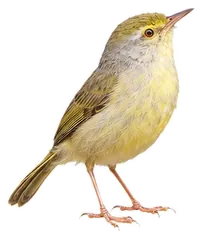 Common JeryNeomixis tenella
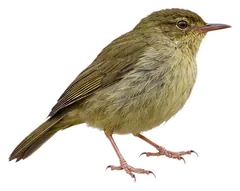 Green JeryNeomixis viridis
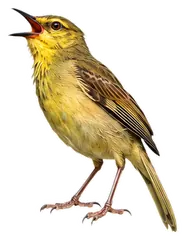 Stripe-throated JeryNeomixis striatigula
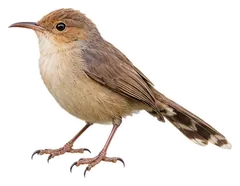 Red-faced CisticolaCisticola erythrops
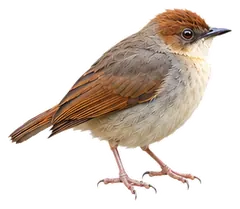 Singing CisticolaCisticola cantans
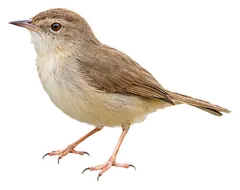 Whistling CisticolaCisticola lateralis
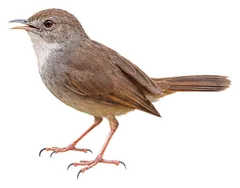 Trilling CisticolaCisticola woosnami
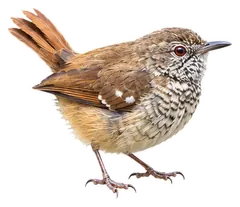
Download illustration
Free to use with credit: “Illustration: Bird Album (birdalbum.com)”. Drawn by AI from a reference photo by Ian N. White. ↗
Heard it but can't see it? Mingji identifies birds by sound and photo, on your phone.
In other languages
- EnglishBarred Wren-Warbler
- 简体中文斑拱翅莺
- 繁體中文斑拱翅鶯
- 日本語ヨコジマコムシクイ
- DeutschDamarabindensänger
- FrançaisCamaroptère barrée
- EspañolCamaróptera barrada
- Portuguêsfelosa-barrada-do-calaári
- ItalianoCalamonaste barrato
- NederlandsGebandeerde Savannezanger
- РусскийПёстрая зебрина
- Svenskakalaharigärdsmygssångare
- DanskDamara Gråsanger
- Polskizebrynka łuskowana