 Bird Album
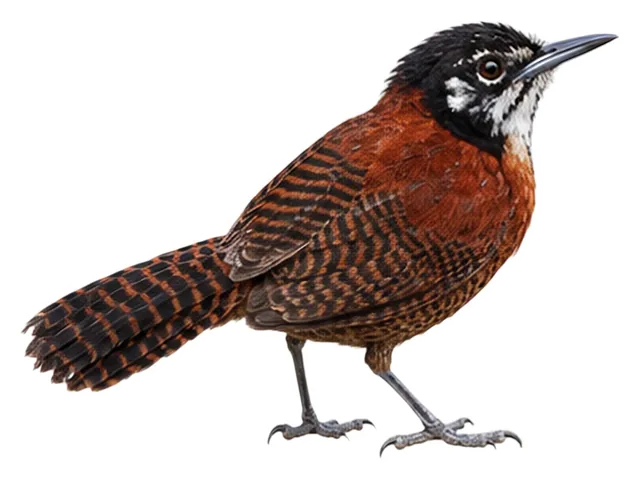
Bay Wren
Cantorchilus nigricapillus (Sclater, PL, 1860)
13–16 cmLength24 gWeight
The bay wren (Cantorchilus nigricapillus) is a species of bird in the family Troglodytidae.
Busiest months: December–March and October · Most records: Costa Rica, Ecuador, Colombia
Where and when it's recorded

Bay Wren has been recorded at 172 of the 8,171 birding hotspots we track, in 5 countries and regions.
Records by month Northern Hemisphere
Where it's recorded most
- Estación Biológica La Selva-OTSCosta Rica4,624 records
- Canopy LodgePanama2,831 records
- Reserva Mashpi-AmagusaEcuador2,564 records
More places
- Refugio mixto Caño NegroCosta Rica2,115 records
- El Pangán ProAves reserveColombia2,095 records
- Tirimbina Rainforest CenterCosta Rica2,018 records
- Arenal Observatory LodgeCosta Rica2,002 records
- Rancho NaturalistaCosta Rica1,921 records
- Alto Anchicayá - El DescansoColombia1,916 records
- RN Cañon del Río ClaroColombia1,700 records
Countries and regions with the most records
eBird records via GBIF up to 2024-12-31. A record means someone listed it; more records partly mean more birders, not more birds.
About
The bay wren (Cantorchilus nigricapillus) is a species of bird in the family Troglodytidae. It is native to southern Central America and northwestern South America.
Excerpt from Wikipedia, CC BY-SA 4.0 · authors · Read more on Wikipedia
Questions
How big is the Bay Wren?
The Bay Wren is about 13–16 cm long and weighs around 24 g.
Where does the Bay Wren live?
Its breeding range: Middle America, South America: Nicaragua to Ecuador. It is most often recorded in Costa Rica, Ecuador and Colombia.
When is the best time to see the Bay Wren?
At the hotspots we track, it is recorded most in January, February, March, October and December (Northern Hemisphere).
Is the Bay Wren endangered?
The IUCN Red List classifies the Bay Wren as Least Concern.
What does the Bay Wren eat?
Main food: Insects & other invertebrates.
What family is the Bay Wren in?
It belongs to the family Wrens (Troglodytidae), order Passerines (Passeriformes).
At a glance
- Length
- 13–16 cm
- Weight
- 24 g
- Habitat
- Forest
- Diet
- Insects & other invertebrates
- Lifestyle
- Perches in trees
- Migration
- Resident (barely migrates)
- Conservation
- Least Concern
More measurements
- Wing
- 66 mm
- Tail
- 54 mm
- Bill
- 19 mm
- Tarsus
- 25 mm
Averages from the AVONET dataset; length from field guides where available.
Range
Middle America, South America: Nicaragua to Ecuador
Breeding range, IOC World Bird List 15.2
Classification
- Order
- Passerines Passeriformes
- Family
- Wrens Troglodytidae
- Genus
- Cantorchilus
Other birds in the genus Cantorchilus
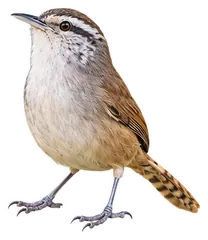 Cabanis's WrenCantorchilus modestus
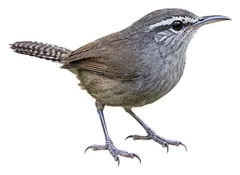 Canebrake WrenCantorchilus zeledoni
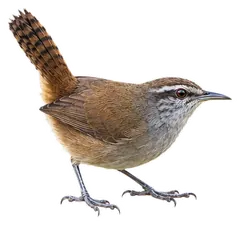 Isthmian WrenCantorchilus elutus
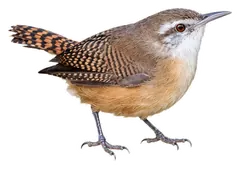 Buff-breasted WrenCantorchilus leucotis
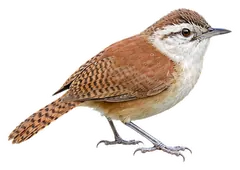 Superciliated WrenCantorchilus superciliaris
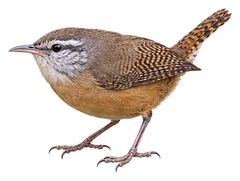 Fawn-breasted WrenCantorchilus guarayanus
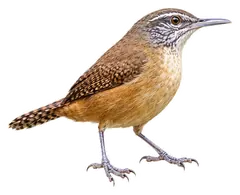 Long-billed WrenCantorchilus longirostris
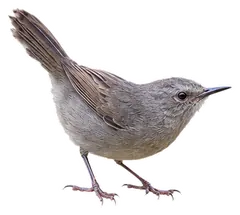 Grey WrenCantorchilus griseus
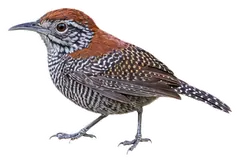 Riverside WrenCantorchilus semibadius
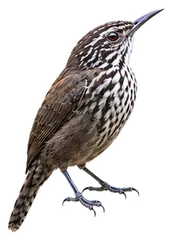 Stripe-breasted WrenCantorchilus thoracicus
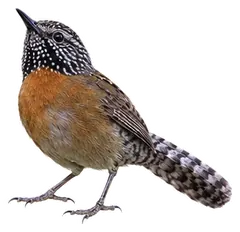 Stripe-throated WrenCantorchilus leucopogon
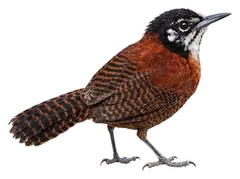
Download illustration
Free to use with credit: “Illustration: Bird Album (birdalbum.com)”. Drawn by AI from reference photos. ↗
Heard it but can't see it? Mingji identifies birds by sound and photo, on your phone.
In other languages
- EnglishBay Wren
- 简体中文栗苇鹪鹩
- 繁體中文栗葦鷦鷯
- 日本語シマバラマユミソサザイ
- DeutschKastanienzaunkönig
- FrançaisTroglodyte à calotte noire
- EspañolCucarachero cabecinegro
- Portuguêsgarrinchão-de-barrete-preto
- ItalianoScricciolo baio
- NederlandsKastanjewinterkoning
- РусскийЧерноголовый крапивник
- Svenskakastanjegärdsmyg
- DanskSortnakket Smutte
- Polskipręgostrzyżyk maskowy