 Bird Album
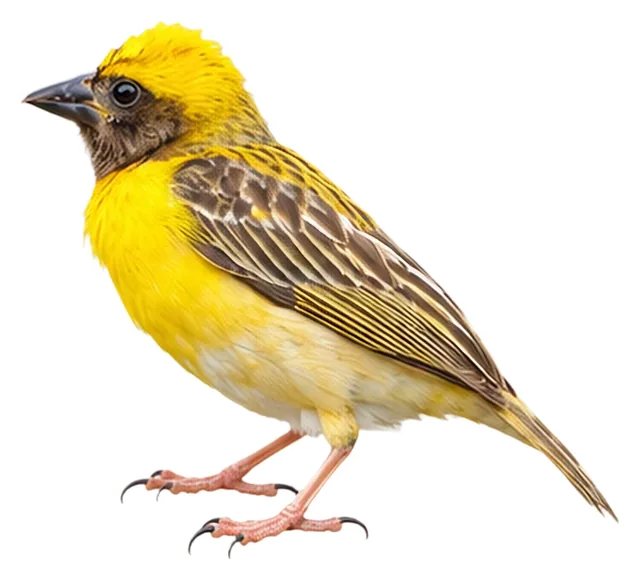
Baya Weaver
Ploceus philippinus (Linnaeus, 1766)
≈15 cmLength28 gWeight
About the size of a Eurasian Tree Sparrow, it weaves hanging retort-shaped nests, and the male has a bright yellow crown in the breeding season.
Busiest months: September–October · Most records: India, Thailand, Singapore
How to identify
Field marks
- Male in breeding season has bright yellow crown
- Male in breeding season has dark brown mask and yellow breast
- Bill thick and conical, tail short and square
- Outside breeding season resembles female House Sparrow, with long supercilium
Male, female and young
The sexes are very similar outside the breeding season; only the male in the breeding season has a bright yellow crown and dark brown mask.
Where and when it's recorded

Baya Weaver has been recorded at 565 of the 8,171 birding hotspots we track, in 18 countries and regions.
Records by month Northern Hemisphere
Where it's recorded most
- Bhandup Pumping StationIndia1,546 records
- Hoskote / Hosakote KereIndia1,498 records
- Changaram Wetlands – EzhupunnaIndia1,487 records
More places
- Muthanallur KereIndia1,235 records
- KattampallyIndia1,191 records
- Manjeera Wildlife SanctuaryIndia1,022 records
- Lat Krabang – Thap Yao paddies & aquaculture pondsThailand939 records
- Byatarayana Doddi KereIndia824 records
- Vetal Tekdi/HillIndia747 records
- Ankasamudra Bird SanctuaryIndia746 records
Countries and regions with the most records
eBird records via GBIF up to 2024-12-31. A record means someone listed it; more records partly mean more birders, not more birds.
About
The baya weaver (Ploceus philippinus) is a weaverbird found across the Indian subcontinent and Southeast Asia. Flocks are found in grasslands, cultivated areas, scrub and secondary growth. They are known for their hanging retort shaped nests woven from leaves, usually found on thorny trees or palm fronds, near or hanging over water where predators cannot easily reach.
Excerpt from Wikipedia, CC BY-SA 4.0 · authors · Read more on Wikipedia
Questions
How big is the Baya Weaver?
The Baya Weaver is about ≈15 cm long and weighs around 28 g.
Where does the Baya Weaver live?
Its breeding range: Oriental: widespread. It is most often recorded in India, Thailand and Singapore.
When is the best time to see the Baya Weaver?
At the hotspots we track, it is recorded most in September and October (Northern Hemisphere).
Is the Baya Weaver endangered?
The IUCN Red List classifies the Baya Weaver as Least Concern.
What does the Baya Weaver eat?
Main food: Seeds.
What family is the Baya Weaver in?
It belongs to the family Weavers, Widowbirds (Ploceidae), order Passerines (Passeriformes).
At a glance
- Length
- ≈15 cm
- Weight
- 28 g
- Habitat
- Shrubland
- Diet
- Seeds
- Lifestyle
- Perches in trees
- Migration
- Resident (barely migrates)
- Conservation
- Least Concern
More measurements
- Wing
- 70 mm
- Tail
- 46 mm
- Bill
- 18 mm
- Tarsus
- 21 mm
Averages from the AVONET dataset; length from field guides where available.
Range
Oriental: widespread
Breeding range, IOC World Bird List 15.2
Subspecies · 1
- Ploceus philippinus burmanicus Bhutan, ne India and Bangladesh through Myanmar to sw China
Classification
- Order
- Passerines Passeriformes
- Family
- Weavers, Widowbirds Ploceidae
- Genus
- Ploceus
Other birds in the genus Ploceus
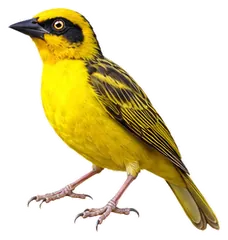 Baglafecht WeaverPloceus baglafecht
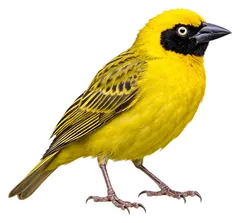 Bannerman's WeaverPloceus bannermani
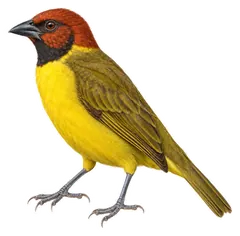 Bates's WeaverPloceus batesi
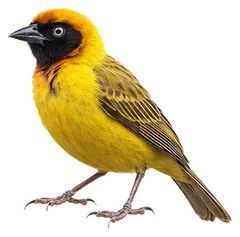 Black-chinned WeaverPloceus nigrimentus
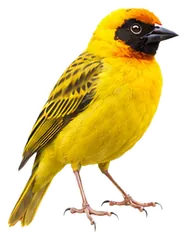 Bertram's WeaverPloceus bertrandi
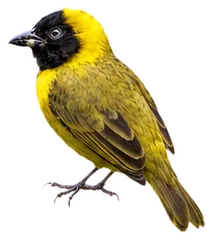 Slender-billed WeaverPloceus pelzelni
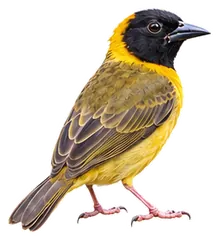 Loango WeaverPloceus subpersonatus
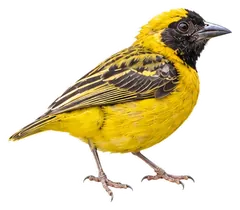 Little WeaverPloceus luteolus
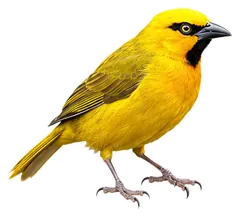 Spectacled WeaverPloceus ocularis
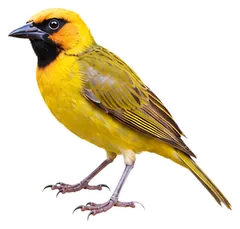 Olive-naped WeaverPloceus brachypterus
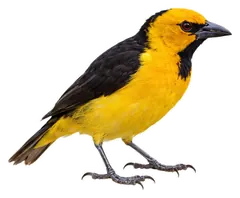 Black-necked WeaverPloceus nigricollis
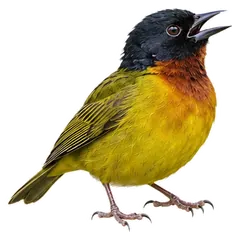 Strange WeaverPloceus alienus
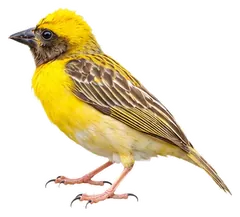
Download illustration
Free to use with credit: “Illustration: Bird Album (birdalbum.com)”. Drawn by AI from a reference photo by Shantanu Kuveskar. ↗

Heard it but can't see it? Mingji identifies birds by sound and photo, on your phone.