 Bird Album
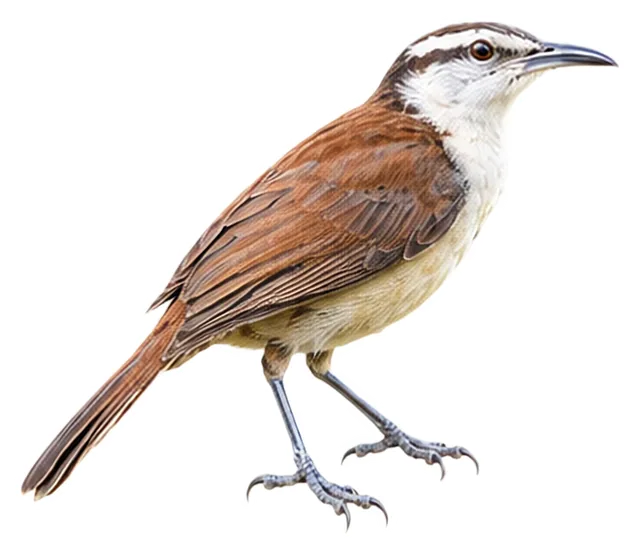
Bicolored Wren
Campylorhynchus griseus (Swainson, 1838)
21–22 cmLength42 gWeight
The bicolored wren (Campylorhynchus griseus) is a species of bird in the family Troglodytidae.
Busiest months: February · Most records: Colombia, Venezuela, Guyana
Where and when it's recorded

Bicolored Wren has been recorded at 85 of the 8,171 birding hotspots we track, in 4 countries and regions.
Records by month Northern Hemisphere
Where it's recorded most
- Reinita Cielo Azul ProAves ReserveColombia1,364 records
- Palermo – Camino Km 4Colombia1,168 records
- Pauxi pauxi ProAves ReserveColombia1,102 records
More places
- Hotel MincaColombia1,082 records
- MincaColombia923 records
- TarataraVenezuela830 records
- Agrícola CameliasColombia573 records
- Jardín Botánico de MaracaiboVenezuela525 records
- Reserva Natural Manantial de la AuroraColombia500 records
- SFF Los Flamencos – Resguardo Perratpu/Boca de CamaronesColombia349 records
Countries and regions with the most records
eBird records via GBIF up to 2024-12-31. A record means someone listed it; more records partly mean more birders, not more birds.
About
The bicolored wren (Campylorhynchus griseus) is a species of bird in the family Troglodytidae. It is found in Colombia, Venezuela, Guyana, and Brazil.
Excerpt from Wikipedia, CC BY-SA 4.0 · authors · Read more on Wikipedia
Questions
How big is the Bicolored Wren?
The Bicolored Wren is about 21–22 cm long and weighs around 42 g.
Where does the Bicolored Wren live?
Its breeding range: South America: northern. It is most often recorded in Colombia, Venezuela and Guyana.
When is the best time to see the Bicolored Wren?
At the hotspots we track, it is recorded most in February (Northern Hemisphere).
Is the Bicolored Wren endangered?
The IUCN Red List classifies the Bicolored Wren as Least Concern.
What does the Bicolored Wren eat?
Main food: Insects & other invertebrates.
What family is the Bicolored Wren in?
It belongs to the family Wrens (Troglodytidae), order Passerines (Passeriformes).
At a glance
- Length
- 21–22 cm
- Weight
- 42 g
- Habitat
- Shrubland
- Diet
- Insects & other invertebrates
- Lifestyle
- Perches in trees
- Migration
- Resident (barely migrates)
- Conservation
- Least Concern
More measurements
- Wing
- 84 mm
- Tail
- 82 mm
- Bill
- 30 mm
- Tarsus
- 29 mm
Averages from the AVONET dataset; length from field guides where available.
Range
South America: northern
Breeding range, IOC World Bird List 15.2
Classification
- Order
- Passerines Passeriformes
- Family
- Wrens Troglodytidae
- Genus
- Campylorhynchus
Other birds in the genus Campylorhynchus
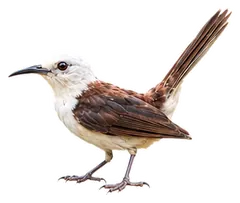 White-headed WrenCampylorhynchus albobrunneus
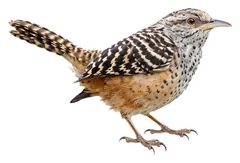 Band-backed WrenCampylorhynchus zonatus
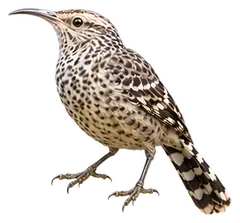 Grey-barred WrenCampylorhynchus megalopterus
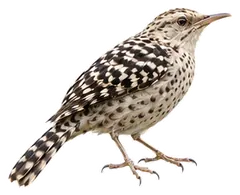 Stripe-backed WrenCampylorhynchus nuchalis
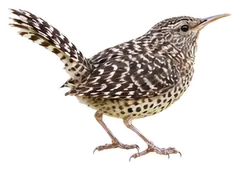 Fasciated WrenCampylorhynchus fasciatus
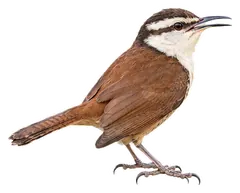 Giant WrenCampylorhynchus chiapensis
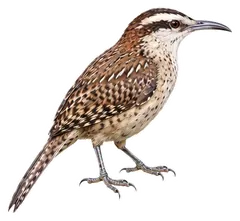 Veracruz WrenCampylorhynchus rufinucha
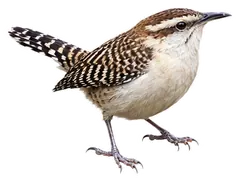 Russet-naped WrenCampylorhynchus humilis
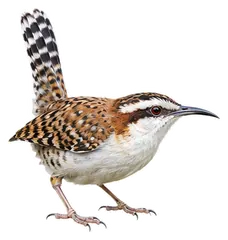 Rufous-backed WrenCampylorhynchus capistratus
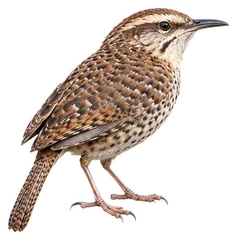 Spotted WrenCampylorhynchus gularis
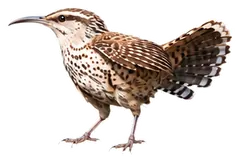 Boucard's WrenCampylorhynchus jocosus
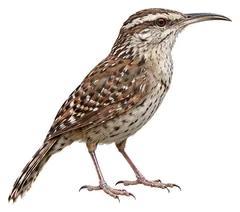 Yucatan WrenCampylorhynchus yucatanicus
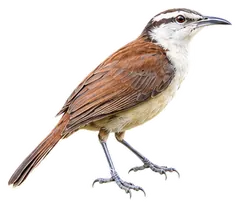
Download illustration
Free to use with credit: “Illustration: Bird Album (birdalbum.com)”. Drawn by AI from a reference photo by cello caruso-turiello. ↗
Heard it but can't see it? Mingji identifies birds by sound and photo, on your phone.
In other languages
- EnglishBicolored Wren
- 简体中文灰曲嘴鹪鹩
- 繁體中文灰曲嘴鷦鷯
- 日本語オオサボテンミソサザイ
- DeutschBrauenzaunkönig
- FrançaisTroglodyte bicolore
- EspañolCucarachero currucuchú
- Portuguêsgarrincha-dos-lhanos
- ItalianoScricciolo bicolore
- NederlandsTweekleurige Winterkoning
- РусскийБелобровый крапивник
- Svenskatvåfärgad gärdsmyg
- DanskBroget Kaktussmutte
- Polskistrzyż dwubarwny