 Bird Album
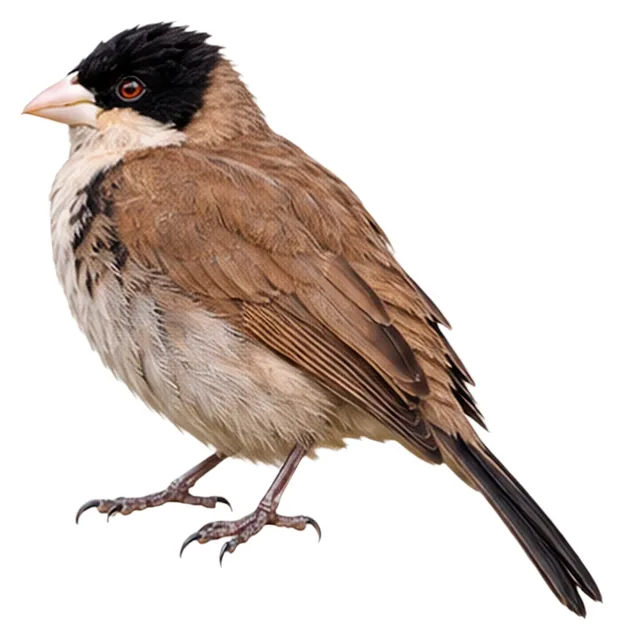
Black-capped Social Weaver
Pseudonigrita cabanisi (Fischer, GA & Reichenow, 1884)
13 cmLength21 gWeight
The black-capped social weaver (Pseudonigrita cabanisi) is a sparrow-like species of bird that has been assigned to the weaverbird family.
Busiest months: April and November · Most records: Kenya, Ethiopia, Tanzania
Where and when it's recorded

Black-capped Social Weaver has been recorded at 27 of the 8,171 birding hotspots we track, in 3 countries and regions.
Records by month Northern Hemisphere
Where it's recorded most
- Samburu NRKenya588 records
- Buffalo Springs NRKenya183 records
- Mpala Ranch and Research CentreKenya153 records
More places
- Shaba NRKenya142 records
- Buffalo Springs NR / Samburu NRKenya116 records
- Tsavo West NPKenya106 records
- Yabello areaEthiopia50 records
- Tsavo West NP – Kilaguni LodgeKenya38 records
- Tsavo East NPKenya34 records
- Tsavo East NP – Southern SectionKenya31 records
Countries and regions with the most records
eBird records via GBIF up to 2024-12-31. A record means someone listed it; more records partly mean more birders, not more birds.
About
The black-capped social weaver (Pseudonigrita cabanisi) is a sparrow-like species of bird that has been assigned to the weaverbird family. It was originally described by Fisher and Reichenow, and later re-classified by the latter to the genus Pseudonigrita. Adults have a large black cap, ivory-colored bill, red eyes, brown back and wings, blackish-brown tail, white throat and underparts with a black midline, and dark horn-colored legs.
Excerpt from Wikipedia, CC BY-SA 4.0 · authors · Read more on Wikipedia
Questions
How big is the Black-capped Social Weaver?
The Black-capped Social Weaver is about 13 cm long and weighs around 21 g.
Where does the Black-capped Social Weaver live?
Its breeding range: Africa: Ethiopia and Somalia to northeastern Tanzania. It is most often recorded in Kenya, Ethiopia and Tanzania.
When is the best time to see the Black-capped Social Weaver?
At the hotspots we track, it is recorded most in April and November (Northern Hemisphere).
Is the Black-capped Social Weaver endangered?
The IUCN Red List classifies the Black-capped Social Weaver as Least Concern.
What does the Black-capped Social Weaver eat?
Main food: Seeds.
What family is the Black-capped Social Weaver in?
It belongs to the family Weavers, Widowbirds (Ploceidae), order Passerines (Passeriformes).
At a glance
- Length
- 13 cm
- Weight
- 21 g
- Habitat
- Grassland
- Diet
- Seeds
- Lifestyle
- Active on the ground
- Migration
- Resident (barely migrates)
- Conservation
- Least Concern
More measurements
- Wing
- 66 mm
- Tail
- 49 mm
- Bill
- 15 mm
- Tarsus
- 18 mm
Averages from the AVONET dataset; length from field guides where available.
Range
Africa: Ethiopia and Somalia to northeastern Tanzania
Breeding range, IOC World Bird List 15.2
Classification
- Order
- Passerines Passeriformes
- Family
- Weavers, Widowbirds Ploceidae
- Genus
- Pseudonigrita
Other birds in the genus Pseudonigrita
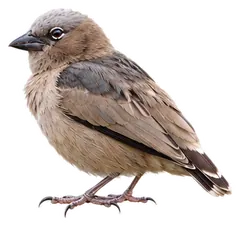 Grey-capped Social WeaverPseudonigrita arnaudi
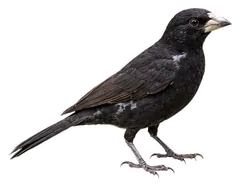 White-billed Buffalo WeaverBubalornis albirostris
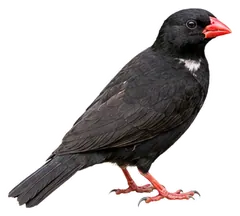 Red-billed Buffalo WeaverBubalornis niger
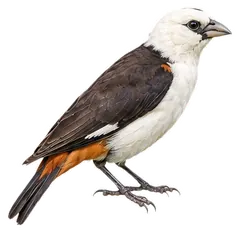 White-headed Buffalo WeaverDinemellia dinemelli
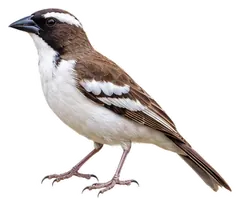 White-browed Sparrow-WeaverPlocepasser mahali
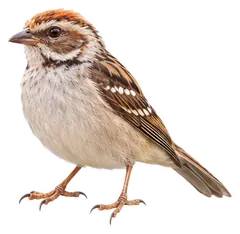 Chestnut-crowned Sparrow-WeaverPlocepasser superciliosus
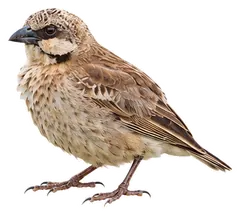 Donaldson Smith's Sparrow-WeaverPlocepasser donaldsoni
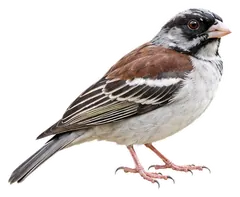 Chestnut-backed Sparrow-WeaverPlocepasser rufoscapulatus
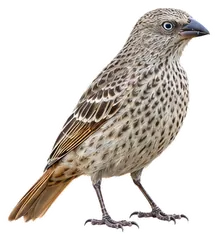 Rufous-tailed WeaverHisturgops ruficauda
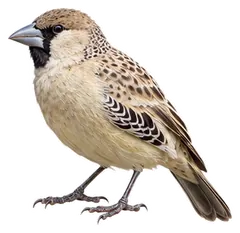 Sociable WeaverPhiletairus socius
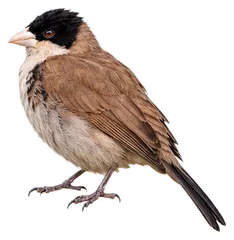
Download illustration
Free to use with credit: “Illustration: Bird Album (birdalbum.com)”. Drawn by AI from a reference photo by Steve Garvie. ↗
Heard it but can't see it? Mingji identifies birds by sound and photo, on your phone.
In other languages
- EnglishBlack-capped Social Weaver
- 简体中文黑头群织雀
- 繁體中文黑頭擬廈鳥
- 日本語クロガシラシュウダンハタオリ
- DeutschSchwarzkappenweber
- FrançaisRépublicain de Cabanis
- EspañolTejedor social de Cabanis
- Portuguêstecelão-de-capuz-preto
- ItalianoTessitore capinero
- NederlandsZwartkapwever
- РусскийЧерноголовый ткачик-воробей
- Svenskasvartkronad vävare
- DanskSorthættet Ørkenvæver
- Polskigromadnik czarnogłowy