 Bird Album
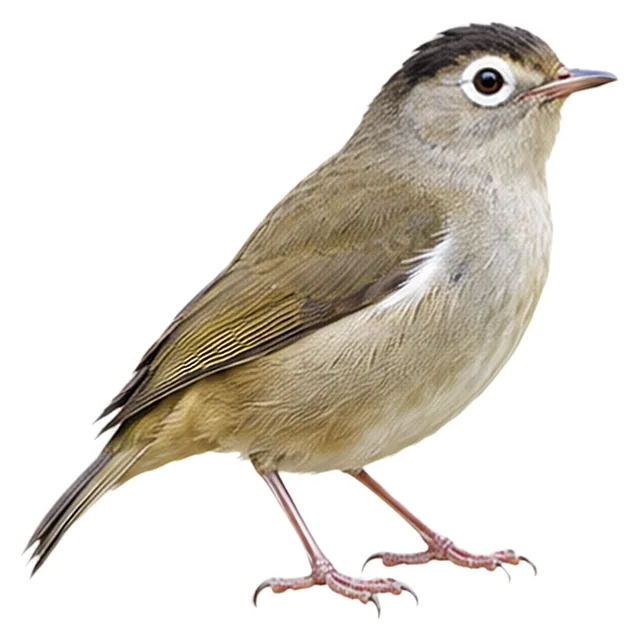
Black-capped Speirops
Zosterops lugubris (Hartlaub, 1848)
15 gWeight
The black-capped speirops (Zosterops lugubris) is a species of bird in the family Zosteropidae.
Busiest months: June and August · Most records: São Tomé & Príncipe
Where and when it's recorded

Black-capped Speirops has been recorded at 8 of the 8,276 birding hotspots we track, in 1 country or region.
Records by month Northern Hemisphere
Where it's recorded most
- PN Obô de São Tomé – Monte CarmoSão Tomé & Príncipe124 records
- São Tomé – Bom Sucesso Botanical GardensSão Tomé & Príncipe82 records
- PN Obô de São Tomé – Lagoa Amélia trailSão Tomé & Príncipe66 records
More places
- São Tomé – Monte CaféSão Tomé & Príncipe63 records
- São Tomé – MucumbliSão Tomé & Príncipe38 records
- PN Obô de São Tomé – Mangal de MalanzaSão Tomé & Príncipe19 records
- São Tomé – São Tomé town vicinitySão Tomé & Príncipe10 records
- São Tomé – International AirportSão Tomé & Príncipe1 record
Countries and regions with the most records
eBird records via GBIF up to 2024-12-31. A record means someone listed it; more records partly mean more birders, not more birds.
About
The black-capped speirops (Zosterops lugubris) is a species of bird in the family Zosteropidae. It was previously placed in the genus Speirops. It is endemic to São Tomé in São Tomé and Príncipe.
Excerpt from Wikipedia, CC BY-SA 4.0 · authors · Read more on Wikipedia
Questions
How big is the Black-capped Speirops?
The Black-capped Speirops weighs around 15 g.
Where does the Black-capped Speirops live?
Its breeding range: Africa: São Tomé (south-central Gulf of Guinea Islands). It is most often recorded in São Tomé & Príncipe.
When is the best time to see the Black-capped Speirops?
At the hotspots we track, it is recorded most in June and August (Northern Hemisphere).
Is the Black-capped Speirops endangered?
The IUCN Red List classifies the Black-capped Speirops as Least Concern.
What does the Black-capped Speirops eat?
Main food: Fruit.
What family is the Black-capped Speirops in?
It belongs to the family White-eyes (Zosteropidae), order Passerines (Passeriformes).
At a glance
- Weight
- 15 g
- Habitat
- Forest
- Diet
- Fruit
- Lifestyle
- Perches in trees
- Migration
- Resident (barely migrates)
- Conservation
- Least Concern
More measurements
- Wing
- 73 mm
- Tail
- 51 mm
- Bill
- 15 mm
- Tarsus
- 22 mm
Averages from the AVONET dataset; length from field guides where available.
Range
Africa: São Tomé (south-central Gulf of Guinea Islands)
Breeding range, IOC World Bird List 15.2
Classification
- Order
- Passerines Passeriformes
- Family
- White-eyes Zosteropidae
- Genus
- Zosterops
Other birds in the genus Zosterops
 Sri Lanka White-eyeZosterops ceylonensis
 Yellowish White-eyeZosterops nigrorum
 Black-capped White-eyeZosterops atricapilla
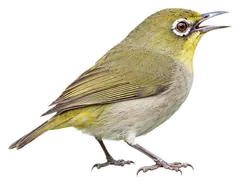 Abyssinian White-eyeZosterops abyssinicus
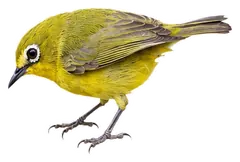 Pale White-eyeZosterops flavilateralis
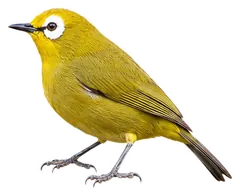 Mbulu White-eyeZosterops mbuluensis
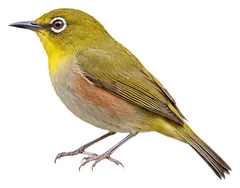 Chestnut-flanked White-eyeZosterops erythropleurus
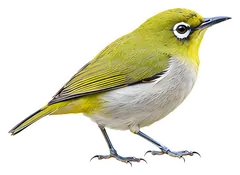 Swinhoe's White-eyeZosterops simplex
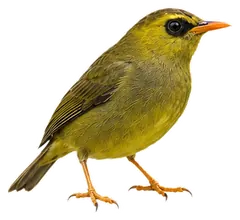 Mountain BlackeyeZosterops emiliae
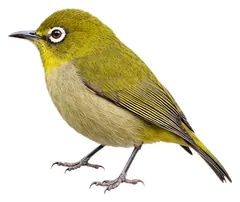 Warbling White-eyeZosterops japonicus
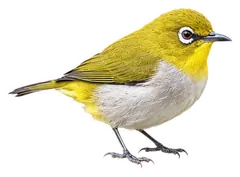 Indian White-eyeZosterops palpebrosus
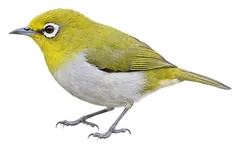 Lowland White-eyeZosterops meyeni
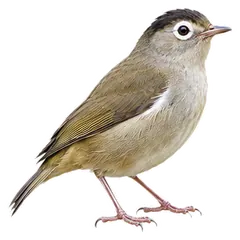
Download illustration
Free to use with credit: “Illustration: Bird Album (birdalbum.com)”. Drawn by AI from a reference photo by Nik Borrow. ↗
Heard it but can't see it? Mingji identifies birds by sound and photo, on your phone.
In other languages
- EnglishBlack-capped Speirops
- 简体中文黑顶绣眼鸟
- 繁體中文聖多美黑冠繡眼
- 日本語ズグロメジロモドキ
- DeutschSchwarzscheitel-Brillenvogel
- FrançaisZostérops de Sao Tomé
- EspañolAnteojitos lúgubre
- Portuguêsolho-grosso-de-são-tomé
- ItalianoSpeirope capinero
- NederlandsRouwbrilvogel
- РусскийТёмная белоглазка
- Svenskasotglasögonfågel
- DanskSortisset Brillefugl
- Polskiszlarnik żałobny