 Bird Album
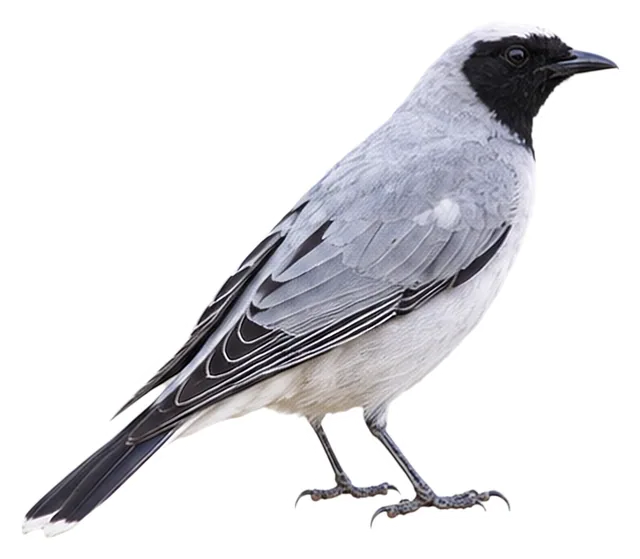
Black-faced Cuckooshrike
Coracina novaehollandiae (Gmelin, JF, 1789)
118 gWeight
The black-faced cuckooshrike (Coracina novaehollandiae) is a common omnivorous passerine bird native to Australia and southern New Guinea.
Busiest months: September–October · Most records: Australia, Papua New Guinea, Timor-Leste
Where and when it's recorded

Black-faced Cuckooshrike has been recorded at 260 of the 8,171 birding hotspots we track, in 5 countries and regions.
Records by month Southern Hemisphere
Where it's recorded most
- Oxley Creek CommonAustralia4,704 records
- Jerrabomberra Wetlands Nature ReserveAustralia3,915 records
- Sandy Camp Road WetlandsAustralia3,715 records
More places
- Bowra Wildlife SanctuaryAustralia2,806 records
- Broome Bird ObservatoryAustralia2,580 records
- Lake Samsonvale – Golds Scrub LaneAustralia2,328 records
- Townsville Town Common Conservation ParkAustralia2,275 records
- Mt Ainslie Nature Reserve – Campbell ParkAustralia1,860 records
- Western Treatment PlantAustralia1,771 records
- Banyule Flats ReserveAustralia1,723 records
Countries and regions with the most records
eBird records via GBIF up to 2024-12-31. A record means someone listed it; more records partly mean more birders, not more birds.
About
The black-faced cuckooshrike (Coracina novaehollandiae) is a common omnivorous passerine bird native to Australia and southern New Guinea. It has a protected status in New South Wales, under the National Parks and Wildlife Act, 1974.
Excerpt from Wikipedia, CC BY-SA 4.0 · authors · Read more on Wikipedia
Questions
How big is the Black-faced Cuckooshrike?
The Black-faced Cuckooshrike weighs around 118 g.
Where does the Black-faced Cuckooshrike live?
Its breeding range: Australasia: Australia and Tasmania. It is most often recorded in Australia, Papua New Guinea and Timor-Leste.
When is the best time to see the Black-faced Cuckooshrike?
At the hotspots we track, it is recorded most in September and October (Southern Hemisphere).
Is the Black-faced Cuckooshrike endangered?
The IUCN Red List classifies the Black-faced Cuckooshrike as Least Concern.
What does the Black-faced Cuckooshrike eat?
Main food: Insects & other invertebrates.
What family is the Black-faced Cuckooshrike in?
It belongs to the family Cuckooshrikes (Campephagidae), order Passerines (Passeriformes).
At a glance
- Weight
- 118 g
- Habitat
- Forest
- Diet
- Insects & other invertebrates
- Lifestyle
- Perches in trees
- Migration
- Resident (barely migrates)
- Conservation
- Least Concern
More measurements
- Wing
- 192 mm
- Tail
- 136 mm
- Bill
- 29 mm
- Tarsus
- 29 mm
Averages from the AVONET dataset; length from field guides where available.
Range
Australasia: Australia and Tasmania
Breeding range, IOC World Bird List 15.2
Classification
- Order
- Passerines Passeriformes
- Family
- Cuckooshrikes Campephagidae
- Genus
- Coracina
Other birds in the genus Coracina
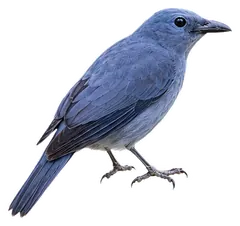 Stout-billed CuckooshrikeCoracina caeruleogrisea
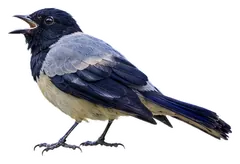 Hooded CuckooshrikeCoracina longicauda
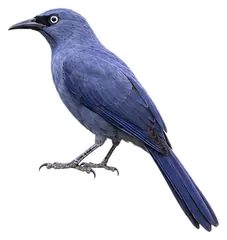 Cerulean CuckooshrikeCoracina temminckii
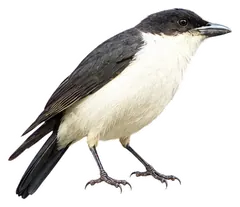 Pied CuckooshrikeCoracina bicolor
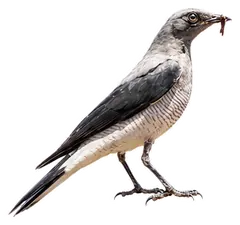 Ground CuckooshrikeCoracina maxima
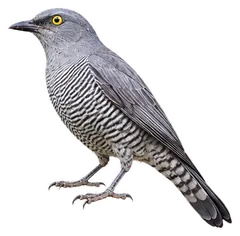 Barred CuckooshrikeCoracina lineata
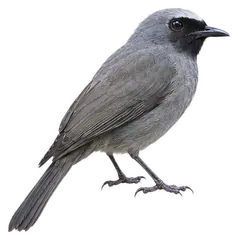 Boyer's CuckooshrikeCoracina boyeri
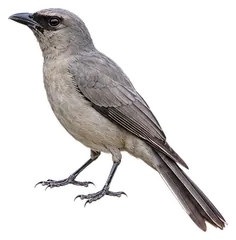 Buru CuckooshrikeCoracina fortis
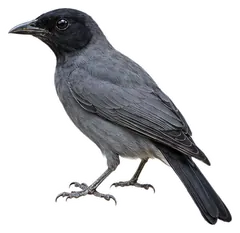 Wallacean CuckooshrikeCoracina personata
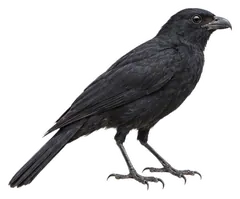 North Melanesian CuckooshrikeCoracina welchmani
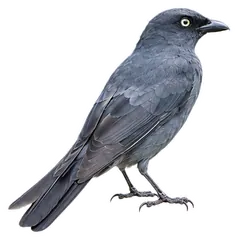 South Melanesian CuckooshrikeCoracina caledonica
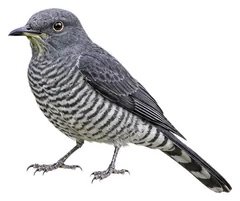 Bar-bellied CuckooshrikeCoracina striata
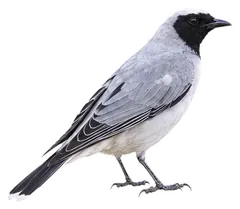
Download illustration
Free to use with credit: “Illustration: Bird Album (birdalbum.com)”. Drawn by AI from a reference photo by Debs Hiking. ↗
Heard it but can't see it? Mingji identifies birds by sound and photo, on your phone.
In other languages
- EnglishBlack-faced Cuckooshrike
- 简体中文黑脸鹃鵙
- 繁體中文黑臉鵑鵙
- 日本語オーストラリアオニサンショウクイ
- DeutschSchwarzgesicht-Raupenfänger
- FrançaisÉchenilleur à masque noir
- EspañolOruguero carinegro
- Portuguêslagarteiro-de-cara-preta
- ItalianoAverla cuculo faccianera
- NederlandsAustralische Rupsvogel
- РусскийЧернолицый воронец
- Svenskaaustralisk gråfågel
- DanskSortmasket Gråfugl
- Polskikruczyna czarnolica