 Bird Album
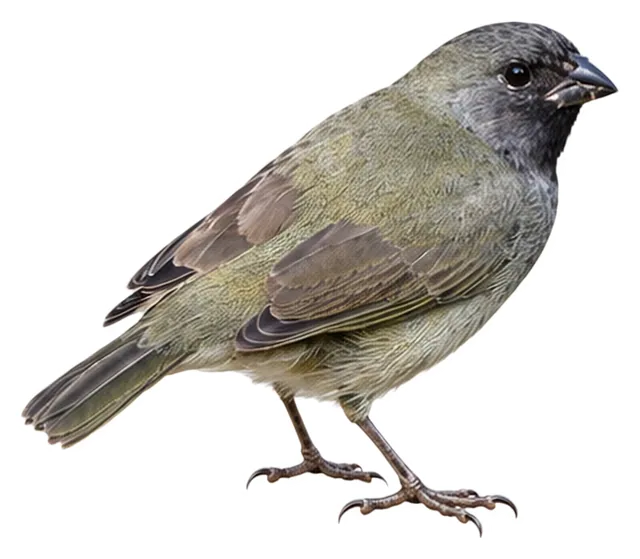
Black-faced Grassquit
Melanospiza bicolor (Linnaeus, 1766)
10–12 cmLength9.8 gWeight
The black-faced grassquit (Melanospiza bicolor) is a small bird in the family Thraupidae, the tanagers and allies.
Busiest months: December–March and October · Most records: Puerto Rico, Venezuela, Aruba
Where and when it's recorded

Black-faced Grassquit has been recorded at 409 of the 8,171 birding hotspots we track, in 28 countries and regions.
Records by month Northern Hemisphere
Where it's recorded most
- Posada El GalloVenezuela2,892 records
- Bubali Bird SanctuaryAruba2,081 records
- Hacienda La EsperanzaPuerto Rico1,151 records
More places
- Laguna Cartagena - West EndPuerto Rico895 records
- Parque del EsteVenezuela876 records
- Blue Bay Curaçao Golf & Beach ResortCuraçao838 records
- Spaans LagoonAruba804 records
- Kralendijk Water Treatment PlantCaribbean Netherlands788 records
- Refugio de Vida Silvestre de BoquerónPuerto Rico739 records
- Bosque Estatal de PiñonesPuerto Rico708 records
Countries and regions with the most records
eBird records via GBIF up to 2024-12-31. A record means someone listed it; more records partly mean more birders, not more birds.
About
The black-faced grassquit (Melanospiza bicolor) is a small bird in the family Thraupidae, the tanagers and allies. It is found in the West Indies except Cuba Colombia, Venezuela and islands off its coast, and on islands in the western Caribbean Sea.
Excerpt from Wikipedia, CC BY-SA 4.0 · authors · Read more on Wikipedia
Questions
How big is the Black-faced Grassquit?
The Black-faced Grassquit is about 10–12 cm long and weighs around 9.8 g.
Where does the Black-faced Grassquit live?
Its breeding range: North America, South America: West Indies and northern South America. It is most often recorded in Puerto Rico, Venezuela and Aruba.
When is the best time to see the Black-faced Grassquit?
At the hotspots we track, it is recorded most in January, February, March, October and December (Northern Hemisphere).
Is the Black-faced Grassquit endangered?
The IUCN Red List classifies the Black-faced Grassquit as Least Concern.
What does the Black-faced Grassquit eat?
Main food: Seeds.
What family is the Black-faced Grassquit in?
It belongs to the family Tanagers & Allies (Thraupidae), order Passerines (Passeriformes).
At a glance
- Length
- 10–12 cm
- Weight
- 9.8 g
- Habitat
- Shrubland
- Diet
- Seeds
- Lifestyle
- Active on the ground
- Migration
- Resident (barely migrates)
- Conservation
- Least Concern
More measurements
- Wing
- 53 mm
- Tail
- 38 mm
- Bill
- 11 mm
- Tarsus
- 16 mm
Averages from the AVONET dataset; length from field guides where available.
Range
North America, South America: West Indies and northern South America
Breeding range, IOC World Bird List 15.2
Classification
- Order
- Passerines Passeriformes
- Family
- Tanagers & Allies Thraupidae
- Genus
- Melanospiza
Other birds in the genus Melanospiza
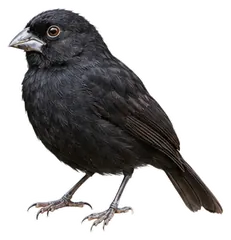 St. Lucia Black FinchMelanospiza richardsoni
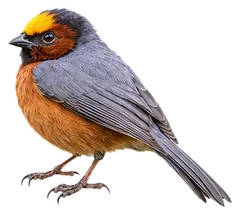 PlushcapCatamblyrhynchus diadema
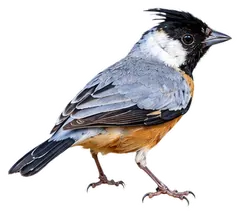 Coal-crested FinchCharitospiza eucosma
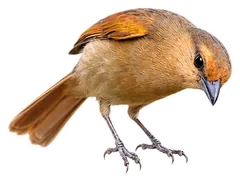 Brown TanagerOrchesticus abeillei
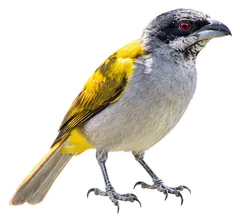 Yellow-shouldered GrosbeakParkerthraustes humeralis
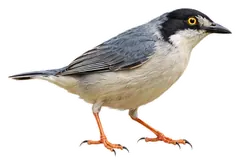 Hooded TanagerNemosia pileata
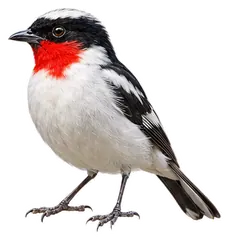 Cherry-throated TanagerNemosia rourei
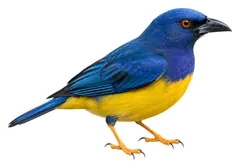 Blue-backed TanagerCyanicterus cyanicterus
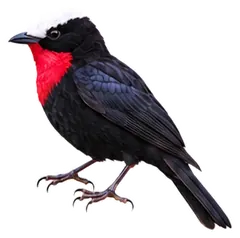 White-capped TanagerSericossypha albocristata
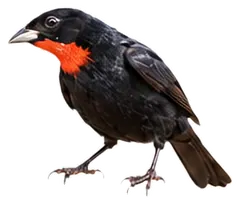 Scarlet-throated TanagerCompsothraupis loricata
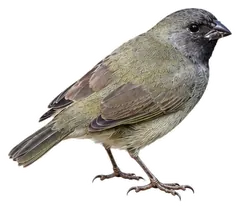
Download illustration
Free to use with credit: “Illustration: Bird Album (birdalbum.com)”. Drawn by AI from a reference photo by Jay L. Keller. ↗
Heard it but can't see it? Mingji identifies birds by sound and photo, on your phone.