 Bird Album
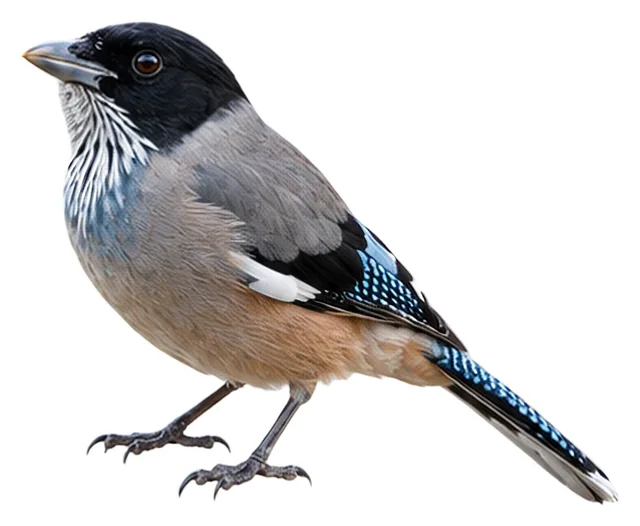
Black-headed Jay
Garrulus lanceolatus Vigors, 1830
≈30 cmLength98 gWeight
It has a gray body, a black head, a disheveled crest and fine white lines on the throat.
Busiest months: April · Most records: India, Nepal, Pakistan
Looks like Eurasian Jay
How to identify
Field marks
- Head mostly black, with a prominent crest
- Fine white lines on the throat
- Bill pale, rather short and thick
- Body mostly gray; tail relatively long
Voice
Most often a harsh “kraaa”, sometimes raspy, sometimes rather nasal.
Similar species
Where and when it's recorded

Black-headed Jay has been recorded at 21 of the 8,276 birding hotspots we track, in 3 countries and regions.
Records by month Northern Hemisphere
Where it's recorded most
- SattalIndia1,092 records
- PangotIndia779 records
- Munsyari – Bheema WodeyarIndia454 records
More places
- Mt. PhulchowkiNepal58 records
- Neelan BothoPakistan44 records
- Talhaar Ridge - Margalla HillsPakistan28 records
- Mt. Phulchowki - Lowest Few Miles of RoadNepal19 records
- Margalla Hills Trail 5Pakistan13 records
- Ichangu NarayanNepal13 records
- Australian Base Camp - Raptor Migration SiteNepal7 records
Countries and regions with the most records
eBird records via GBIF up to 2024-12-31. A record means someone listed it; more records partly mean more birders, not more birds.
About
The black-headed jay or lanceolated jay (Garrulus lanceolatus) is a species of passerine bird in the crow family Corvidae. It is found in open wooded country across the Himalayas and into eastern Afghanistan. A relatively large songbird, it has a largely grey body with a black head, an untidy crest, white streaks on the throat, and a pale bill.
Excerpt from Wikipedia, CC BY-SA 4.0 · authors · Read more on Wikipedia
Questions
How big is the Black-headed Jay?
The Black-headed Jay is about ≈30 cm long and weighs around 98 g.
Where does the Black-headed Jay live?
Its breeding range: Palearctic: eastern Afghanistan and northern Pakistan to western Tibet, Nepal and northern India. It is most often recorded in India, Nepal and Pakistan.
When is the best time to see the Black-headed Jay?
At the hotspots we track, it is recorded most in April (Northern Hemisphere).
Is the Black-headed Jay endangered?
The IUCN Red List classifies the Black-headed Jay as Least Concern.
What does the Black-headed Jay eat?
Main food: Omnivore.
What family is the Black-headed Jay in?
It belongs to the family Crows, Jays (Corvidae), order Passerines (Passeriformes).
At a glance
- Length
- ≈30 cm
- Weight
- 98 g
- Habitat
- Forest
- Diet
- Omnivore
- Lifestyle
- Perches in trees
- Migration
- Partial migrant
- Conservation
- Least Concern
More measurements
- Wing
- 153 mm
- Tail
- 149 mm
- Bill
- 27 mm
- Tarsus
- 38 mm
Averages from the AVONET dataset; length from field guides where available.
Range
Palearctic: eastern Afghanistan and northern Pakistan to western Tibet, Nepal and northern India
Breeding range, IOC World Bird List 15.2
Classification
- Order
- Passerines Passeriformes
- Family
- Crows, Jays Corvidae
- Genus
- Garrulus
Other birds in the genus Garrulus
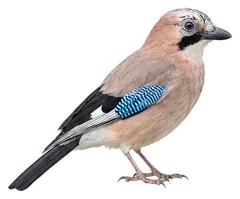 Eurasian JayGarrulus glandarius
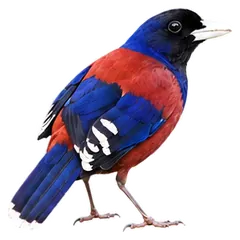 Lidth's JayGarrulus lidthi
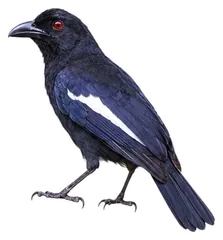 Malayan Black MagpiePlatysmurus leucopterus
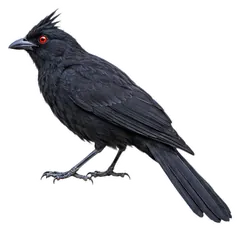 Bornean Black MagpiePlatysmurus aterrimus
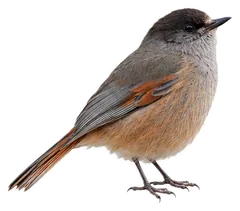 Siberian JayPerisoreus infaustus
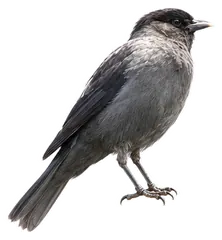 Sichuan JayPerisoreus internigrans
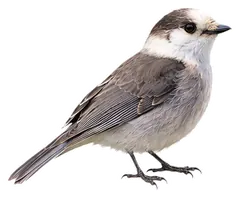 Canada JayPerisoreus canadensis
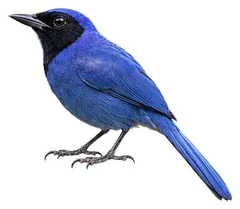 Black-collared JayCyanolyca armillata
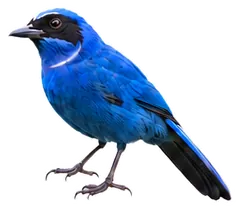 White-collared JayCyanolyca viridicyanus
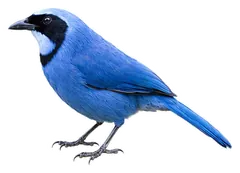 Turquoise JayCyanolyca turcosa
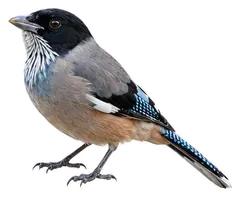
Download illustration
Free to use with credit: “Illustration: Bird Album (birdalbum.com)”. Drawn by AI from a reference photo by Pål A. Olsvik. ↗
Heard it but can't see it? Mingji identifies birds by sound and photo, on your phone.