 Bird Album
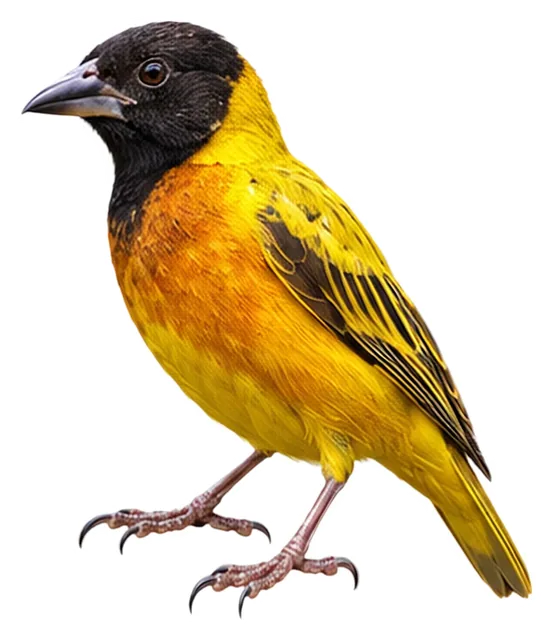
Black-headed Weaver
Ploceus melanocephalus (Linnaeus, 1758)
23 gWeight
The black-headed weaver (Ploceus melanocephalus), also known as yellow-backed weaver, is a species of bird in the family Ploceidae.
Busiest months: April–May and September–October · Most records: Uganda, Portugal, Spain
Where and when it's recorded
Busiest months: April–May and September–October · Most records: Uganda, Portugal, Spain

Black-headed Weaver has been recorded at 226 of the 8,276 birding hotspots we track, in 31 countries and regions.
Records by month Northern Hemisphere
Where it's recorded most
- PN Ria Formosa – Quinta do Lago – área geralPortugal1,758 records
- Brazo del Este PjeNat – ÁreaSpain1,259 records
- Parque Ambiental de VilamouraPortugal814 records
More places
- Entebbe Botanical GardenUganda529 records
- Paul da BarrocaPortugal460 records
- RN Paul do Boquilobo – área geralPortugal410 records
- Mabamba SwampUganda363 records
- Dehesa de AbajoSpain353 records
- Lagunas de Camino ColoradoSpain340 records
- Kisumu WaterfrontKenya305 records
Countries and regions with the most records
eBird records via GBIF up to 2024-12-31. A record means someone listed it; more records partly mean more birders, not more birds.
About
The black-headed weaver (Ploceus melanocephalus), also known as yellow-backed weaver, is a species of bird in the family Ploceidae. It is a resident breeder in damp areas in tropical Africa.
Excerpt from Wikipedia, CC BY-SA 4.0 · authors · Read more on Wikipedia
Questions
How big is the Black-headed Weaver?
The Black-headed Weaver weighs around 23 g.
Where does the Black-headed Weaver live?
Its breeding range: Africa: western, central, east-central. It is most often recorded in Uganda, Portugal and Spain.
When is the best time to see the Black-headed Weaver?
At the hotspots we track, it is recorded most in April, May, September and October (Northern Hemisphere).
Is the Black-headed Weaver endangered?
The IUCN Red List classifies the Black-headed Weaver as Least Concern.
What does the Black-headed Weaver eat?
Main food: Seeds.
What family is the Black-headed Weaver in?
It belongs to the family Weavers, Widowbirds (Ploceidae), order Passerines (Passeriformes).
At a glance
- Weight
- 23 g
- Habitat
- Wetland
- Diet
- Seeds
- Lifestyle
- Perches in trees
- Migration
- Resident (barely migrates)
- Conservation
- Least Concern
More measurements
- Wing
- 72 mm
- Tail
- 47 mm
- Bill
- 16 mm
- Tarsus
- 20 mm
Averages from the AVONET dataset; length from field guides where available.
Range
Africa: western, central, east-central
Breeding range, IOC World Bird List 15.2
Classification
- Order
- Passerines Passeriformes
- Family
- Weavers, Widowbirds Ploceidae
- Genus
- Ploceus
Other birds in the genus Ploceus
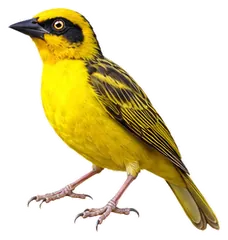 Baglafecht WeaverPloceus baglafecht
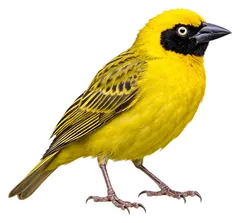 Bannerman's WeaverPloceus bannermani
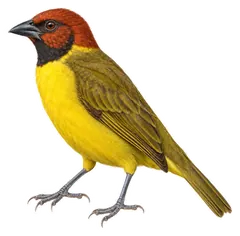 Bates's WeaverPloceus batesi
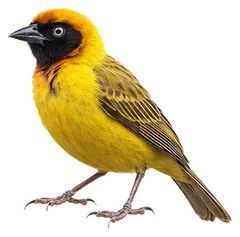 Black-chinned WeaverPloceus nigrimentus
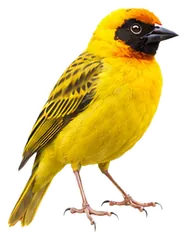 Bertram's WeaverPloceus bertrandi
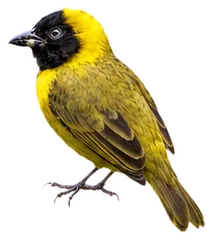 Slender-billed WeaverPloceus pelzelni
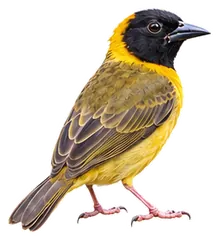 Loango WeaverPloceus subpersonatus
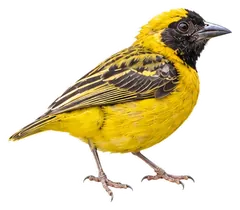 Little WeaverPloceus luteolus
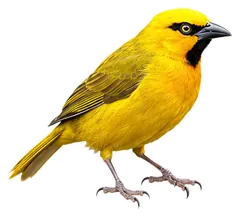 Spectacled WeaverPloceus ocularis
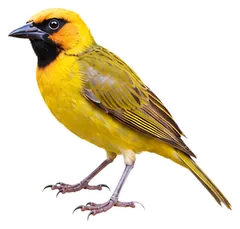 Olive-naped WeaverPloceus brachypterus
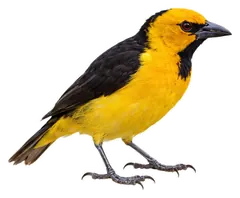 Black-necked WeaverPloceus nigricollis
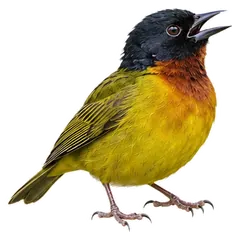 Strange WeaverPloceus alienus
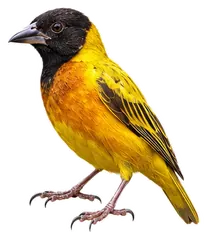
Download illustration
Free to use with credit: “Illustration: Bird Album (birdalbum.com)”. Drawn by AI from a reference photo by Nik Borrow. ↗
Heard it but can't see it? Mingji identifies birds by sound and photo, on your phone.
In other languages
- EnglishBlack-headed Weaver
- 简体中文黑头黄背织雀
- 繁體中文黑頭黃背織布鳥
- 日本語ズグロハタオリ
- DeutschSchwarzkopfweber
- FrançaisTisserin à tête noire
- EspañolTejedor cabecinegro
- Portuguêstecelão-de-cabeça-preta
- ItalianoTessitore testanera
- NederlandsZwartkopwever
- РусскийЧерноголовый ткач
- Svenskasvarthuvad vävare
- DanskSorthovedet Væver
- Polskiwikłacz czarnogłowy