 Bird Album
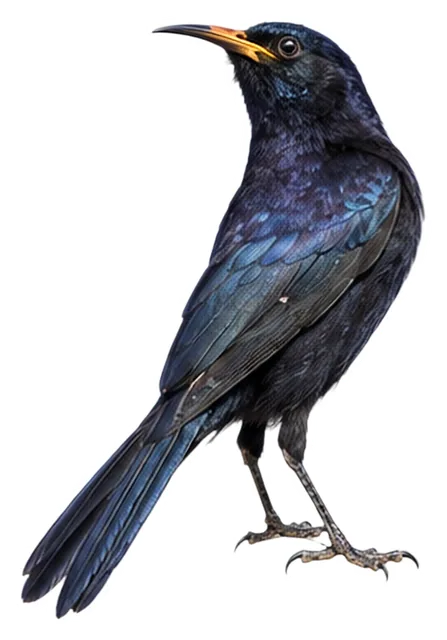
Black Scimitarbill
Rhinopomastus aterrimus (Stephens, 1826)
27 gWeight
Busiest months: February and November–December · Most records: Ghana, Ethiopia, Gambia
Where and when it's recorded
Busiest months: February and November–December · Most records: Ghana, Ethiopia, Gambia

Black Scimitarbill has been recorded at 87 of the 8,276 birding hotspots we track, in 16 countries and regions.
Records by month Northern Hemisphere
Where it's recorded most
- Mole NPGhana106 records
- Shai Hills Resource ReserveGhana87 records
- Hara Langano LodgeEthiopia79 records
More places
- Mole NP – Samole Loop & waterholeGhana64 records
- Shai Hills RR – Kandra RouteGhana50 records
- Mole NP – Asibey Loop/Haraba track vicinityGhana43 records
- Murchison Falls NP – North sideUganda42 records
- Amurum Forest ReserveNigeria41 records
- Mole NP – Samole loopGhana40 records
- Mole NP – Mole Hotel & waterholeGhana38 records
Countries and regions with the most records
eBird records via GBIF up to 2024-12-31. A record means someone listed it; more records partly mean more birders, not more birds.
Questions
How big is the Black Scimitarbill?
The Black Scimitarbill weighs around 27 g.
Where does the Black Scimitarbill live?
Its breeding range: Africa: eastern, central, western, southwestern. It is most often recorded in Ghana, Ethiopia and Gambia.
When is the best time to see the Black Scimitarbill?
At the hotspots we track, it is recorded most in February, November and December (Northern Hemisphere).
Is the Black Scimitarbill endangered?
The IUCN Red List classifies the Black Scimitarbill as Least Concern.
What does the Black Scimitarbill eat?
Main food: Insects & other invertebrates.
What family is the Black Scimitarbill in?
It belongs to the family Wood Hoopoes (Phoeniculidae), order Bucerotiformes.
At a glance
- Weight
- 27 g
- Habitat
- Woodland
- Diet
- Insects & other invertebrates
- Lifestyle
- Perches in trees
- Migration
- Resident (barely migrates)
- Conservation
- Least Concern
More measurements
- Wing
- 98 mm
- Tail
- 111 mm
- Bill
- 32 mm
- Tarsus
- 19 mm
Averages from the AVONET dataset; length from field guides where available.
Range
Africa: eastern, central, western, southwestern
Breeding range, IOC World Bird List 15.2
Classification
- Order
- Bucerotiformes
- Family
- Wood Hoopoes Phoeniculidae
- Genus
- Rhinopomastus
Other birds in the genus Rhinopomastus
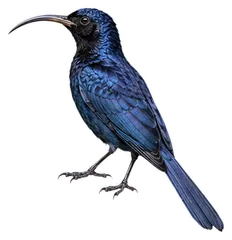 Common ScimitarbillRhinopomastus cyanomelas
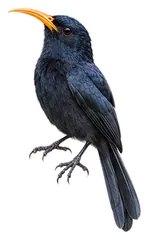 Abyssinian ScimitarbillRhinopomastus minor
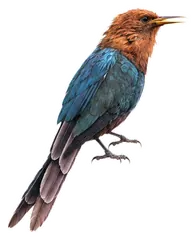 Forest Wood HoopoePhoeniculus castaneiceps
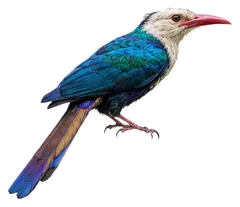 White-headed Wood HoopoePhoeniculus bollei
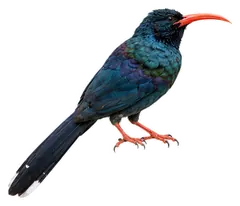 Green Wood HoopoePhoeniculus purpureus
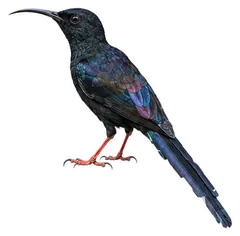 Black-billed Wood HoopoePhoeniculus somaliensis
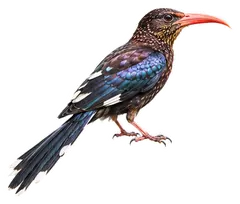 Violet Wood HoopoePhoeniculus damarensis
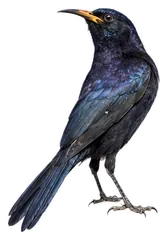
Download illustration
Free to use with credit: “Illustration: Bird Album (birdalbum.com)”. Drawn by AI from a reference photo by markuslilje. ↗
Heard it but can't see it? Mingji identifies birds by sound and photo, on your phone.
In other languages
- EnglishBlack Scimitarbill
- 简体中文黑弯嘴林戴胜
- 繁體中文黑林戴勝
- 日本語クロモリヤツガシラ
- DeutschViolettsichelhopf
- FrançaisIrrisor noir
- EspañolAbubilla arbórea negra
- Portuguêszombeteiro-preto
- ItalianoBecco a scimitarra nero
- NederlandsZwarte Boomhop
- РусскийЧёрный древесный удод
- Svenskasvart sabelnäbb
- DanskSort Seglhærfugl
- Polskiczarnodudek ciemnodzioby