 Bird Album
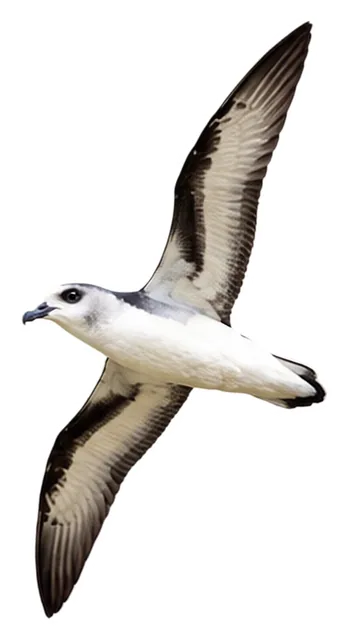
Black-winged Petrel
Pterodroma nigripennis (Rothschild, 1893)
174 gWeight
The black-winged petrel (Pterodroma nigripennis) is a species of seabird in the family Procellariidae.
Busiest months: February and November–December · Most records: Norfolk Island, New Zealand, Australia
Where and when it's recorded

Black-winged Petrel has been recorded at 26 of the 8,171 birding hotspots we track, in 9 countries and regions.
Records by month Southern Hemisphere
Where it's recorded most
- Norfolk Island – Phillip IslandNorfolk Island212 records
- Poor Knights Shelf AreaNew Zealand95 records
- Norfolk Island National Park – Captain Cook MemorialNorfolk Island91 records
More places
- Hundred Acres ReserveNorfolk Island40 records
- Norfolk Island – main islandNorfolk Island28 records
- Hauraki Gulf PelagicNew Zealand21 records
- Slaughter BayNorfolk Island20 records
- Kingston Common – Main lagoonNorfolk Island20 records
- Kaikoura – offshore – Albatross Encounter pelagicNew Zealand11 records
- Norfolk Island National Park – Palm GlenNorfolk Island8 records
Countries and regions with the most records
eBird records via GBIF up to 2024-12-31. A record means someone listed it; more records partly mean more birders, not more birds.
About
The black-winged petrel (Pterodroma nigripennis) is a species of seabird in the family Procellariidae. It breeds on a number of oceanic islands in the tropical and subtropical East Pacific Ocean and spends the rest of the year at sea.
Excerpt from Wikipedia, CC BY-SA 4.0 · authors · Read more on Wikipedia
Questions
How big is the Black-winged Petrel?
The Black-winged Petrel weighs around 174 g.
Where does the Black-winged Petrel live?
Its breeding range: Pacific Ocean: Round Island (northeast of Mauritius, central Mascarenes, southwestern Indian Ocean); Lord Howe and Norfolk islands (far east of Australia), Grande Terre (New Caledonia), northern, eastern North Island and Kermadec Islands (northeast of North Island) and Chatham Islands (east of South Island; New Zealand), Tonga and Cook Islands (central Polynesia), Bass Rock (=Marotiri, southeastern Austral Islands, eastern Polynesia), and Rapa (eastern Tubuai=Austral Islands, southeastern Polynesia). It is most often recorded in Norfolk Island, New Zealand and Australia.
When is the best time to see the Black-winged Petrel?
At the hotspots we track, it is recorded most in February, November and December (Southern Hemisphere).
Is the Black-winged Petrel endangered?
The IUCN Red List classifies the Black-winged Petrel as Least Concern.
What does the Black-winged Petrel eat?
Main food: Fish, shrimp & shellfish.
What family is the Black-winged Petrel in?
It belongs to the family Petrels, Shearwaters, Diving Petrels (Procellariidae), order Procellariiformes.
At a glance
- Weight
- 174 g
- Habitat
- Ocean
- Diet
- Fish, shrimp & shellfish
- Lifestyle
- Varied
- Migration
- Partial migrant
- Conservation
- Least Concern
More measurements
- Wing
- 222 mm
- Tail
- 94 mm
- Bill
- 23 mm
- Tarsus
- 28 mm
Averages from the AVONET dataset; length from field guides where available.
Range
Pacific Ocean: Round Island (northeast of Mauritius, central Mascarenes, southwestern Indian Ocean); Lord Howe and Norfolk islands (far east of Australia), Grande Terre (New Caledonia), northern, eastern North Island and Kermadec Islands (northeast of North Island) and Chatham Islands (east of South Island; New Zealand), Tonga and Cook Islands (central Polynesia), Bass Rock (=Marotiri, southeastern Austral Islands, eastern Polynesia), and Rapa (eastern Tubuai=Austral Islands, southeastern Polynesia)
Breeding range, IOC World Bird List 15.2
Classification
- Order
- Procellariiformes
- Family
- Petrels, Shearwaters, Diving Petrels Procellariidae
- Genus
- Pterodroma
Other birds in the genus Pterodroma
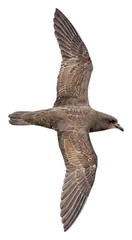 Great-winged PetrelPterodroma macroptera
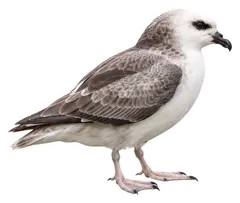 White-headed PetrelPterodroma lessonii
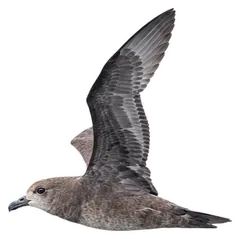 Grey-faced PetrelPterodroma gouldi
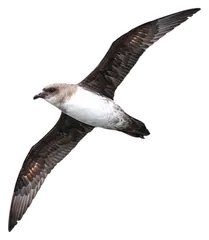 Atlantic PetrelPterodroma incerta
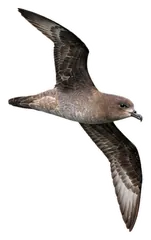 Providence PetrelPterodroma solandri
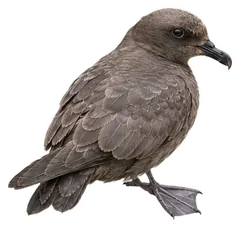 Magenta PetrelPterodroma magentae
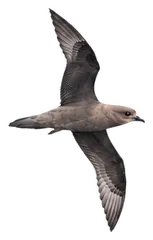 Murphy's PetrelPterodroma ultima
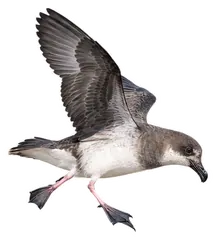 Soft-plumaged PetrelPterodroma mollis
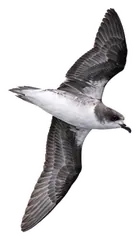 Zino's PetrelPterodroma madeira
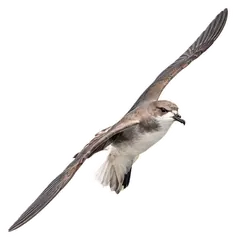 Fea's PetrelPterodroma feae
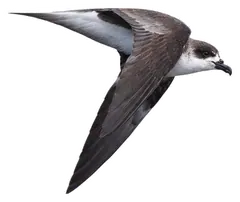 Desertas PetrelPterodroma deserta
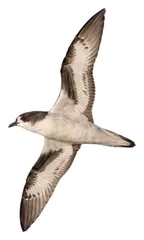 Bermuda PetrelPterodroma cahow
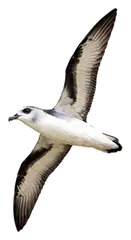
Download illustration
Free to use with credit: “Illustration: Bird Album (birdalbum.com)”. Drawn by AI from a reference photo by mscaus. ↗
Heard it but can't see it? Mingji identifies birds by sound and photo, on your phone.
In other languages
- EnglishBlack-winged Petrel
- 简体中文黑翅圆尾鹱
- 繁體中文黑翅圓尾鸌
- 日本語ハグロシロハラミズナギドリ
- DeutschSchwarzflügel-Sturmvogel
- FrançaisPétrel à ailes noires
- EspañolPetrel alinegro
- Portuguêsfreira-de-asa-negra
- ItalianoPetrello alinere
- NederlandsZwartvleugelstormvogel
- РусскийЧернокрылый тайфунник
- Svenskakragpetrell
- DanskSortvinget Petrel
- Polskipetrel czarnoskrzydły