 Bird Album
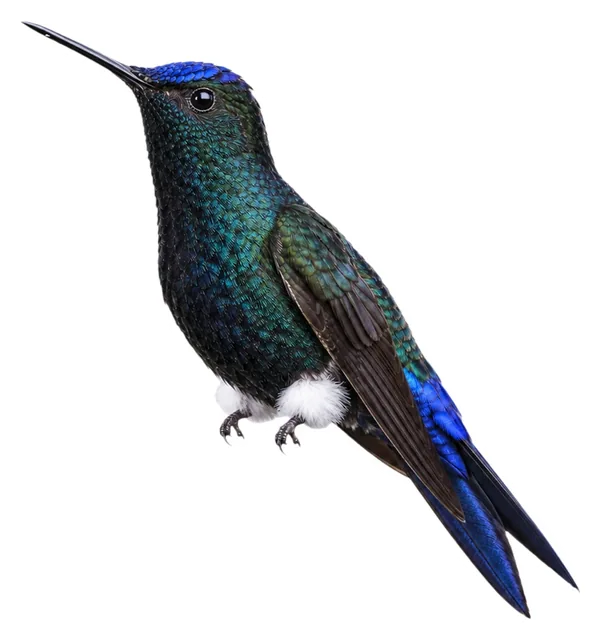
Blue-capped Puffleg
Eriocnemis glaucopoides (d'Orbigny & Lafresnaye, 1838)
9–13 cmLength3.7 gWeight
The blue-capped puffleg (Eriocnemis glaucopoides) is a species of hummingbird in the "brilliants", tribe Heliantheini in subfamily Lesbiinae.
Busiest months: October · Most records: Bolivia, Argentina
Where and when it's recorded

Blue-capped Puffleg has been recorded at 11 of the 8,171 birding hotspots we track, in 2 countries and regions.
Records by month Southern Hemisphere
Where it's recorded most
- Siberia CrossroadsBolivia75 records
- Reserva Natural Privada Eco-Portal de PiedraArgentina60 records
- PN CalileguaArgentina56 records
More places
- AstillerosBolivia39 records
- Tablas Monte AreaBolivia11 records
- PP Potrero de YalaArgentina7 records
- Chapare Region – Miguelito Substation Rd.Bolivia3 records
- TamboBolivia2 records
- CoroicoBolivia2 records
- Old Coroico Rd.Bolivia2 records
Countries and regions with the most records
eBird records via GBIF up to 2024-12-31. A record means someone listed it; more records partly mean more birders, not more birds.
About
The blue-capped puffleg (Eriocnemis glaucopoides) is a species of hummingbird in the "brilliants", tribe Heliantheini in subfamily Lesbiinae. It is found in Argentina and Bolivia.
Excerpt from Wikipedia, CC BY-SA 4.0 · authors · Read more on Wikipedia
Questions
How big is the Blue-capped Puffleg?
The Blue-capped Puffleg is about 9–13 cm long and weighs around 3.7 g.
Where does the Blue-capped Puffleg live?
Its breeding range: South America: central Bolivia to northwestern Argentina. It is most often recorded in Bolivia and Argentina.
When is the best time to see the Blue-capped Puffleg?
At the hotspots we track, it is recorded most in October (Southern Hemisphere).
Is the Blue-capped Puffleg endangered?
The IUCN Red List classifies the Blue-capped Puffleg as Least Concern.
What does the Blue-capped Puffleg eat?
Main food: Nectar.
What family is the Blue-capped Puffleg in?
It belongs to the family Hummingbirds (Trochilidae), order Apodiformes.
At a glance
- Length
- 9–13 cm
- Weight
- 3.7 g
- Habitat
- Towns & farmland
- Diet
- Nectar
- Lifestyle
- Feeds in the air
- Migration
- Resident (barely migrates)
- Conservation
- Least Concern
More measurements
- Wing
- 50 mm
- Tail
- 38 mm
- Bill
- 25 mm
- Tarsus
- 4 mm
Averages from the AVONET dataset; length from field guides where available.
Range
South America: central Bolivia to northwestern Argentina
Breeding range, IOC World Bird List 15.2
Classification
- Order
- Apodiformes
- Family
- Hummingbirds Trochilidae
- Genus
- Eriocnemis
Other birds in the genus Eriocnemis
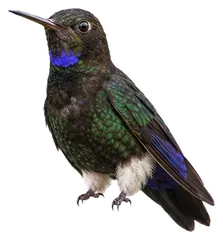 Black-breasted PufflegEriocnemis nigrivestis
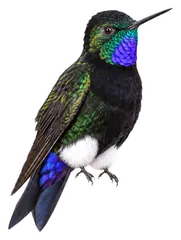 Gorgeted PufflegEriocnemis isabellae
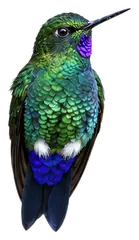 Glowing PufflegEriocnemis vestita
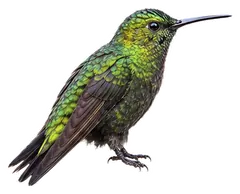 Black-thighed PufflegEriocnemis derbyi
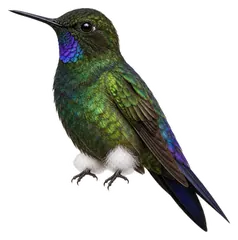 Turquoise-throated PufflegEriocnemis godini
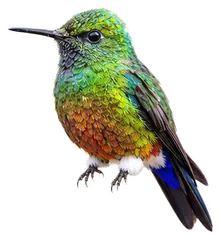 Coppery-bellied PufflegEriocnemis cupreoventris
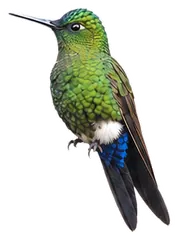 Sapphire-vented PufflegEriocnemis luciani
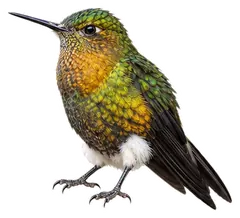 Golden-breasted PufflegEriocnemis mosquera
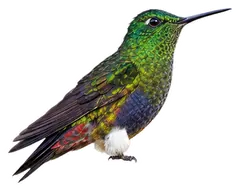 Colorful PufflegEriocnemis mirabilis
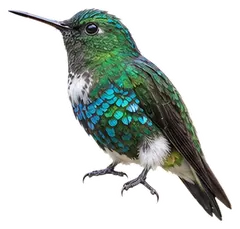 Emerald-bellied PufflegEriocnemis aline
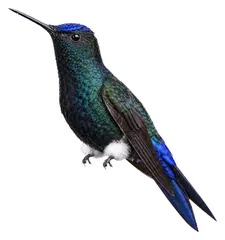
Download illustration
Free to use with credit: “Illustration: Bird Album (birdalbum.com)”. Drawn by AI from reference photos.
Heard it but can't see it? Mingji identifies birds by sound and photo, on your phone.
In other languages
- EnglishBlue-capped Puffleg
- 简体中文蓝顶毛腿蜂鸟
- 繁體中文藍頂鬆腿蜂鳥
- 日本語ズアオワタアシハチドリ
- DeutschBlaustirn-Höschenkolibri
- FrançaisÉrione à front bleu
- EspañolCalzadito frentiazul
- Portuguêscalçudo-de-barrete-azul
- ItalianoFiocchetto capoblu
- NederlandsBlauwkruinpluimbroekje
- РусскийСинешапочный эрион
- Svenskablåpannad dunbena
- DanskBlåpandet Kvastben
- Polskipuchatek modrogłowy