 Bird Album
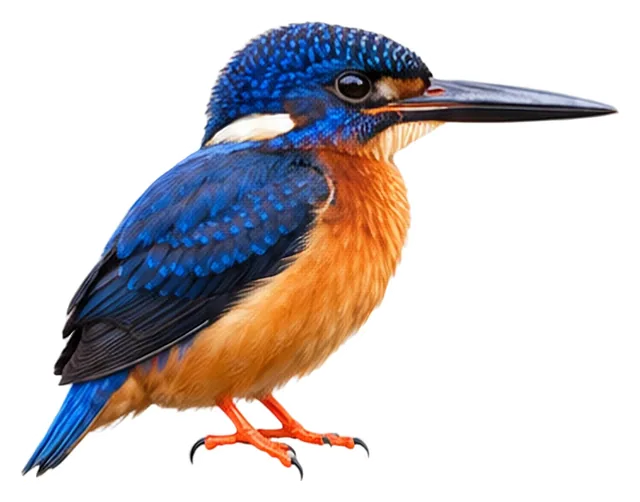
Blue-eared Kingfisher
Alcedo meninting Horsfield, 1821
16 cmLength20 gWeight
The adult resembles Common Kingfisher but has blue ear-coverts and darker, more vivid upperparts.
Busiest months: March and July–August · Most records: Malaysia, Singapore, India
Looks like Common Kingfisher
How to identify
Field marks
- Adult: ear-coverts blue, with no rufous ear stripe
- Upperparts cobalt-blue, deeper and richer
- Underparts richer rufous
- Crown darker
Male, female and young
Adult male has an entirely dark bill; female has a reddish lower mandible; juvenile has rufous ear-coverts, usually mottled throat and upper breast, and a reddish bill with a whitish tip.
Similar species
Where and when it's recorded
Busiest months: March and July–August · Most records: Malaysia, Singapore, India

Blue-eared Kingfisher has been recorded at 264 of the 8,276 birding hotspots we track, in 12 countries and regions.
Records by month Northern Hemisphere
Where it's recorded most
- Sepilok – Rainforest Discovery CenterMalaysia965 records
- Kinabatangan River – SukauMalaysia817 records
- Menanggol RiverMalaysia503 records
More places
- Kinabatangan River – Sukau Rainforest LodgeMalaysia364 records
- Kinabatangan Wildlife SanctuaryMalaysia323 records
- Kebun Raya BogorIndonesia311 records
- Silau TenegangMalaysia228 records
- Kranji MarshSingapore224 records
- Kinabatangan – Sukau LodgesMalaysia216 records
- Hindhede Nature ParkSingapore198 records
Countries and regions with the most records
eBird records via GBIF up to 2024-12-31. A record means someone listed it; more records partly mean more birders, not more birds.
About
The blue-eared kingfisher (Alcedo meninting) is found in Asia, ranging across the Indian subcontinent and Southeast Asia. It is found mainly in dense shaded forests where it hunts in small streams. It is darker crowned, with darker rufous underparts and lacking the rufous ear stripe of the common kingfisher (Alcedo atthis) which is found in more open habitats.
Excerpt from Wikipedia, CC BY-SA 4.0 · authors · Read more on Wikipedia
Questions
How big is the Blue-eared Kingfisher?
The Blue-eared Kingfisher is about 16 cm long and weighs around 20 g.
Where does the Blue-eared Kingfisher live?
Its breeding range: Oriental, Australasia: widespread. It is most often recorded in Malaysia, Singapore and India.
When is the best time to see the Blue-eared Kingfisher?
At the hotspots we track, it is recorded most in March, July and August (Northern Hemisphere).
Is the Blue-eared Kingfisher endangered?
The IUCN Red List classifies the Blue-eared Kingfisher as Least Concern.
What does the Blue-eared Kingfisher eat?
Main food: Fish, shrimp & shellfish.
What family is the Blue-eared Kingfisher in?
It belongs to the family Kingfishers (Alcedinidae), order Coraciiformes.
At a glance
- Length
- 16 cm
- Weight
- 20 g
- Habitat
- Rivers & streams
- Diet
- Fish, shrimp & shellfish
- Lifestyle
- Perches in trees
- Migration
- Resident (barely migrates)
- Conservation
- Least Concern
More measurements
- Wing
- 65 mm
- Tail
- 28 mm
- Bill
- 42 mm
- Tarsus
- 9 mm
Averages from the AVONET dataset; length from field guides where available.
Range
Oriental, Australasia: widespread
Breeding range, IOC World Bird List 15.2
Classification
- Order
- Coraciiformes
- Family
- Kingfishers Alcedinidae
- Genus
- Alcedo
Other birds in the genus Alcedo
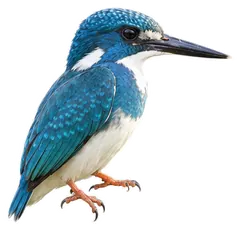 Cerulean KingfisherAlcedo coerulescens
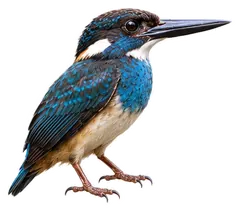 Malaysian Blue-banded KingfisherAlcedo peninsulae
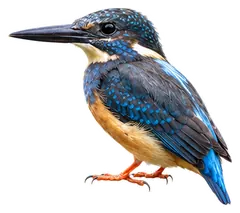 Javan Blue-banded KingfisherAlcedo euryzona
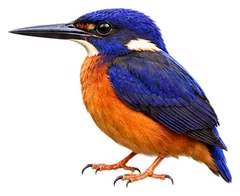 Shining-blue KingfisherAlcedo quadribrachys
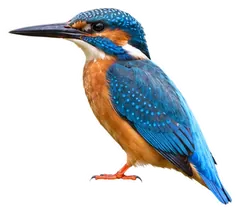 Common KingfisherAlcedo atthis
 Half-collared KingfisherAlcedo semitorquata
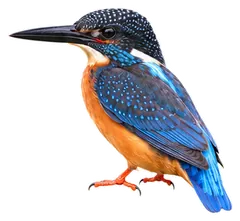 Blyth's KingfisherAlcedo hercules
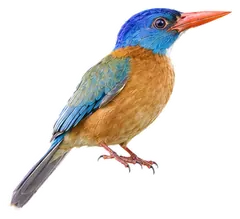 Green-backed KingfisherActenoides monachus
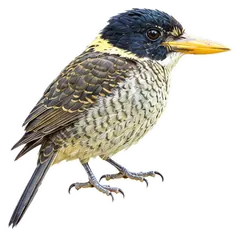 Scaly-breasted KingfisherActenoides princeps
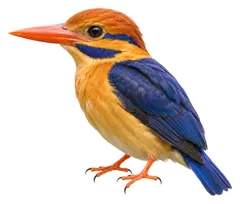 Moustached KingfisherActenoides bougainvillei
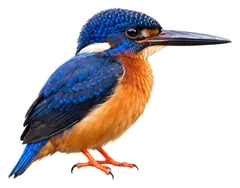
Download illustration
Free to use with credit: “Illustration: Bird Album (birdalbum.com)”. Drawn by AI from a reference photo by Evan Hessels. ↗
Heard it but can't see it? Mingji identifies birds by sound and photo, on your phone.
In other languages
- EnglishBlue-eared Kingfisher
- 简体中文蓝耳翠鸟
- 繁體中文藍耳翠鳥
- 日本語ルリカワセミ
- DeutschMenintingeisvogel
- FrançaisMartin-pêcheur méninting
- EspañolMartín pescador meninting
- Portuguêsguarda-rios-oriental
- ItalianoMartin pescatore guanceblu
- NederlandsMenintingijsvogel
- РусскийСинеухий зимородок
- Svenskamenintingkungsfiskare
- DanskBlåøret Isfugl
- Polskizimorodek granatowy