 Bird Album
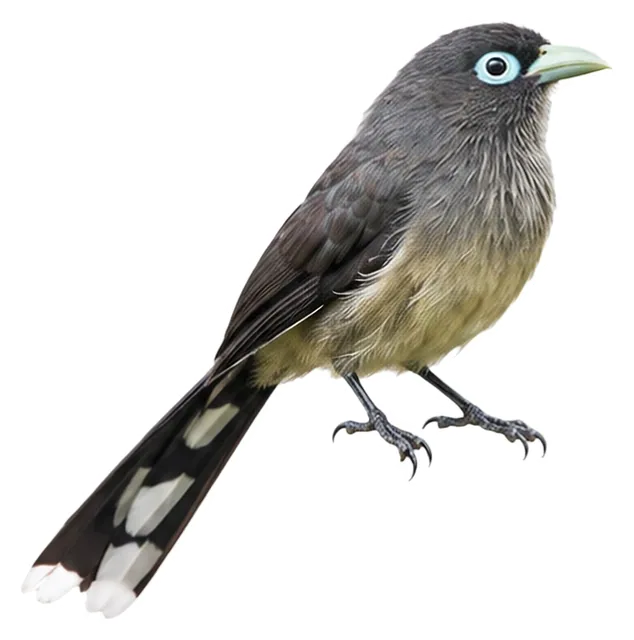
Blue-faced Malkoha
Phaenicophaeus viridirostris (Jerdon, 1840)
67 gWeight
The blue-faced malkoha (Phaenicophaeus viridirostris) or small green-billed malkoha, is a non-parasitic cuckoo found in the scrub and deciduous forests of peninsular India and Sri Lanka.
Busiest months: December–February · Most records: India, Sri Lanka
Where and when it's recorded

Blue-faced Malkoha has been recorded at 115 of the 8,171 birding hotspots we track, in 2 countries and regions.
Records by month Northern Hemisphere
Where it's recorded most
- Valley SchoolIndia1,669 records
- Salim Ali Centre for Ornithology and Natural HistoryIndia1,017 records
- GKVK CampusIndia843 records
More places
- Ankasamudra Bird SanctuaryIndia557 records
- Hessaraghatta KereIndia475 records
- Yala National ParkSri Lanka473 records
- Manjeera Wildlife SanctuaryIndia443 records
- Rishi Valley – School CampusIndia401 records
- Eshwar Nagar, ManipalIndia389 records
- Madayi ParaIndia383 records
Countries and regions with the most records
eBird records via GBIF up to 2024-12-31. A record means someone listed it; more records partly mean more birders, not more birds.
About
The blue-faced malkoha (Phaenicophaeus viridirostris) or small green-billed malkoha, is a non-parasitic cuckoo found in the scrub and deciduous forests of peninsular India and Sri Lanka. It has a waxy, dark, blue-grey plumage on its upperparts and has a long tail with graduated white-tipped feathers. The throat and chin are dark with spiny pale feathers that are branched.
Excerpt from Wikipedia, CC BY-SA 4.0 · authors · Read more on Wikipedia
Questions
How big is the Blue-faced Malkoha?
The Blue-faced Malkoha weighs around 67 g.
Where does the Blue-faced Malkoha live?
Its breeding range: Oriental: southern India and Sri Lanka. It is most often recorded in India and Sri Lanka.
When is the best time to see the Blue-faced Malkoha?
At the hotspots we track, it is recorded most in January, February and December (Northern Hemisphere).
Is the Blue-faced Malkoha endangered?
The IUCN Red List classifies the Blue-faced Malkoha as Least Concern.
What does the Blue-faced Malkoha eat?
Main food: Insects & other invertebrates.
What family is the Blue-faced Malkoha in?
It belongs to the family Cuckoos (Cuculidae), order Cuculiformes.
At a glance
- Weight
- 67 g
- Habitat
- Woodland
- Diet
- Insects & other invertebrates
- Lifestyle
- Perches in trees
- Migration
- Resident (barely migrates)
- Conservation
- Least Concern
More measurements
- Wing
- 136 mm
- Tail
- 226 mm
- Bill
- 32 mm
- Tarsus
- 34 mm
Averages from the AVONET dataset; length from field guides where available.
Range
Oriental: southern India and Sri Lanka
Breeding range, IOC World Bird List 15.2
Classification
- Order
- Cuculiformes
- Family
- Cuckoos Cuculidae
- Genus
- Phaenicophaeus
Other birds in the genus Phaenicophaeus
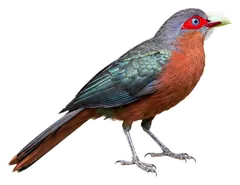 Chestnut-breasted MalkohaPhaenicophaeus curvirostris
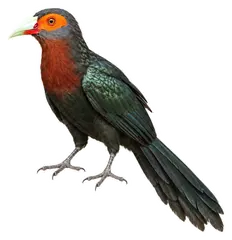 Mentawai MalkohaPhaenicophaeus oeneicaudus
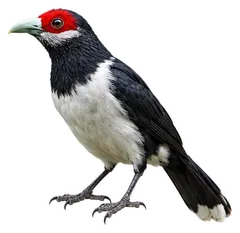 Red-faced MalkohaPhaenicophaeus pyrrhocephalus
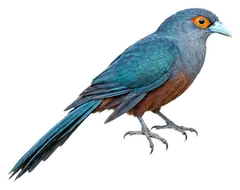 Chestnut-bellied MalkohaPhaenicophaeus sumatranus
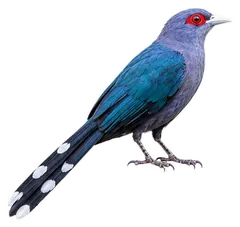 Black-bellied MalkohaPhaenicophaeus diardi
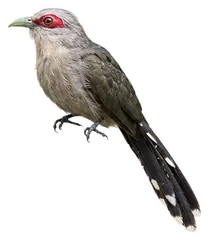 Green-billed MalkohaPhaenicophaeus tristis
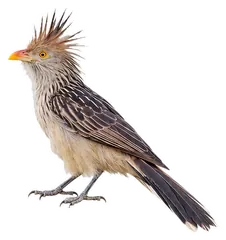 Guira CuckooGuira guira
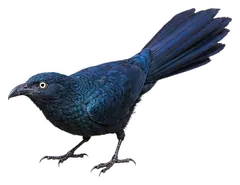 Greater AniCrotophaga major
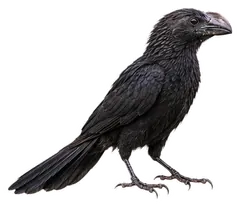 Smooth-billed AniCrotophaga ani
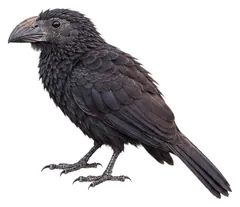 Groove-billed AniCrotophaga sulcirostris
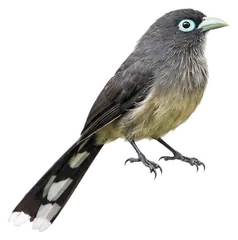
Download illustration
Free to use with credit: “Illustration: Bird Album (birdalbum.com)”. Drawn by AI from reference photos. ↗
Heard it but can't see it? Mingji identifies birds by sound and photo, on your phone.
In other languages
- EnglishBlue-faced Malkoha
- 简体中文小绿嘴地鹃
- 繁體中文藍臉地鵑
- 日本語アオメクロバンケンモドキ
- DeutschBlauringkuckuck
- FrançaisMalcoha à bec vert
- EspañolMalcoha cariazul
- Portuguêsmalcoa-de-faces-azuis
- ItalianoMalcoa facciablu
- NederlandsKleine Groensnavelmalkoha
- РусскийСинеглазая малкоа
- Svenskablåmaskad malkoha
- DanskBrillemalkoha
- Polskikukuła niebieskooka