 Bird Album
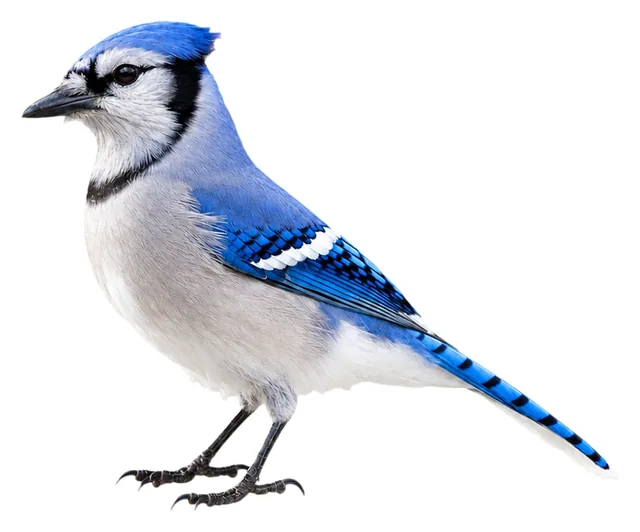
Blue Jay
Cyanocitta cristata (Linnaeus, 1758)
22–30 cmLength34–43 cmWingspan88 gWeight
It has a blue crest that can be raised or lowered and a single black collar around the neck.
Busiest months: May · Most records: United States, Canada, St. Pierre & Miquelon
How to identify
Field marks
- Blue crest on the crown
- Black collar extends to the sides of the face
- Tail feathers blue with black barring
- Bill, legs and eyes all black
Male, female and young
Sexes almost identical in appearance; male slightly larger.
Voice
Loud, shrill alarm call, somewhat like a gull's call.
Where and when it's recorded

Blue Jay has been recorded at 538 of the 8,276 birding hotspots we track, in 3 countries and regions.
Records by month Northern Hemisphere
Where it's recorded most
- Central ParkUnited States37,958 records
- Prospect ParkUnited States35,640 records
- Parker River NWRUnited States21,731 records
More places
- Point Pelee National ParkCanada20,945 records
- Mount Auburn CemeteryUnited States20,608 records
- Central Park – The RambleUnited States18,524 records
- Magee Marsh – BoardwalkUnited States17,794 records
- Green-Wood Cemetery, BrooklynUnited States15,498 records
- RNF du Cap-TourmenteCanada14,436 records
- Cape Island – Higbee Beach WMAUnited States14,126 records
Countries and regions with the most records
eBird records via GBIF up to 2024-12-31. A record means someone listed it; more records partly mean more birders, not more birds.
About
The blue jay (Cyanocitta cristata) is a passerine bird in the family Corvidae, native to eastern North America. It lives in most of the eastern and central United States; some eastern populations may be migratory. Resident populations are also in Newfoundland, Canada; breeding populations are found across southern Canada.
Excerpt from Wikipedia, CC BY-SA 4.0 · authors · Read more on Wikipedia
Questions
How big is the Blue Jay?
The Blue Jay is about 22–30 cm long, with a wingspan of 34–43 cm and weighs around 88 g.
Where does the Blue Jay live?
Its breeding range: North America: central, eastern. It is most often recorded in United States, Canada and St. Pierre & Miquelon.
When is the best time to see the Blue Jay?
At the hotspots we track, it is recorded most in May (Northern Hemisphere).
Is the Blue Jay endangered?
The IUCN Red List classifies the Blue Jay as Least Concern.
What does the Blue Jay eat?
Main food: Omnivore.
What family is the Blue Jay in?
It belongs to the family Crows, Jays (Corvidae), order Passerines (Passeriformes).
At a glance
- Length
- 22–30 cm
- Wingspan
- 34–43 cm
- Weight
- 88 g
- Habitat
- Woodland
- Diet
- Omnivore
- Lifestyle
- Active on the ground
- Migration
- Resident (barely migrates)
- Conservation
- Least Concern
More measurements
- Wing
- 130 mm
- Tail
- 121 mm
- Bill
- 30 mm
- Tarsus
- 35 mm
Averages from the AVONET dataset; length from field guides where available.
Range
North America: central, eastern
Breeding range, IOC World Bird List 15.2
Classification
- Order
- Passerines Passeriformes
- Family
- Crows, Jays Corvidae
- Genus
- Cyanocitta
Other birds in the genus Cyanocitta
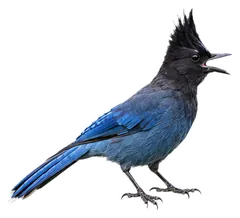 Steller's JayCyanocitta stelleri
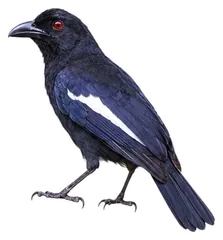 Malayan Black MagpiePlatysmurus leucopterus
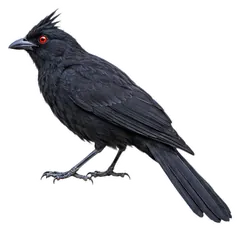 Bornean Black MagpiePlatysmurus aterrimus
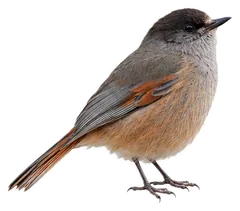 Siberian JayPerisoreus infaustus
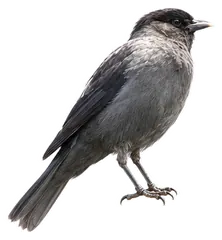 Sichuan JayPerisoreus internigrans
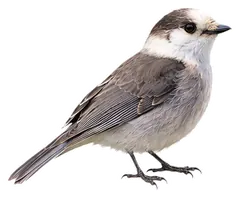 Canada JayPerisoreus canadensis
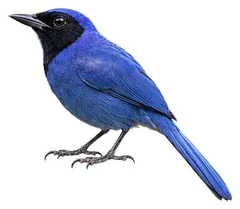 Black-collared JayCyanolyca armillata
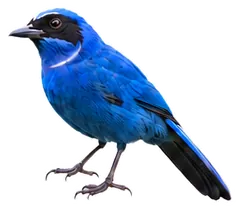 White-collared JayCyanolyca viridicyanus
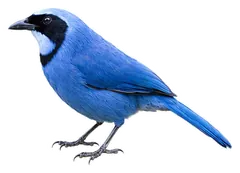 Turquoise JayCyanolyca turcosa
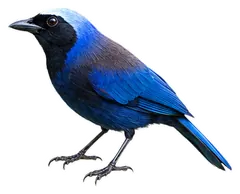 Beautiful JayCyanolyca pulchra
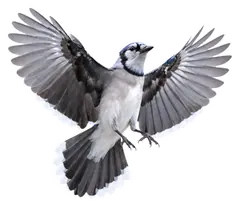
Download illustration
Free to use with credit: “Illustration: Bird Album (birdalbum.com)”. Drawn by AI from a reference photo by Blake Ross. ↗
Heard it but can't see it? Mingji identifies birds by sound and photo, on your phone.