 Bird Album
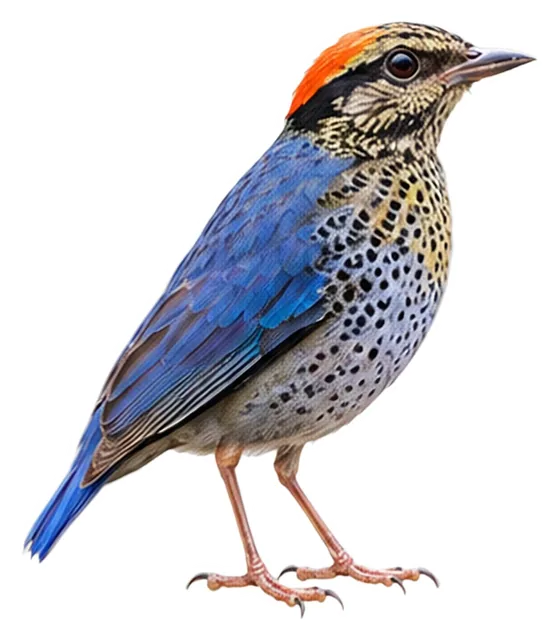
Blue Pitta
Hydrornis cyaneus (Blyth, 1843)
23 cmLength109 gWeight
With a yellow crown and orange nape, it searches alone for small insects on the woodland floor.
Busiest months: February · Most records: Thailand, Vietnam, Cambodia
How to identify
Field marks
- Forehead and crown yellow, nape bright orange
- Thick black stripe through the eye
- Male has blue back and tail, with black spots on the pale blue breast
- Bill dark gray, legs and feet pale pink
Male, female and young
The male has a blue back and pale blue breast; the female has a gray back and pale gray breast, and both have black spots on the breast.
Voice
A drawn-out “pleoow-whit” or “choocoo-whip”, ending abruptly.
Where and when it's recorded
Busiest months: February · Most records: Thailand, Vietnam, Cambodia

Blue Pitta has been recorded at 60 of the 8,276 birding hotspots we track, in 3 countries and regions.
Records by month Northern Hemisphere
Where it's recorded most
- Deo Nui San passVietnam337 records
- Khao Yai NPThailand293 records
- Taksin Maharat NP – headquarters vicinityThailand190 records
More places
- Kaeng Krachan NP – stream crossings 1–3Thailand186 records
- Kaeng Krachan NPThailand186 records
- Phnom AuralCambodia129 records
- Khao Yai NP – Khao Khieo Rd. after the junctionThailand98 records
- Kaeng Krachan NP – Dab Toon's hideThailand81 records
- Dinhthinh( Tim) (12,1024,108,3599)Vietnam73 records
- Khao Yai NP – headquarters vicinityThailand71 records
Countries and regions with the most records
eBird records via GBIF up to 2024-12-31. A record means someone listed it; more records partly mean more birders, not more birds.
About
The blue pitta (Hydrornis cyaneus) is a species of bird in the family Pittidae found in the northeastern Indian subcontinent, southern China, and Indochina. It typically lives in moist forests but can also inhabit dry forest. It is an unobtrusive, solitary bird which feeds by foraging on the ground for insects and other small invertebrates.
Excerpt from Wikipedia, CC BY-SA 4.0 · authors · Read more on Wikipedia
Questions
How big is the Blue Pitta?
The Blue Pitta is about 23 cm long and weighs around 109 g.
Where does the Blue Pitta live?
Its breeding range: Oriental: Southeast Asia. It is most often recorded in Thailand, Vietnam and Cambodia.
When is the best time to see the Blue Pitta?
At the hotspots we track, it is recorded most in February (Northern Hemisphere).
Is the Blue Pitta endangered?
The IUCN Red List classifies the Blue Pitta as Least Concern.
What does the Blue Pitta eat?
Main food: Insects & other invertebrates.
What family is the Blue Pitta in?
It belongs to the family Pittas (Pittidae), order Passerines (Passeriformes).
At a glance
- Length
- 23 cm
- Weight
- 109 g
- Habitat
- Forest
- Diet
- Insects & other invertebrates
- Lifestyle
- Active on the ground
- Migration
- Resident (barely migrates)
- Conservation
- Least Concern
More measurements
- Wing
- 110 mm
- Tail
- 54 mm
- Bill
- 26 mm
- Tarsus
- 42 mm
Averages from the AVONET dataset; length from field guides where available.
Range
Oriental: Southeast Asia
Breeding range, IOC World Bird List 15.2
Subspecies · 1
- Hydrornis cyaneus cyaneus ne India, e Bangladesh and Myanmar to s China, Thailand, ne Laos and n, c Vietnam
Classification
- Order
- Passerines Passeriformes
- Family
- Pittas Pittidae
- Genus
- Hydrornis
Other birds in the genus Hydrornis
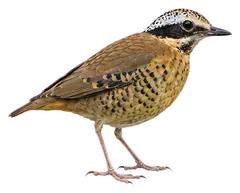 Eared PittaHydrornis phayrei
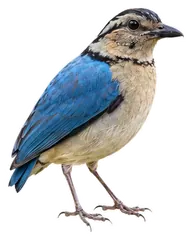 Giant PittaHydrornis caeruleus
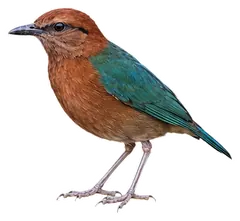 Rusty-naped PittaHydrornis oatesi
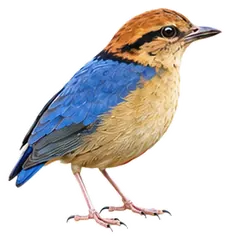 Schneider's PittaHydrornis schneideri
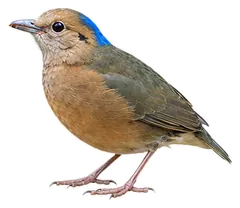 Blue-naped PittaHydrornis nipalensis
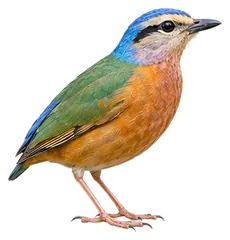 Blue-rumped PittaHydrornis soror
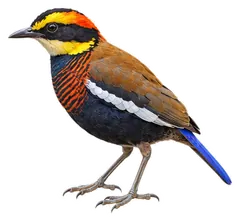 Malayan Banded PittaHydrornis irena
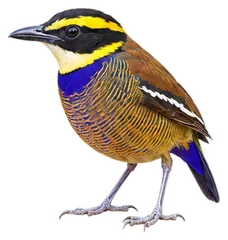 Javan Banded PittaHydrornis guajanus
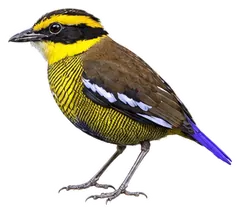 Bornean Banded PittaHydrornis schwaneri
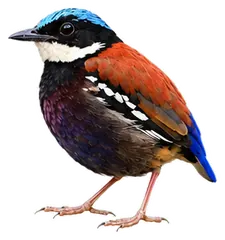 Blue-headed PittaHydrornis baudii
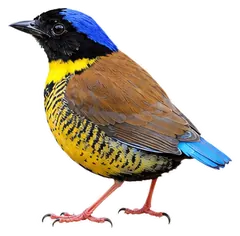 Gurney's PittaHydrornis gurneyi
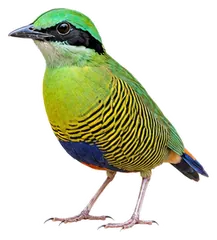 Bar-bellied PittaHydrornis elliotii
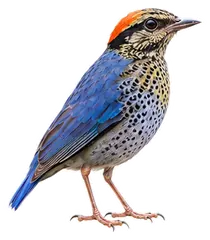
Download illustration
Free to use with credit: “Illustration: Bird Album (birdalbum.com)”. Drawn by AI from a reference photo by Mike Rose. ↗
Heard it but can't see it? Mingji identifies birds by sound and photo, on your phone.