 Bird Album
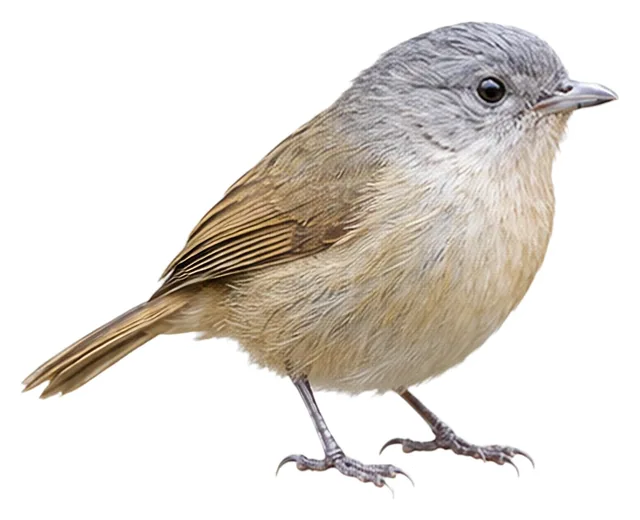
Brown-cheeked Fulvetta
Alcippe poioicephala (Jerdon, 1841)
≈15 cmLength21 gWeight
This inconspicuous gray-brown bird gives repeated loud whistles in the morning and afternoon but is difficult to see.
Busiest months: February–March · Most records: India, Thailand, China
How to identify
Field marks
- Gray crown
- Brown wings and buff underparts
- Gray bill, short and weak, with a curved upper mandible
- Some subspecies have dark stripes behind the eyes that meet at the nape
Male, female and young
Sexes indistinguishable.
Voice
Loud, multisyllabic whistles in the morning and afternoon, especially loud at dawn.
Where and when it's recorded

Brown-cheeked Fulvetta has been recorded at 112 of the 8,171 birding hotspots we track, in 6 countries and regions.
Records by month Northern Hemisphere
Where it's recorded most
- Kanha NP – Mukki ZoneIndia6,051 records
- Kanha NP – Kanha ZoneIndia1,092 records
- Bondla Wildlife SanctuaryIndia913 records
More places
- Kanha NP – Kisli ZoneIndia748 records
- Taksin Maharat NP – headquarters vicinityThailand571 records
- Kanha Tiger ReserveIndia515 records
- Thattekad Bird Sanctuary – UrulanthanniIndia410 records
- Kaeng Krachan NPThailand383 records
- Kaeng Krachan NP – Lung Sin's hideThailand332 records
- Chiang Dao Wildlife Sanctuary – Wat Tham Pha PlongThailand308 records
Countries and regions with the most records
eBird records via GBIF up to 2024-12-31. A record means someone listed it; more records partly mean more birders, not more birds.
About
The brown-cheeked fulvetta (Alcippe poioicephala) is a babbler-like bird belonging to the family Leiothrichidae found in the forests of South and Southeast Asia. It was formerly called the quaker babbler in India and common nun babbler in Malaya. They forage on trees for insects, sometimes hanging from the branches in a tit-like manner, and visiting flowers for nectar.
Excerpt from Wikipedia, CC BY-SA 4.0 · authors · Read more on Wikipedia
Questions
How big is the Brown-cheeked Fulvetta?
The Brown-cheeked Fulvetta is about ≈15 cm long and weighs around 21 g.
Where does the Brown-cheeked Fulvetta live?
Its breeding range: Oriental: widespread. It is most often recorded in India, Thailand and China.
When is the best time to see the Brown-cheeked Fulvetta?
At the hotspots we track, it is recorded most in February and March (Northern Hemisphere).
Is the Brown-cheeked Fulvetta endangered?
The IUCN Red List classifies the Brown-cheeked Fulvetta as Least Concern.
What does the Brown-cheeked Fulvetta eat?
Main food: Insects & other invertebrates.
What family is the Brown-cheeked Fulvetta in?
It belongs to the family Laughingthrushes & Allies (Leiothrichidae), order Passerines (Passeriformes).
At a glance
- Length
- ≈15 cm
- Weight
- 21 g
- Habitat
- Forest
- Diet
- Insects & other invertebrates
- Lifestyle
- Perches in trees
- Migration
- Resident (barely migrates)
- Conservation
- Least Concern
More measurements
- Wing
- 70 mm
- Tail
- 66 mm
- Bill
- 15 mm
- Tarsus
- 21 mm
Averages from the AVONET dataset; length from field guides where available.
Range
Oriental: widespread
Breeding range, IOC World Bird List 15.2
Subspecies · 1
- Alcippe poioicephala alearis s China and n Thailand to n Indochina
Classification
- Order
- Passerines Passeriformes
- Family
- Laughingthrushes & Allies Leiothrichidae
- Genus
- Alcippe
Other birds in the genus Alcippe
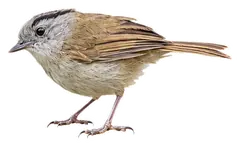 Black-browed FulvettaAlcippe grotei
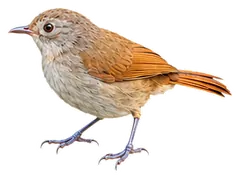 Brown FulvettaAlcippe brunneicauda
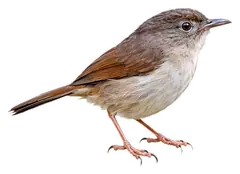 Javan FulvettaAlcippe pyrrhoptera
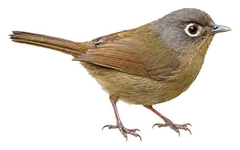 Nepal FulvettaAlcippe nipalensis
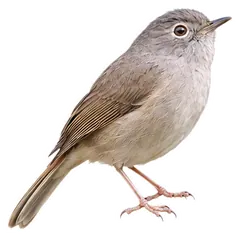 David's FulvettaAlcippe davidi
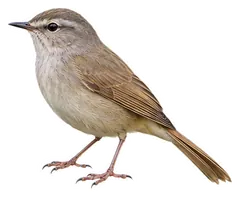 Huet's FulvettaAlcippe hueti
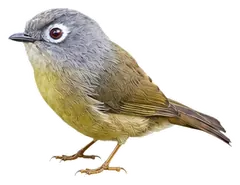 Grey-cheeked FulvettaAlcippe morrisonia
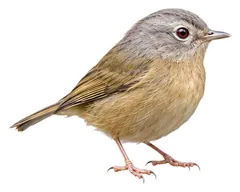 Yunnan FulvettaAlcippe fratercula
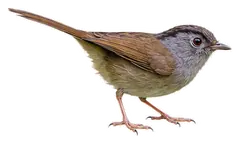 Mountain FulvettaAlcippe peracensis
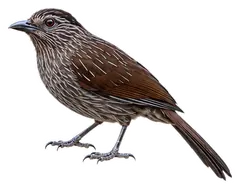 Striated LaughingthrushGrammatoptila striata
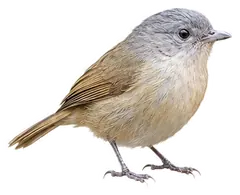
Download illustration
Free to use with credit: “Illustration: Bird Album (birdalbum.com)”. Drawn by AI from a reference photo by JJ Harrison (https://www.jjharrison.com.au/). ↗

Heard it but can't see it? Mingji identifies birds by sound and photo, on your phone.
In other languages
- EnglishBrown-cheeked Fulvetta
- 简体中文褐脸雀鹛
- 繁體中文褐臉雀鶥
- 日本語ハイガシラチメドリ
- DeutschGraukopf-Zweigdrossling
- FrançaisAlcippe à joues brunes
- EspañolFulveta cariparda
- Portuguêsfulveta-de-faces-morenas
- ItalianoFulvetta guancebrune
- NederlandsBruinwangalcippe
- РусскийСерошапочная альциппа
- Svenskaockrabukig alkippa
- DanskBrunkindet Fulvetta
- Polskisikornik duży