 Bird Album
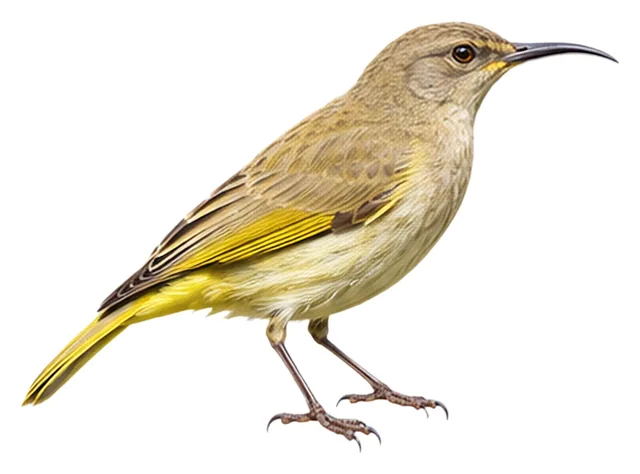
Brown Honeyeater
Lichmera indistincta (Vigors & Horsfield, 1827)
11 gWeight
The brown honeyeater (Lichmera indistincta) is a species of bird in the family Meliphagidae.
Busiest months: July–October · Most records: Australia, Indonesia, Timor-Leste
Where and when it's recorded
Busiest months: July–October · Most records: Australia, Indonesia, Timor-Leste

Brown Honeyeater has been recorded at 151 of the 8,276 birding hotspots we track, in 3 countries and regions.
Records by month Southern Hemisphere
Where it's recorded most
- Oxley Creek CommonAustralia6,206 records
- Sandy Camp Road WetlandsAustralia5,811 records
- Broome Bird ObservatoryAustralia4,371 records
More places
- Carlyle Gardens Retirement Resort, TownsvilleAustralia3,097 records
- Townsville Town Common Conservation ParkAustralia3,074 records
- Herdsman LakeAustralia2,530 records
- Lake Samsonvale – Golds Scrub LaneAustralia2,411 records
- Cairns EsplanadeAustralia2,396 records
- Cattana WetlandsAustralia2,202 records
- Tinchi Tamba Wetlands ReserveAustralia1,813 records
Countries and regions with the most records
eBird records via GBIF up to 2024-12-31. A record means someone listed it; more records partly mean more birders, not more birds.
About
The brown honeyeater (Lichmera indistincta) is a species of bird in the family Meliphagidae. It belongs to the honeyeaters, a group of birds which have highly developed brush-tipped tongues adapted for nectar feeding. Honeyeaters are found mainly in Australia, New Guinea, and parts of Indonesia, but the brown honeyeater is unique in that it also occurs on the island of Bali, making it the only honeyeater to be found west of the Wallace Line, the biogeographical boundary between the Australian-Papuan and Oriental zoogeographical regions.
Excerpt from Wikipedia, CC BY-SA 4.0 · authors · Read more on Wikipedia
Questions
How big is the Brown Honeyeater?
The Brown Honeyeater weighs around 11 g.
Where does the Brown Honeyeater live?
Its breeding range: Australasia: Bali, Lesser Sundas, Aru Islands, south-central New Guinea and western, northern, central, eastern Australia. It is most often recorded in Australia, Indonesia and Timor-Leste.
When is the best time to see the Brown Honeyeater?
At the hotspots we track, it is recorded most in July, August, September and October (Southern Hemisphere).
Is the Brown Honeyeater endangered?
The IUCN Red List classifies the Brown Honeyeater as Least Concern.
What does the Brown Honeyeater eat?
Main food: Nectar.
What family is the Brown Honeyeater in?
It belongs to the family Honeyeaters (Meliphagidae), order Passerines (Passeriformes).
At a glance
- Weight
- 11 g
- Habitat
- Woodland
- Diet
- Nectar
- Lifestyle
- Perches in trees
- Migration
- Resident (barely migrates)
- Conservation
- Least Concern
More measurements
- Wing
- 66 mm
- Tail
- 50 mm
- Bill
- 18 mm
- Tarsus
- 16 mm
Averages from the AVONET dataset; length from field guides where available.
Range
Australasia: Bali, Lesser Sundas, Aru Islands, south-central New Guinea and western, northern, central, eastern Australia
Breeding range, IOC World Bird List 15.2
Classification
- Order
- Passerines Passeriformes
- Family
- Honeyeaters Meliphagidae
- Genus
- Lichmera
Other birds in the genus Lichmera
 Olive HoneyeaterLichmera argentauris
 Grey-eared HoneyeaterLichmera incana
 Silver-eared HoneyeaterLichmera alboauricularis
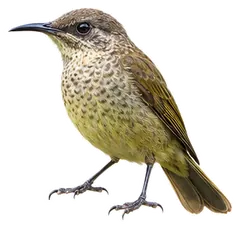 Scaly-breasted HoneyeaterLichmera squamata
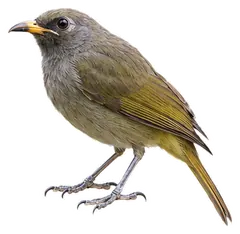 Buru HoneyeaterLichmera deningeri
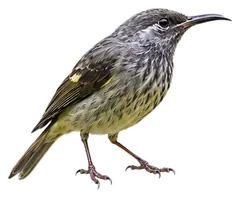 Seram HoneyeaterLichmera monticola
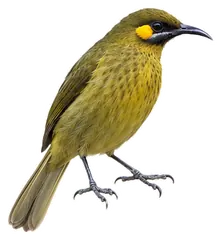 Flame-eared HoneyeaterLichmera flavicans
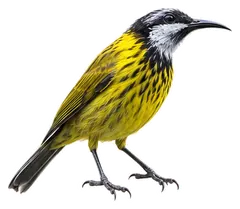 Black-necklaced HoneyeaterLichmera notabilis
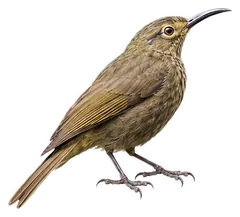 Dark-eared MyzaMyza celebensis
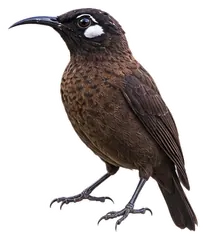 White-eared MyzaMyza sarasinorum
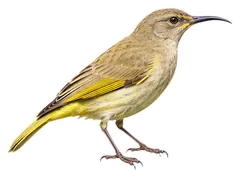
Download illustration
Free to use with credit: “Illustration: Bird Album (birdalbum.com)”. Drawn by AI from a reference photo by Mark Ayers. ↗
Heard it but can't see it? Mingji identifies birds by sound and photo, on your phone.