 Bird Album
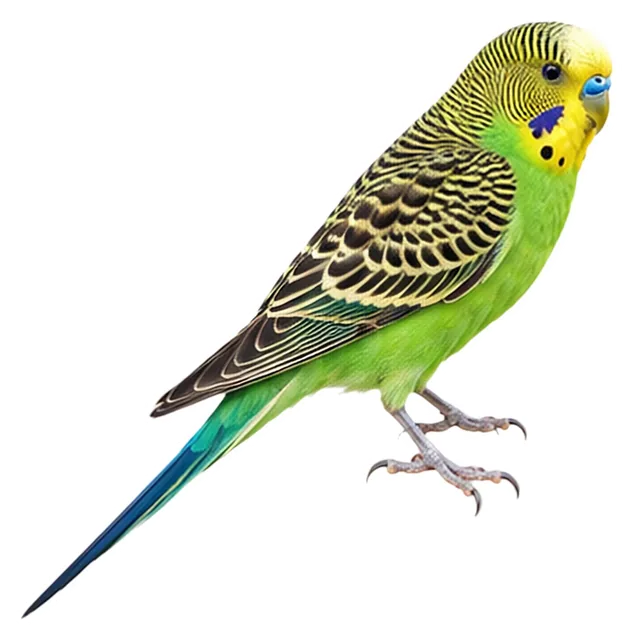
Budgerigar
Melopsittacus undulatus (Shaw, 1805)
18 cmLength25 cmWingspan29 gWeight
Wild adults have a green body and yellow face, with black wavy markings across the nape, back and wings.
Busiest months: May–June and October · Most records: Australia, United States, China
How to identify
Field marks
- Wild adults have pale green body, yellow forehead and face
- Wild birds have black wavy markings on nape, back and wings
- Wild birds have blue-violet cheeks and black spots at sides of throat
- Wild birds have blue tail, with yellow patches on outer tail feathers
Male, female and young
Adult males usually have a blue cere, except in some color morphs; females usually have a pale brown or white cere in the non-breeding season and a brown cere in the breeding season.
Where and when it's recorded

Budgerigar has been recorded at 419 of the 8,171 birding hotspots we track, in 53 countries and regions.
Records by month Southern Hemisphere
Where it's recorded most
- Bowra Wildlife SanctuaryAustralia1,528 records
- Alice Springs Sewage PondsAustralia315 records
- Broome Bird ObservatoryAustralia315 records
More places
- Goschen Bushland ReserveAustralia309 records
- Glendale Recharge PondsUnited States107 records
- Cumberland DamAustralia89 records
- Los Angeles River – Willow St.United States77 records
- Taylors LagoonAustralia67 records
- Crab Creek MangrovesAustralia55 records
- Hattah-Kulkyne National ParkAustralia51 records
Countries and regions with the most records
eBird records via GBIF up to 2024-12-31. A record means someone listed it; more records partly mean more birders, not more birds.
About
The budgerigar, also known as the common parakeet, shell parakeet or budgie, is a small, long-tailed, seed-eating parrot native to Australia. Budgies are bred in captivity with colouring of blues, whites, yellows, greys, and even with small crests. Juveniles and chicks are monomorphic (the sexes are visually indistinguishable), while adults are told apart by their cere colouring and their behaviour.
Excerpt from Wikipedia, CC BY-SA 4.0 · authors · Read more on Wikipedia
Questions
How big is the Budgerigar?
The Budgerigar is about 18 cm long, with a wingspan of 25 cm and weighs around 29 g.
Where does the Budgerigar live?
Its breeding range: Australasia: Australia (except northern, eastern, southern, Tasmania). It is most often recorded in Australia, United States and China.
When is the best time to see the Budgerigar?
At the hotspots we track, it is recorded most in May, June and October (Southern Hemisphere).
Is the Budgerigar endangered?
The IUCN Red List classifies the Budgerigar as Least Concern.
What does the Budgerigar eat?
Main food: Seeds.
What family is the Budgerigar in?
It belongs to the family Old World Parrots (Psittaculidae), order Parrot (Psittaciformes).
At a glance
- Length
- 18 cm
- Wingspan
- 25 cm
- Weight
- 29 g
- Habitat
- Woodland
- Diet
- Seeds
- Lifestyle
- Varied
- Migration
- Partial migrant
- Conservation
- Least Concern
More measurements
- Wing
- 95 mm
- Tail
- 93 mm
- Bill
- 13 mm
- Tarsus
- 12 mm
Averages from the AVONET dataset; length from field guides where available.
Range
Australasia: Australia (except northern, eastern, southern, Tasmania)
Breeding range, IOC World Bird List 15.2
Classification
- Order
- Parrot Psittaciformes
- Family
- Old World Parrots Psittaculidae
- Genus
- Melopsittacus
More from the family Old World Parrots
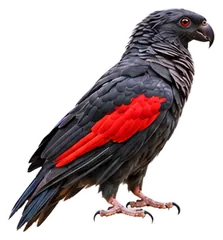 Pesquet's ParrotPsittrichas fulgidus
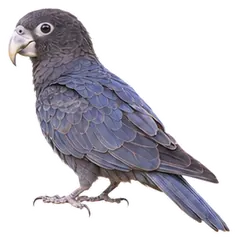 Greater Vasa ParrotCoracopsis vasa
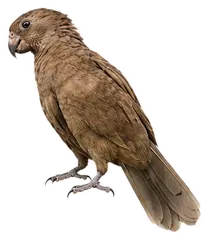 Seychelles Black ParrotCoracopsis barklyi
 Comoro Black ParrotCoracopsis sibilans
 Lesser Vasa ParrotCoracopsis nigra
 Yellow-capped Pygmy ParrotMicropsitta keiensis
 Geelvink Pygmy ParrotMicropsitta geelvinkiana
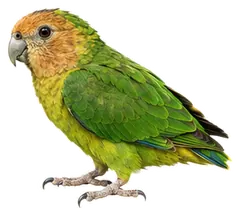 Buff-faced Pygmy ParrotMicropsitta pusio
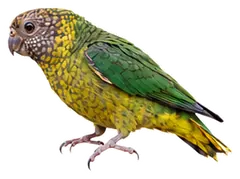 Meek's Pygmy ParrotMicropsitta meeki
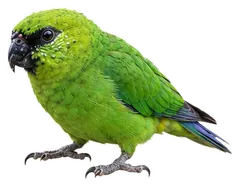 Finsch's Pygmy ParrotMicropsitta finschii
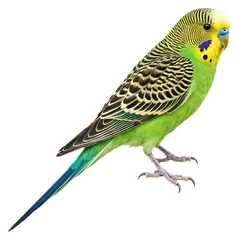
Download illustration
Free to use with credit: “Illustration: Bird Album (birdalbum.com)”. Drawn by AI from a reference photo by Benjamint444. ↗
Heard it but can't see it? Mingji identifies birds by sound and photo, on your phone.