 Bird Album
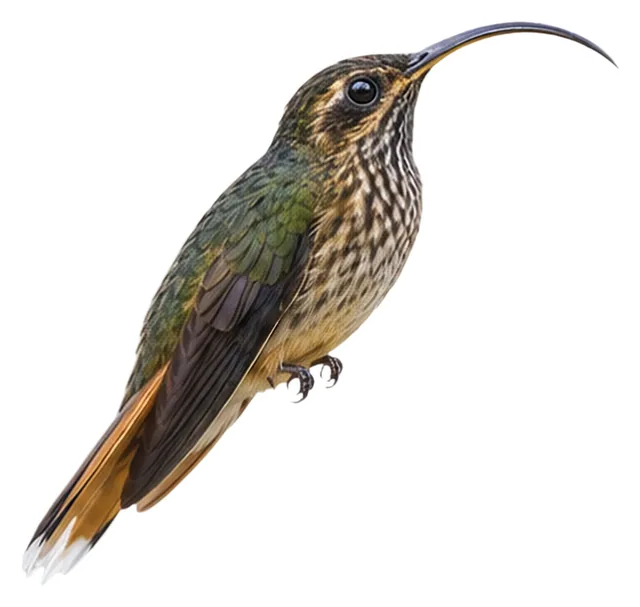
Buff-tailed Sicklebill
Eutoxeres condamini (Bourcier, 1851)
11 gWeight
Epimachus albertisi, a bird-of-paradise from New Guinea, is also sometimes called "buff-tailed sicklebill".
Busiest months: October · Most records: Peru, Colombia, Ecuador
Where and when it's recorded
Busiest months: October · Most records: Peru, Colombia, Ecuador

Buff-tailed Sicklebill has been recorded at 32 of the 8,276 birding hotspots we track, in 3 countries and regions.
Records by month Southern Hemisphere
Where it's recorded most
- Reserva Natural La Isla EscondidaColombia198 records
- Cock-of-the-Rock Lodge & Manu Paradise LodgePeru192 records
- Jardín de Colibries y Mirador Pico de HozPeru75 records
More places
- Flor de Café/PlataformaPeru57 records
- Reserva Ecologica GuadalupePeru52 records
- ACP Bosque de ChurumazúPeru34 records
- Manu BiolodgePeru31 records
- Reserva Biologica del Rio BigalEcuador30 records
- Wayra ReserveEcuador26 records
- Waqanki/Quebrada MishquiyaquilloPeru24 records
Countries and regions with the most records
eBird records via GBIF up to 2024-12-31. A record means someone listed it; more records partly mean more birders, not more birds.
About
Epimachus albertisi, a bird-of-paradise from New Guinea, is also sometimes called "buff-tailed sicklebill".
Excerpt from Wikipedia, CC BY-SA 4.0 · authors · Read more on Wikipedia
Questions
How big is the Buff-tailed Sicklebill?
The Buff-tailed Sicklebill weighs around 11 g.
Where does the Buff-tailed Sicklebill live?
Its breeding range: South America: southeastern Colombia to northwestern Bolivia. It is most often recorded in Peru, Colombia and Ecuador.
When is the best time to see the Buff-tailed Sicklebill?
At the hotspots we track, it is recorded most in October (Southern Hemisphere).
Is the Buff-tailed Sicklebill endangered?
The IUCN Red List classifies the Buff-tailed Sicklebill as Least Concern.
What does the Buff-tailed Sicklebill eat?
Main food: Nectar.
What family is the Buff-tailed Sicklebill in?
It belongs to the family Hummingbirds (Trochilidae), order Apodiformes.
At a glance
- Weight
- 11 g
- Habitat
- Forest
- Diet
- Nectar
- Lifestyle
- Perches in trees
- Migration
- Resident (barely migrates)
- Conservation
- Least Concern
More measurements
- Wing
- 68 mm
- Tail
- 57 mm
- Bill
- 25 mm
- Tarsus
- 7 mm
Averages from the AVONET dataset; length from field guides where available.
Range
South America: southeastern Colombia to northwestern Bolivia
Breeding range, IOC World Bird List 15.2
Classification
- Order
- Apodiformes
- Family
- Hummingbirds Trochilidae
- Genus
- Eutoxeres
Other birds in the genus Eutoxeres
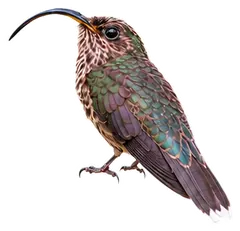 White-tipped SicklebillEutoxeres aquila
 Crimson TopazTopaza pella
 Fiery TopazTopaza pyra
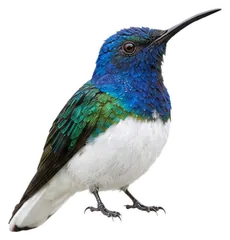 White-necked JacobinFlorisuga mellivora
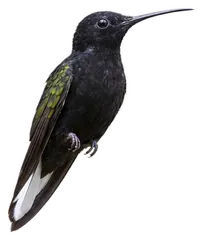 Black JacobinFlorisuga fusca
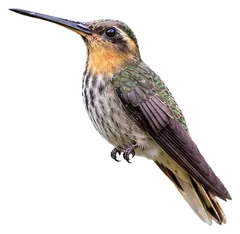 Saw-billed HermitRamphodon naevius
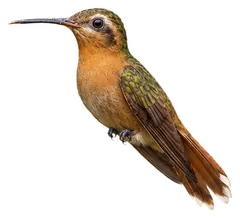 Hook-billed HermitGlaucis dohrnii
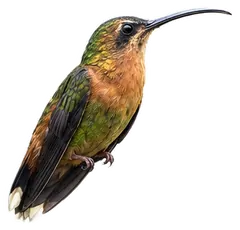 Bronzy HermitGlaucis aeneus
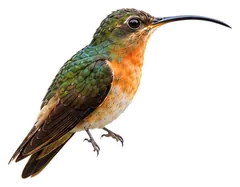 Rufous-breasted HermitGlaucis hirsutus
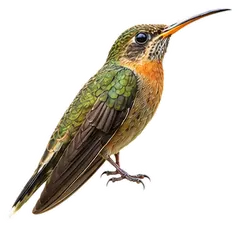 Band-tailed BarbthroatThrenetes ruckeri
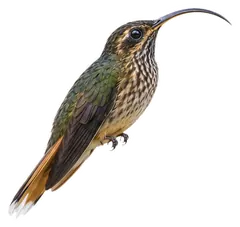
Download illustration
Free to use with credit: “Illustration: Bird Album (birdalbum.com)”. Drawn by AI from a reference photo by Adriana Dinu. ↗
Heard it but can't see it? Mingji identifies birds by sound and photo, on your phone.
In other languages
- EnglishBuff-tailed Sicklebill
- 简体中文黄尾镰嘴蜂鸟
- 繁體中文黃尾鐮嘴蜂鳥
- 日本語アカオカマハシハチドリ
- DeutschRotschwanz-Sichelschnabel
- FrançaisBec-en-faucille de La Condamine
- EspañolPicohoz colicanela
- Portuguêsbico-de-foice-de-cauda-canela
- ItalianoFalcetto codacamoscio
- NederlandsRoodstaarthaaksnavelkolibrie
- РусскийКраснохвостый орлиноклюв
- Svenskaroststjärtad liekolibri
- DanskOkkerhalet Seglnæbskolibri
- Polskiorłodziobek białosterny