 Bird Album
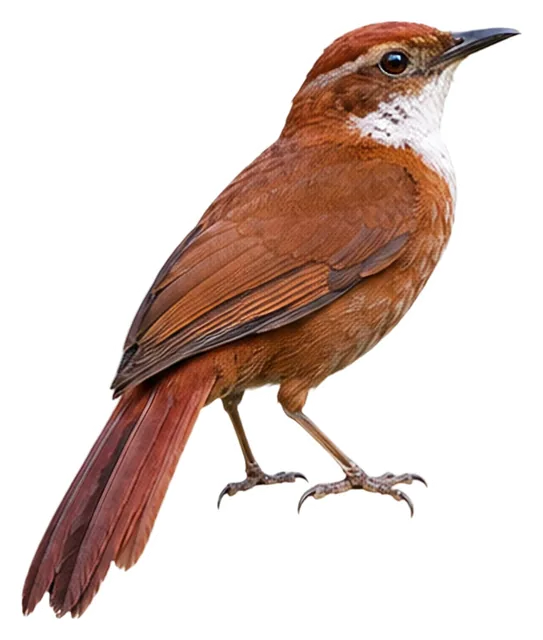
Canebrake Groundcreeper
Clibanornis dendrocolaptoides (Pelzeln, 1859)
20–22 cmLength48 gWeight
The canebrake groundcreeper (Clibanornis dendrocolaptoides) is a species of bird in the Furnariinae subfamily of the ovenbird family Furnariidae.
Busiest months: October · Most records: Argentina, Brazil, Paraguay
Where and when it's recorded

Canebrake Groundcreeper has been recorded at 7 of the 8,171 birding hotspots we track, in 3 countries and regions.
Records by month Southern Hemisphere
Where it's recorded most
- PP de la AraucariaArgentina475 records
- Curitiba – Parque TanguáBrazil245 records
- PP Caá YaríArgentina27 records
More places
- PP Cruce CaballeroArgentina14 records
- PP Urugua-í – Seccional UruzúArgentina10 records
- Ypeti, CaazapáParaguay2 records
- Parque Nacional Ybycui, Dpto. ParaguariParaguay1 record
Countries and regions with the most records
eBird records via GBIF up to 2024-12-31. A record means someone listed it; more records partly mean more birders, not more birds.
About
The canebrake groundcreeper (Clibanornis dendrocolaptoides) is a species of bird in the Furnariinae subfamily of the ovenbird family Furnariidae. It is found in Argentina, Brazil, and Paraguay.
Excerpt from Wikipedia, CC BY-SA 4.0 · authors · Read more on Wikipedia
Questions
How big is the Canebrake Groundcreeper?
The Canebrake Groundcreeper is about 20–22 cm long and weighs around 48 g.
Where does the Canebrake Groundcreeper live?
Its breeding range: South America: eastern Paraguay, northeastern Argentina and southern Brazil. It is most often recorded in Argentina, Brazil and Paraguay.
When is the best time to see the Canebrake Groundcreeper?
At the hotspots we track, it is recorded most in October (Southern Hemisphere).
Is the Canebrake Groundcreeper endangered?
The IUCN Red List classifies the Canebrake Groundcreeper as Least Concern.
What does the Canebrake Groundcreeper eat?
Main food: Insects & other invertebrates.
What family is the Canebrake Groundcreeper in?
It belongs to the family Ovenbirds (Furnariidae), order Passerines (Passeriformes).
At a glance
- Length
- 20–22 cm
- Weight
- 48 g
- Habitat
- Forest
- Diet
- Insects & other invertebrates
- Lifestyle
- Active on the ground
- Migration
- Resident (barely migrates)
- Conservation
- Least Concern
More measurements
- Wing
- 92 mm
- Tail
- 99 mm
- Bill
- 26 mm
- Tarsus
- 30 mm
Averages from the AVONET dataset; length from field guides where available.
Range
South America: eastern Paraguay, northeastern Argentina and southern Brazil
Breeding range, IOC World Bird List 15.2
Classification
- Order
- Passerines Passeriformes
- Family
- Ovenbirds Furnariidae
- Genus
- Clibanornis
Other birds in the genus Clibanornis
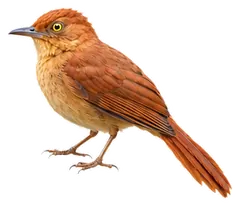 Henna-capped Foliage-gleanerClibanornis rectirostris
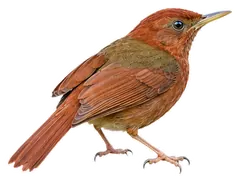 Henna-hooded Foliage-gleanerClibanornis erythrocephalus
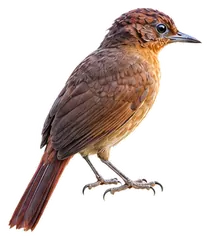 Ruddy Foliage-gleanerClibanornis rubiginosus
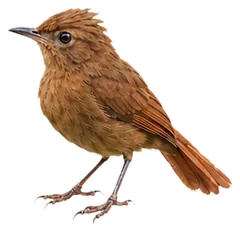 Santa Marta Foliage-gleanerClibanornis rufipectus
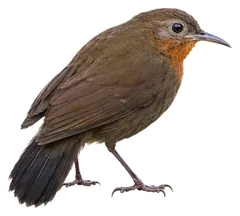 Tawny-throated LeaftosserSclerurus mexicanus
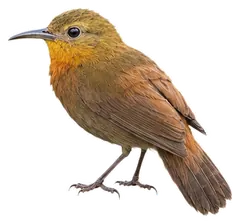 Dusky LeaftosserSclerurus obscurior
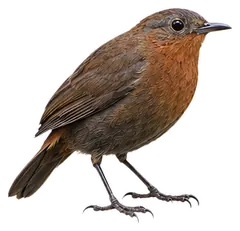 Short-billed LeaftosserSclerurus rufigularis
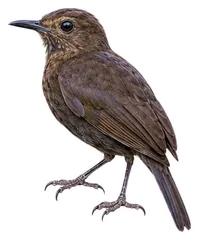 Scaly-throated LeaftosserSclerurus guatemalensis
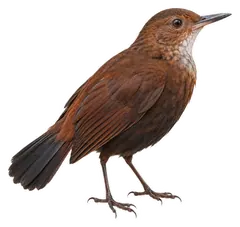 Black-tailed LeaftosserSclerurus caudacutus
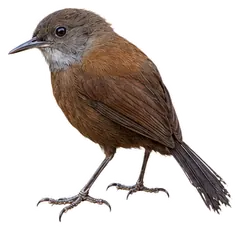 Grey-throated LeaftosserSclerurus albigularis
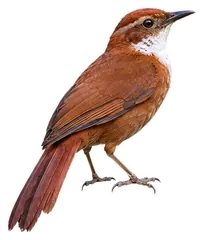
Download illustration
Free to use with credit: “Illustration: Bird Album (birdalbum.com)”. Drawn by AI from a reference photo by Celso Modesto Jr.. ↗
Heard it but can't see it? Mingji identifies birds by sound and photo, on your phone.