 Bird Album
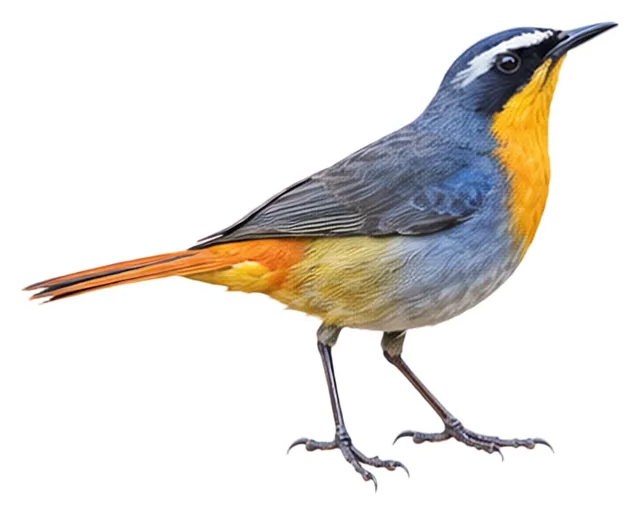
Cape Robin-Chat
Dessonornis caffer (Linnaeus, 1771)
28 gWeight
The Cape robin-chat (Dessonornis caffer) is a small passerine bird of the Old World flycatcher family Muscicapidae.
Busiest months: September–November · Most records: South Africa, Kenya, Tanzania
Where and when it's recorded

Cape Robin-Chat has been recorded at 168 of the 8,171 birding hotspots we track, in 11 countries and regions.
Records by month Southern Hemisphere
Where it's recorded most
- Kirstenbosch Botanical GardenSouth Africa2,845 records
- Harold Porter Botanical GardensSouth Africa1,004 records
- Strandfontein WTPSouth Africa972 records
More places
- Nairobi NPKenya891 records
- Rietvlei NRSouth Africa780 records
- West Coast NPSouth Africa625 records
- Walter Sisulu National Botanical GardenSouth Africa616 records
- Rondevlei NRSouth Africa595 records
- Boulders BeachSouth Africa593 records
- Rooi-ElsSouth Africa589 records
Countries and regions with the most records
eBird records via GBIF up to 2024-12-31. A record means someone listed it; more records partly mean more birders, not more birds.
About
The Cape robin-chat (Dessonornis caffer) is a small passerine bird of the Old World flycatcher family Muscicapidae. It has a disjunct range from South Sudan to South Africa.
Excerpt from Wikipedia, CC BY-SA 4.0 · authors · Read more on Wikipedia
Questions
How big is the Cape Robin-Chat?
The Cape Robin-Chat weighs around 28 g.
Where does the Cape Robin-Chat live?
Its breeding range: Africa: eastern, southeastern, southern. It is most often recorded in South Africa, Kenya and Tanzania.
When is the best time to see the Cape Robin-Chat?
At the hotspots we track, it is recorded most in September, October and November (Southern Hemisphere).
Is the Cape Robin-Chat endangered?
The IUCN Red List classifies the Cape Robin-Chat as Least Concern.
What does the Cape Robin-Chat eat?
Main food: Insects & other invertebrates.
What family is the Cape Robin-Chat in?
It belongs to the family Chats, Old World Flycatchers (Muscicapidae), order Passerines (Passeriformes).
At a glance
- Weight
- 28 g
- Habitat
- Forest
- Diet
- Insects & other invertebrates
- Lifestyle
- Varied
- Migration
- Resident (barely migrates)
- Conservation
- Least Concern
More measurements
- Wing
- 81 mm
- Tail
- 75 mm
- Bill
- 19 mm
- Tarsus
- 29 mm
Averages from the AVONET dataset; length from field guides where available.
Range
Africa: eastern, southeastern, southern
Breeding range, IOC World Bird List 15.2
Classification
- Order
- Passerines Passeriformes
- Family
- Chats, Old World Flycatchers Muscicapidae
- Genus
- Dessonornis
Other birds in the genus Dessonornis
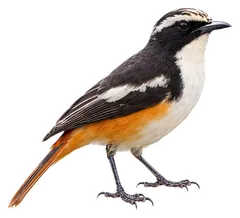 White-throated Robin-ChatDessonornis humeralis
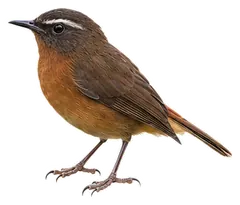 Archer's Ground RobinDessonornis archeri
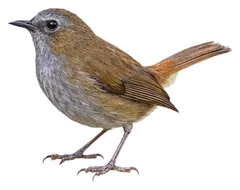 Olive-flanked Ground RobinDessonornis anomalus
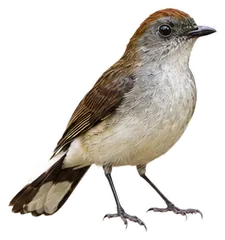 White-tailed AletheAlethe diademata
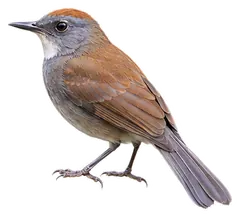 Fire-crested AletheAlethe castanea
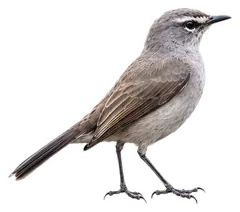 Karoo Scrub RobinTychaedon coryphoeus
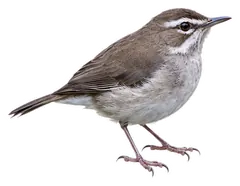 Brown Scrub RobinTychaedon signata
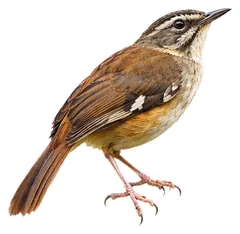 Forest Scrub RobinTychaedon leucosticta
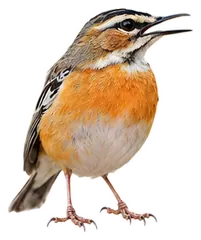 Bearded Scrub RobinTychaedon quadrivirgata
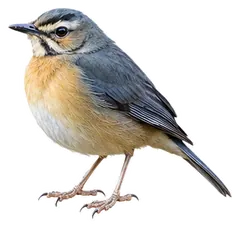 Miombo Scrub RobinTychaedon barbata
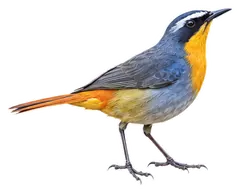
Download illustration
Free to use with credit: “Illustration: Bird Album (birdalbum.com)”. Drawn by AI from a reference photo by Ad Konings. ↗
Heard it but can't see it? Mingji identifies birds by sound and photo, on your phone.