 Bird Album
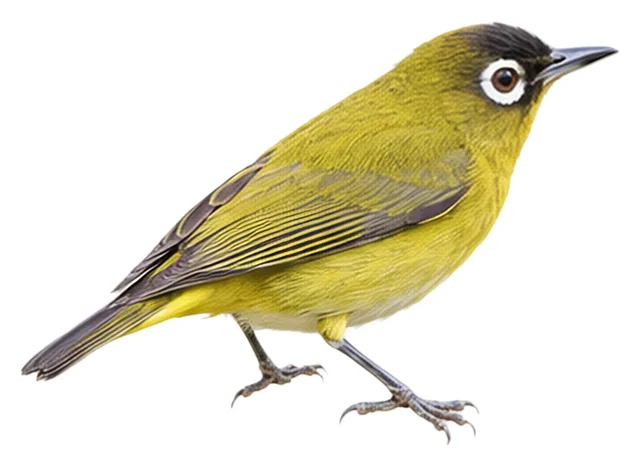
Capped White-eye
Zosterops fuscicapilla Salvadori, 1876
11 gWeight
The capped white-eye (Zosterops fuscicapilla) is a species of bird in the family Zosteropidae.
Busiest months: July · Most records: Indonesia, Papua New Guinea
Where and when it's recorded

Capped White-eye has been recorded at 14 of the 8,171 birding hotspots we track, in 2 countries and regions.
Records by month Southern Hemisphere
Where it's recorded most
- Minggre Birdwatching HomestayIndonesia138 records
- Arfak Mtns – MaybriIndonesia134 records
- Dablin Creek RoadPapua New Guinea61 records
More places
- Ambua LodgePapua New Guinea52 records
- Highlands Hwy – above Ambua Lodge to Tari GapPapua New Guinea38 records
- Arfak Mtns – German CampIndonesia38 records
- Tabubil AreaPapua New Guinea21 records
- Tari GapPapua New Guinea11 records
- Tonga TrailPapua New Guinea3 records
- Ok Menga Hydro IntakePapua New Guinea1 record
Countries and regions with the most records
eBird records via GBIF up to 2024-12-31. A record means someone listed it; more records partly mean more birders, not more birds.
About
The capped white-eye (Zosterops fuscicapilla) is a species of bird in the family Zosteropidae. It is found in New Guinea. Its natural habitat is in subtropical or tropical moist montane forests.
Excerpt from Wikipedia, CC BY-SA 4.0 · authors · Read more on Wikipedia
Questions
How big is the Capped White-eye?
The Capped White-eye weighs around 11 g.
Where does the Capped White-eye live?
Its breeding range: Australasia: montane northwest to central New Guinea. It is most often recorded in Indonesia and Papua New Guinea.
When is the best time to see the Capped White-eye?
At the hotspots we track, it is recorded most in July (Southern Hemisphere).
Is the Capped White-eye endangered?
The IUCN Red List classifies the Capped White-eye as Least Concern.
What does the Capped White-eye eat?
Main food: Insects & other invertebrates.
What family is the Capped White-eye in?
It belongs to the family White-eyes (Zosteropidae), order Passerines (Passeriformes).
At a glance
- Weight
- 11 g
- Habitat
- Forest
- Diet
- Insects & other invertebrates
- Lifestyle
- Perches in trees
- Migration
- Resident (barely migrates)
- Conservation
- Least Concern
More measurements
- Wing
- 57 mm
- Tail
- 39 mm
- Bill
- 12 mm
- Tarsus
- 15 mm
Averages from the AVONET dataset; length from field guides where available.
Range
Australasia: montane northwest to central New Guinea
Breeding range, IOC World Bird List 15.2
Classification
- Order
- Passerines Passeriformes
- Family
- White-eyes Zosteropidae
- Genus
- Zosterops
Other birds in the genus Zosterops
 Sri Lanka White-eyeZosterops ceylonensis
 Yellowish White-eyeZosterops nigrorum
 Black-capped White-eyeZosterops atricapilla
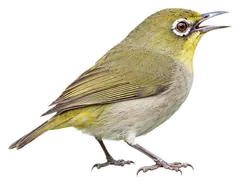 Abyssinian White-eyeZosterops abyssinicus
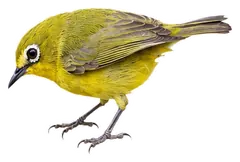 Pale White-eyeZosterops flavilateralis
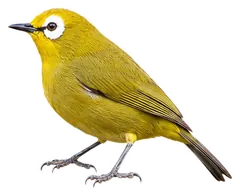 Mbulu White-eyeZosterops mbuluensis
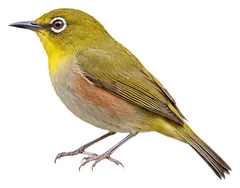 Chestnut-flanked White-eyeZosterops erythropleurus
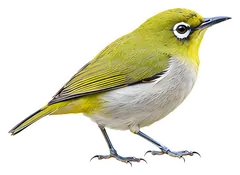 Swinhoe's White-eyeZosterops simplex
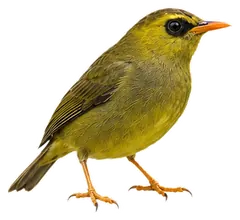 Mountain BlackeyeZosterops emiliae
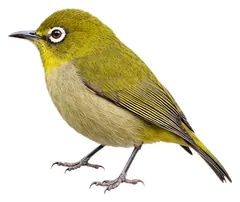 Warbling White-eyeZosterops japonicus
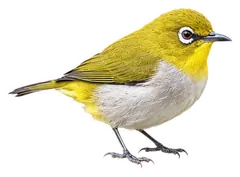 Indian White-eyeZosterops palpebrosus
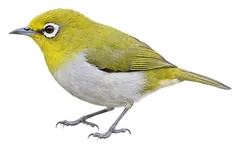 Lowland White-eyeZosterops meyeni
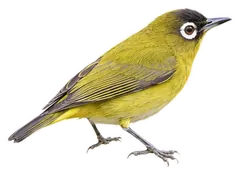
Download illustration
Free to use with credit: “Illustration: Bird Album (birdalbum.com)”. Drawn by AI from a reference photo by Carlos N. G. Bocos. ↗
Heard it but can't see it? Mingji identifies birds by sound and photo, on your phone.
In other languages
- EnglishCapped White-eye
- 简体中文黄腹绣眼鸟
- 繁體中文黃腹山繡眼
- 日本語キバラヤマメジロ
- DeutschArfakbrillenvogel
- FrançaisZostérops mitré
- EspañolAnteojitos de las Arfak
- Portuguêsolho-branco-de-carapuça
- ItalianoOcchialino pileato
- NederlandsArfakbrilvogel
- РусскийАрфакская белоглазка
- Svenskasvarthuvad glasögonfågel
- DanskGulbuget Bjergbrillefugl
- Polskiszlarnik okopcony