 Bird Album
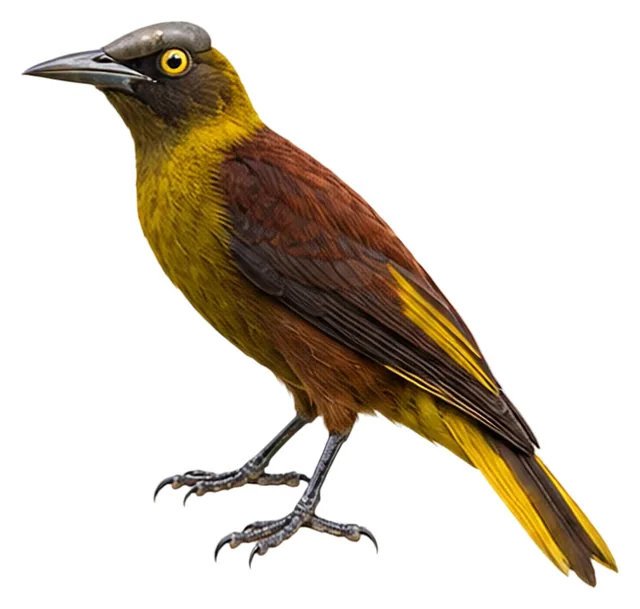
Casqued Cacique
Cacicus oseryi Deville, 1849
29–37 cmLength138 gWeight
The casqued cacique (Cacicus oseryi) is a species of bird in the family Icteridae, the oropendolas, New World orioles, and New World blackbirds.
Busiest months: July and September · Most records: Peru, Ecuador, Brazil
Where and when it's recorded

Casqued Cacique has been recorded at 39 of the 8,171 birding hotspots we track, in 4 countries and regions.
Records by month Southern Hemisphere
Where it's recorded most
- Los Amigos Biological StationPeru272 records
- Manú Wildlife Center (Valqui A5.1)Peru150 records
- Estación Biológica de Cocha CashuPeru144 records
More places
- Tambopata Research CenterPeru113 records
- Amazonía LodgePeru109 records
- Shiripuno LodgeEcuador109 records
- Gareno LodgeEcuador100 records
- Pantiacolla LodgePeru98 records
- Manu Birding LodgePeru97 records
- Napo Wildlife CenterEcuador95 records
Countries and regions with the most records
eBird records via GBIF up to 2024-12-31. A record means someone listed it; more records partly mean more birders, not more birds.
About
The casqued cacique (Cacicus oseryi) is a species of bird in the family Icteridae, the oropendolas, New World orioles, and New World blackbirds. It is found in Brazil, Colombia, Ecuador, Peru, and possibly Bolivia.
Excerpt from Wikipedia, CC BY-SA 4.0 · authors · Read more on Wikipedia
Questions
How big is the Casqued Cacique?
The Casqued Cacique is about 29–37 cm long and weighs around 138 g.
Where does the Casqued Cacique live?
Its breeding range: South America: terra firme of western Amazonia from far southwestern Colombia to far western Brazil and far northern Bolivia. It is most often recorded in Peru, Ecuador and Brazil.
When is the best time to see the Casqued Cacique?
At the hotspots we track, it is recorded most in July and September (Southern Hemisphere).
Is the Casqued Cacique endangered?
The IUCN Red List classifies the Casqued Cacique as Least Concern.
What does the Casqued Cacique eat?
Main food: Omnivore.
What family is the Casqued Cacique in?
It belongs to the family Oropendolas, New World Orioles, Blackbirds (Icteridae), order Passerines (Passeriformes).
At a glance
- Length
- 29–37 cm
- Weight
- 138 g
- Habitat
- Forest
- Diet
- Omnivore
- Lifestyle
- Perches in trees
- Migration
- Resident (barely migrates)
- Conservation
- Least Concern
More measurements
- Wing
- 187 mm
- Tail
- 130 mm
- Bill
- 46 mm
- Tarsus
- 38 mm
Averages from the AVONET dataset; length from field guides where available.
Range
South America: terra firme of western Amazonia from far southwestern Colombia to far western Brazil and far northern Bolivia
Breeding range, IOC World Bird List 15.2
Classification
- Order
- Passerines Passeriformes
- Family
- Oropendolas, New World Orioles, Blackbirds Icteridae
- Genus
- Cacicus
Other birds in the genus Cacicus
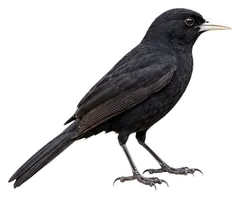 Solitary CaciqueCacicus solitarius
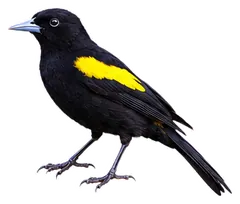 Golden-winged CaciqueCacicus chrysopterus
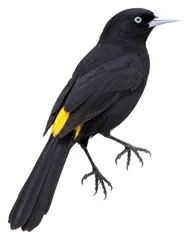 Selva CaciqueCacicus koepckeae
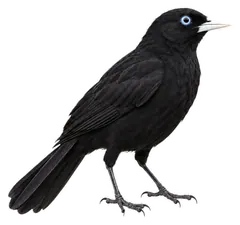 Ecuadorian CaciqueCacicus sclateri
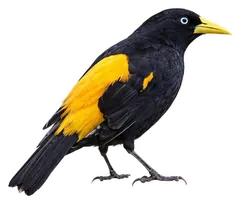 Yellow-rumped CaciqueCacicus cela
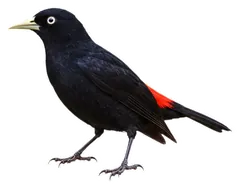 Scarlet-rumped CaciqueCacicus uropygialis
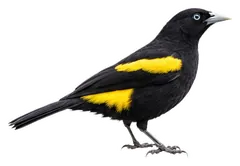 Mountain CaciqueCacicus chrysonotus
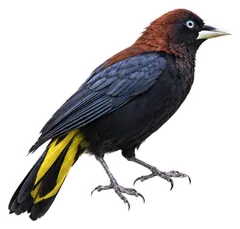 Band-tailed CaciqueCacicus latirostris
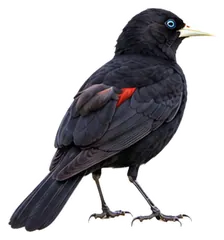 Red-rumped CaciqueCacicus haemorrhous
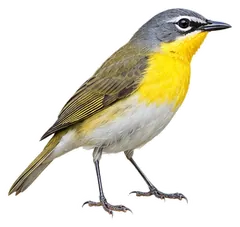 Yellow-breasted ChatIcteria virens
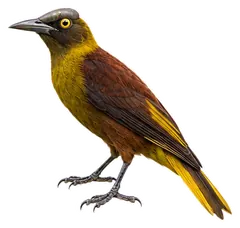
Download illustration
Free to use with credit: “Illustration: Bird Album (birdalbum.com)”. Drawn by AI from a reference photo by Sylvère Corre. ↗
Heard it but can't see it? Mingji identifies birds by sound and photo, on your phone.