 Bird Album
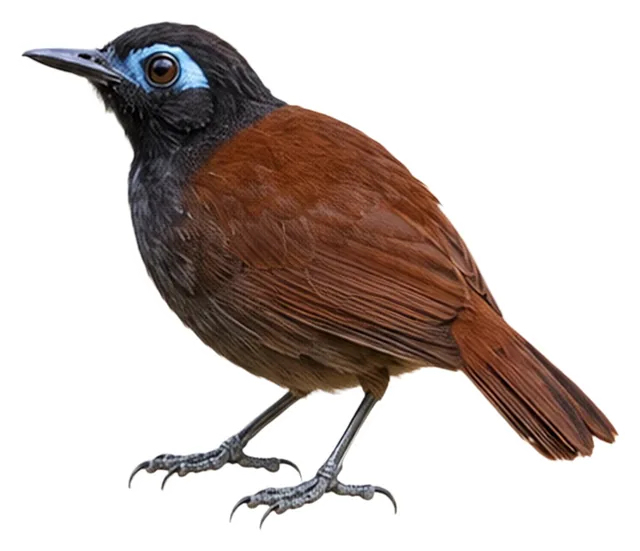
Chestnut-backed Antbird
Poliocrania exsul (Sclater, PL, 1859)
14–15 cmLength26 gWeight
The chestnut-backed antbird (Poliocrania exsul) is a passerine bird in subfamily Thamnophilinae of family Thamnophilidae, the "typical antbirds".
Busiest months: January–March · Most records: Costa Rica, Panama, Ecuador
Where and when it's recorded
Busiest months: January–March · Most records: Costa Rica, Panama, Ecuador

Chestnut-backed Antbird has been recorded at 171 of the 8,276 birding hotspots we track, in 5 countries and regions.
Records by month Northern Hemisphere
Where it's recorded most
- PN Carara-Entrada principal [senderos Quebrada Bonita y Universal]Costa Rica5,399 records
- Estación Biológica La Selva-OTSCosta Rica3,180 records
- Pipeline Road (Camino del Oleoducto)Panama2,375 records
More places
- RN San Cipriano-EscalereteColombia1,700 records
- Tranquilo Bay Eco-Adventure LodgePanama1,699 records
- PN Manuel AntonioCosta Rica1,691 records
- PN Carara – Sendero La MeandricaCosta Rica1,683 records
- Pipeline Road – Parque Nacional SoberaníaPanama1,628 records
- Tirimbina Rainforest CenterCosta Rica1,600 records
- PN Corcovado – Sector SirenaCosta Rica1,405 records
Countries and regions with the most records
eBird records via GBIF up to 2024-12-31. A record means someone listed it; more records partly mean more birders, not more birds.
About
The chestnut-backed antbird (Poliocrania exsul) is a passerine bird in subfamily Thamnophilinae of family Thamnophilidae, the "typical antbirds". It is found in Colombia, Costa Rica, Ecuador, Honduras, Nicaragua, and Panama.
Excerpt from Wikipedia, CC BY-SA 4.0 · authors · Read more on Wikipedia
Questions
How big is the Chestnut-backed Antbird?
The Chestnut-backed Antbird is about 14–15 cm long and weighs around 26 g.
Where does the Chestnut-backed Antbird live?
Its breeding range: Middle America, South America: Nicaragua to western Ecuador. It is most often recorded in Costa Rica, Panama and Ecuador.
When is the best time to see the Chestnut-backed Antbird?
At the hotspots we track, it is recorded most in January, February and March (Northern Hemisphere).
Is the Chestnut-backed Antbird endangered?
The IUCN Red List classifies the Chestnut-backed Antbird as Least Concern.
What does the Chestnut-backed Antbird eat?
Main food: Insects & other invertebrates.
What family is the Chestnut-backed Antbird in?
It belongs to the family Antbirds (Thamnophilidae), order Passerines (Passeriformes).
At a glance
- Length
- 14–15 cm
- Weight
- 26 g
- Habitat
- Forest
- Diet
- Insects & other invertebrates
- Lifestyle
- Perches in trees
- Migration
- Resident (barely migrates)
- Conservation
- Least Concern
More measurements
- Wing
- 66 mm
- Tail
- 47 mm
- Bill
- 21 mm
- Tarsus
- 28 mm
Averages from the AVONET dataset; length from field guides where available.
Range
Middle America, South America: Nicaragua to western Ecuador
Breeding range, IOC World Bird List 15.2
Classification
- Order
- Passerines Passeriformes
- Family
- Antbirds Thamnophilidae
- Genus
- Poliocrania
More from the family Antbirds
 Rufous-rumped AntwrenEuchrepomis callinota
 Chestnut-shouldered AntwrenEuchrepomis humeralis
 Yellow-rumped AntwrenEuchrepomis sharpei
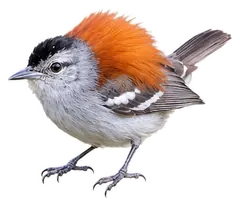 Ash-winged AntwrenEuchrepomis spodioptila
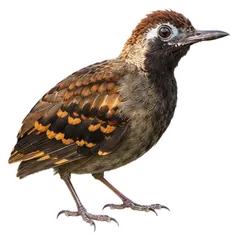 Wing-banded AntbirdMyrmornis torquata
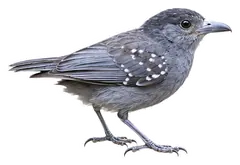 Spot-winged AntshrikePygiptila stellaris
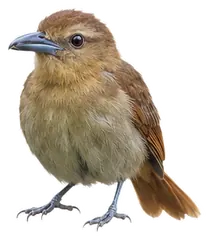 Russet AntshrikeThamnistes anabatinus
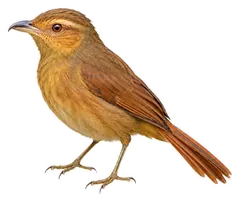 Rufescent AntshrikeThamnistes rufescens
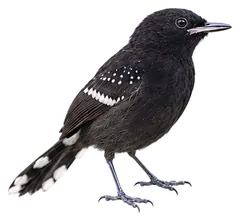 Dot-winged AntwrenMicrorhopias quixensis
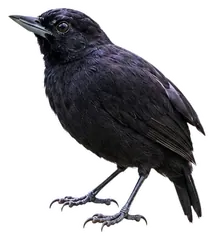 Black BushbirdNeoctantes niger
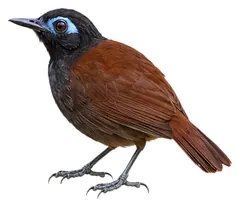
Download illustration
Free to use with credit: “Illustration: Bird Album (birdalbum.com)”. Drawn by AI from a reference photo by Ben Tsai蔡維哲. ↗
Heard it but can't see it? Mingji identifies birds by sound and photo, on your phone.
In other languages
- EnglishChestnut-backed Antbird
- 简体中文栗背蚁鸟
- 繁體中文栗背蟻鳥
- 日本語クリセアリドリ
- DeutschBraunrücken-Ameisenvogel
- FrançaisAlapi à dos roux
- EspañolHormiguero dorsicastaño
- Portuguêsformigueiro-de-dorso-castanho
- ItalianoFormichiere dorsocastano
- NederlandsBruinrugmiervogel
- РусскийКоричневоспинная муравьеловка
- Svenskabrunryggig myrfågel
- DanskKastanjerygget Myrefugl
- Polskigołoliczek (kasztanowaty)