 Bird Album
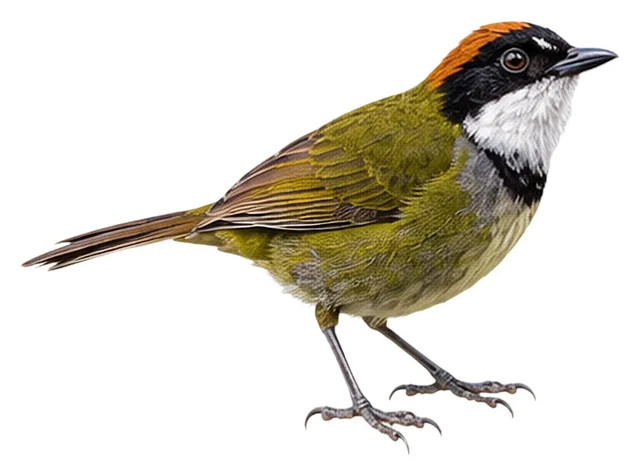
Chestnut-capped Brushfinch
Arremon brunneinucha (Lafresnaye, 1839)
16–20 cmLength44 gWeight
The chestnut-capped brushfinch (Arremon brunneinucha) is a species of bird in the family Passerellidae, the New World sparrows.
Busiest months: January–March · Most records: Colombia, Costa Rica, Ecuador
Where and when it's recorded
Busiest months: January–March · Most records: Colombia, Costa Rica, Ecuador

Chestnut-capped Brushfinch has been recorded at 257 of the 8,276 birding hotspots we track, in 10 countries and regions.
Records by month Northern Hemisphere
Where it's recorded most
- Curi-Cancha Refugio de Vida SilvestreCosta Rica2,233 records
- Reserva Biológica Bosque Nuboso MonteverdeCosta Rica2,211 records
- La Florida - Bosque de Las AvesColombia1,958 records
More places
- Guango LodgeEcuador1,757 records
- Savegre HotelCosta Rica1,285 records
- Reserva Ecológica Río Blanco – LodgeColombia1,042 records
- Cabañas San IsidroEcuador920 records
- Sachatamia LodgeEcuador913 records
- Bellavista Cloud Forest LodgeEcuador907 records
- Finca Bosque de NieblaColombia874 records
Countries and regions with the most records
eBird records via GBIF up to 2024-12-31. A record means someone listed it; more records partly mean more birders, not more birds.
About
The chestnut-capped brushfinch (Arremon brunneinucha) is a species of bird in the family Passerellidae, the New World sparrows. It is found from Mexico to Peru.
Excerpt from Wikipedia, CC BY-SA 4.0 · authors · Read more on Wikipedia
Questions
How big is the Chestnut-capped Brushfinch?
The Chestnut-capped Brushfinch is about 16–20 cm long and weighs around 44 g.
Where does the Chestnut-capped Brushfinch live?
Its breeding range: Middle America, South America: Mexico to Ecuador. It is most often recorded in Colombia, Costa Rica and Ecuador.
When is the best time to see the Chestnut-capped Brushfinch?
At the hotspots we track, it is recorded most in January, February and March (Northern Hemisphere).
Is the Chestnut-capped Brushfinch endangered?
The IUCN Red List classifies the Chestnut-capped Brushfinch as Least Concern.
What does the Chestnut-capped Brushfinch eat?
Main food: Insects & other invertebrates.
What family is the Chestnut-capped Brushfinch in?
It belongs to the family New World Sparrows (Passerellidae), order Passerines (Passeriformes).
At a glance
- Length
- 16–20 cm
- Weight
- 44 g
- Habitat
- Forest
- Diet
- Insects & other invertebrates
- Lifestyle
- Varied
- Migration
- Resident (barely migrates)
- Conservation
- Least Concern
More measurements
- Wing
- 81 mm
- Tail
- 85 mm
- Bill
- 20 mm
- Tarsus
- 29 mm
Averages from the AVONET dataset; length from field guides where available.
Range
Middle America, South America: Mexico to Ecuador
Breeding range, IOC World Bird List 15.2
Classification
- Order
- Passerines Passeriformes
- Family
- New World Sparrows Passerellidae
- Genus
- Arremon
Other birds in the genus Arremon
 Sierra Nevada BrushfinchArremon basilicus
 Perija BrushfinchArremon perijanus
 Costa Rican BrushfinchArremon costaricensis
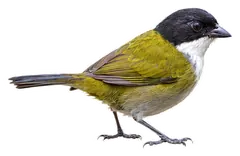 Black-headed BrushfinchArremon atricapillus
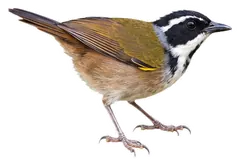 Caracas BrushfinchArremon phaeopleurus
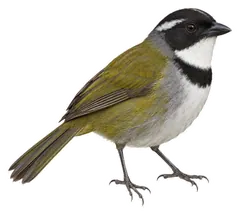 Paria BrushfinchArremon phygas
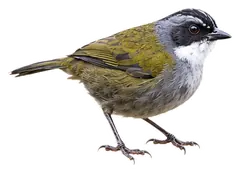 Grey-browed BrushfinchArremon assimilis
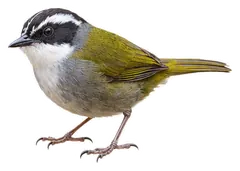 White-browed BrushfinchArremon torquatus
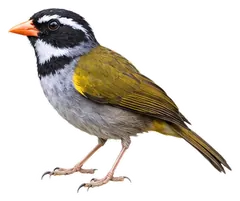 Orange-billed SparrowArremon aurantiirostris
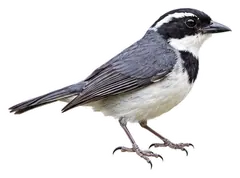 Black-capped SparrowArremon abeillei
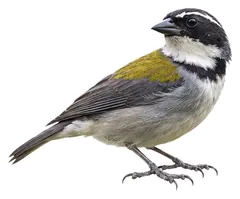 Maranon SparrowArremon nigriceps
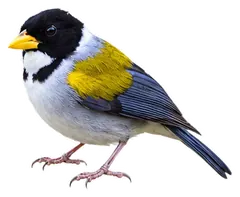 Golden-winged SparrowArremon schlegeli
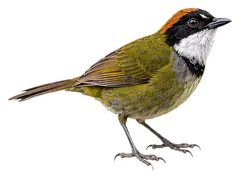
Download illustration
Free to use with credit: “Illustration: Bird Album (birdalbum.com)”. Drawn by AI from a reference photo by Luis Enrique Girón Mejía. ↗
Heard it but can't see it? Mingji identifies birds by sound and photo, on your phone.
In other languages
- EnglishChestnut-capped Brushfinch
- 简体中文栗顶薮雀
- 繁體中文栗頂藪雀
- 日本語クリボウシヤブシトド
- DeutschBraunkopf-Buschammer
- FrançaisTohi à nuque brune
- EspañolCerquero coronicastaño
- Portuguêstico-tico-de-gorro-castanho
- ItalianoFringuello di macchia capocastano
- NederlandsBruinkapstruikgors
- РусскийКаштановоголовый тохи
- Svenskakastanjekronad sparv
- DanskBrunkappet Kratfinke
- Polskistrojnogłowik białogardły