 Bird Album
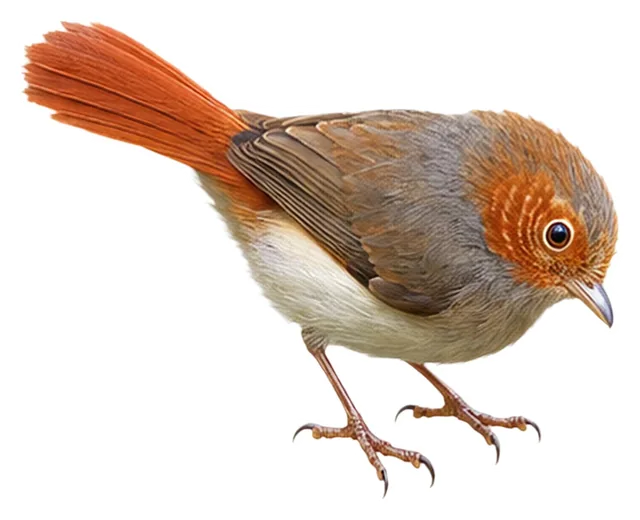
Chestnut-capped Flycatcher
Erythrocercus mccallii (Cassin, 1855)
7.2 gWeight
Busiest months: November · Most records: Ghana, Uganda, Equatorial Guinea
Where and when it's recorded

Chestnut-capped Flycatcher has been recorded at 50 of the 8,171 birding hotspots we track, in 11 countries and regions.
Records by month Northern Hemisphere
Where it's recorded most
- Budongo Forest Reserve – Royal MileUganda565 records
- Bobiri Butterfly SanctuaryGhana373 records
- Atewa Range – upland forest & ridgeGhana174 records
More places
- Kakum NP – Canopy Walkway & vicinityGhana134 records
- Bosque Científica – Selva PrimariaEquatorial Guinea97 records
- Semuliki NPUganda83 records
- Kakum National ParkGhana79 records
- Kakum NP – CanopyGhana78 records
- Semuliki NP – Kirumya TrailUganda66 records
- Kwabena Sam ForestGhana41 records
Countries and regions with the most records
eBird records via GBIF up to 2024-12-31. A record means someone listed it; more records partly mean more birders, not more birds.
Questions
How big is the Chestnut-capped Flycatcher?
The Chestnut-capped Flycatcher weighs around 7.2 g.
Where does the Chestnut-capped Flycatcher live?
Its breeding range: Africa: central, western. It is most often recorded in Ghana, Uganda and Equatorial Guinea.
When is the best time to see the Chestnut-capped Flycatcher?
At the hotspots we track, it is recorded most in November (Northern Hemisphere).
Is the Chestnut-capped Flycatcher endangered?
The IUCN Red List classifies the Chestnut-capped Flycatcher as Least Concern.
What does the Chestnut-capped Flycatcher eat?
Main food: Insects & other invertebrates.
What family is the Chestnut-capped Flycatcher in?
It belongs to the family Yellow Flycatchers (Erythrocercidae), order Passerines (Passeriformes).
At a glance
- Weight
- 7.2 g
- Habitat
- Forest
- Diet
- Insects & other invertebrates
- Lifestyle
- Perches in trees
- Migration
- Resident (barely migrates)
- Conservation
- Least Concern
More measurements
- Wing
- 47 mm
- Tail
- 47 mm
- Bill
- 11 mm
- Tarsus
- 15 mm
Averages from the AVONET dataset; length from field guides where available.
Range
Africa: central, western
Breeding range, IOC World Bird List 15.2
Classification
- Order
- Passerines Passeriformes
- Family
- Yellow Flycatchers Erythrocercidae
- Genus
- Erythrocercus
Other birds in the genus Erythrocercus
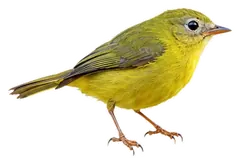 Little Yellow FlycatcherErythrocercus holochlorus
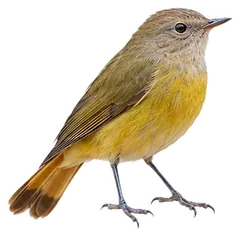 Livingstone's FlycatcherErythrocercus livingstonei
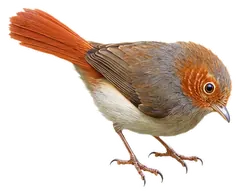
Download illustration
Free to use with credit: “Illustration: Bird Album (birdalbum.com)”. Drawn by AI from a reference photo by Nik Borrow. ↗
Heard it but can't see it? Mingji identifies birds by sound and photo, on your phone.
In other languages
- EnglishChestnut-capped Flycatcher
- 简体中文栗顶红鹟
- 繁體中文栗頂黃鶲
- 日本語クリガシラヒメヒタキ
- DeutschRotkappen-Spreizschwanz
- FrançaisÉrythrocerque à tête rousse
- EspañolMonarca capirrufo
- Portuguêspapa-moscas-coroado
- ItalianoPigliamosche capocastano
- NederlandsRoodkapelfmonarch
- РусскийСерая рыжехвостка
- Svenskarödkronad spretstjärt
- DanskRødkronet Elminia
- Polskioliweczka rdzawa