 Bird Album
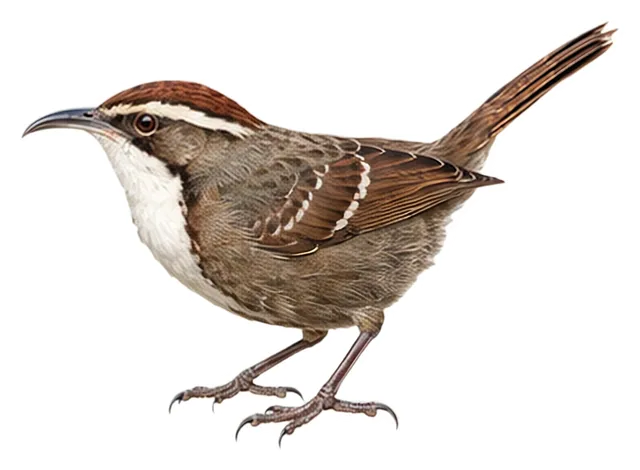
Chestnut-crowned Babbler
Pomatostomus ruficeps (Hartlaub, 1852)
58 gWeight
The chestnut-crowned babbler (Pomatostomus ruficeps) is a medium-sized bird that is endemic to arid and semi-arid areas of south-eastern Australia.
Busiest months: August–October · Most records: Australia
Where and when it's recorded

Chestnut-crowned Babbler has been recorded at 4 of the 8,171 birding hotspots we track, in 1 country or region.
Records by month Southern Hemisphere
Where it's recorded most
- Bowra Wildlife SanctuaryAustralia2,992 records
- Gluepot ReserveAustralia399 records
- Hattah-Kulkyne National ParkAustralia305 records
More places
- Terrick Terrick National ParkAustralia13 records
Countries and regions with the most records
eBird records via GBIF up to 2024-12-31. A record means someone listed it; more records partly mean more birders, not more birds.
About
The chestnut-crowned babbler (Pomatostomus ruficeps) is a medium-sized bird that is endemic to arid and semi-arid areas of south-eastern Australia. It is a member of the family Pomatostomidae, which comprises five species of Australo-Papuan babblers. All are boisterous and highly social, living in groups of up to 23 individuals that forage and breed communally.
Excerpt from Wikipedia, CC BY-SA 4.0 · authors · Read more on Wikipedia
Questions
How big is the Chestnut-crowned Babbler?
The Chestnut-crowned Babbler weighs around 58 g.
Where does the Chestnut-crowned Babbler live?
Its breeding range: Australasia: eastern Western Australia to southwestern Queensland and western New South Wales (east-central Australia). It is most often recorded in Australia.
When is the best time to see the Chestnut-crowned Babbler?
At the hotspots we track, it is recorded most in August, September and October (Southern Hemisphere).
Is the Chestnut-crowned Babbler endangered?
The IUCN Red List classifies the Chestnut-crowned Babbler as Least Concern.
What does the Chestnut-crowned Babbler eat?
Main food: Insects & other invertebrates.
What family is the Chestnut-crowned Babbler in?
It belongs to the family Australasian Babblers (Pomatostomidae), order Passerines (Passeriformes).
At a glance
- Weight
- 58 g
- Habitat
- Shrubland
- Diet
- Insects & other invertebrates
- Lifestyle
- Varied
- Migration
- Partial migrant
- Conservation
- Least Concern
More measurements
- Wing
- 86 mm
- Tail
- 89 mm
- Bill
- 28 mm
- Tarsus
- 28 mm
Averages from the AVONET dataset; length from field guides where available.
Range
Australasia: eastern Western Australia to southwestern Queensland and western New South Wales (east-central Australia)
Breeding range, IOC World Bird List 15.2
Classification
- Order
- Passerines Passeriformes
- Family
- Australasian Babblers Pomatostomidae
- Genus
- Pomatostomus
Other birds in the genus Pomatostomus
 Grey-crowned BabblerPomatostomus temporalis
 Hall's BabblerPomatostomus halli
 White-browed BabblerPomatostomus superciliosus
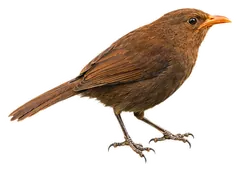 Papuan BabblerGarritornis isidorei
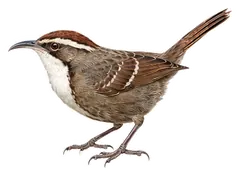
Download illustration
Free to use with credit: “Illustration: Bird Album (birdalbum.com)”. Drawn by AI from a reference photo by Ellura Sanctuary. ↗
Heard it but can't see it? Mingji identifies birds by sound and photo, on your phone.
In other languages
- EnglishChestnut-crowned Babbler
- 简体中文栗冠弯嘴鹛
- 繁體中文慄冠彎嘴鶥
- 日本語クリボウシオーストラリアマルハシ
- DeutschRotscheitelsäbler
- FrançaisPomatostome à calotte marron
- EspañolGárrulo coronirrufo
- Portuguêsgárrulo-de-coroa-castanha
- ItalianoGarrulo capocastano
- NederlandsRoodkruinbabbelaar
- РусскийКрасноголовая яху
- Svenskabrunkronad bågnäbb
- DanskKastanjekronet Buenæb
- Polskistadniak rdzawołbisty