 Bird Album
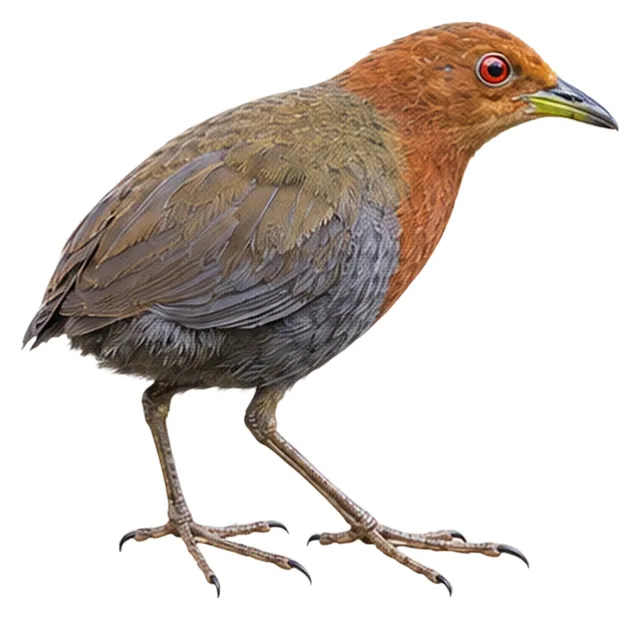
Chestnut-headed Crake
Anurolimnas castaneiceps (Sclater, PL & Salvin, 1869)
19–22 cmLength126 gWeight
The chestnut-headed crake (Anurolimnas castaneiceps) is a species of bird in subfamily Rallinae of family Rallidae, the rails, gallinules, and coots.
Busiest months: July and September–October · Most records: Peru, Ecuador, Brazil
Where and when it's recorded

Chestnut-headed Crake has been recorded at 37 of the 8,171 birding hotspots we track, in 4 countries and regions.
Records by month Southern Hemisphere
Where it's recorded most
- Los Amigos Biological StationPeru218 records
- Reserva MaycuEcuador107 records
- Rio Branco – Ramal do NocaBrazil100 records
More places
- Sumaco RoadEcuador91 records
- WildSumaco LodgeEcuador64 records
- Asociacion para La Conservacion de Aves y La Biodiversidad Koepcke's HermitPeru34 records
- Sacha LodgeEcuador31 records
- Finca Las PiedrasPeru28 records
- Pumarinri Amazon LodgePeru27 records
- Flor de Café/PlataformaPeru25 records
Countries and regions with the most records
eBird records via GBIF up to 2024-12-31. A record means someone listed it; more records partly mean more birders, not more birds.
About
The chestnut-headed crake (Anurolimnas castaneiceps) is a species of bird in subfamily Rallinae of family Rallidae, the rails, gallinules, and coots. It is the only species placed in the genus Anurolimnas. It is found in Bolivia, Brazil, Colombia, Ecuador, and Peru.
Excerpt from Wikipedia, CC BY-SA 4.0 · authors · Read more on Wikipedia
Questions
How big is the Chestnut-headed Crake?
The Chestnut-headed Crake is about 19–22 cm long and weighs around 126 g.
Where does the Chestnut-headed Crake live?
Its breeding range: South America: southern Colombia to northwestern Bolivia. It is most often recorded in Peru, Ecuador and Brazil.
When is the best time to see the Chestnut-headed Crake?
At the hotspots we track, it is recorded most in July, September and October (Southern Hemisphere).
What does the Chestnut-headed Crake eat?
Main food: Insects & other invertebrates.
What family is the Chestnut-headed Crake in?
It belongs to the family Rails, Crakes & Coots (Rallidae), order Gruiformes.
At a glance
- Length
- 19–22 cm
- Weight
- 126 g
- Habitat
- Towns & farmland
- Diet
- Insects & other invertebrates
- Lifestyle
- Active on the ground
- Migration
- Resident (barely migrates)
More measurements
- Wing
- 111 mm
- Tail
- 27 mm
- Bill
- 26 mm
- Tarsus
- 52 mm
Averages from the AVONET dataset; length from field guides where available.
Range
South America: southern Colombia to northwestern Bolivia
Breeding range, IOC World Bird List 15.2
Classification
- Order
- Gruiformes
- Family
- Rails, Crakes & Coots Rallidae
- Genus
- Anurolimnas
More from the family Rails, Crakes & Coots
 Grey-throated RailCanirallus oculeus
 Spotted RailPardirallus maculatus
 Blackish RailPardirallus nigricans
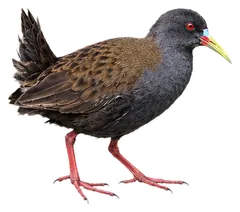 Plumbeous RailPardirallus sanguinolentus
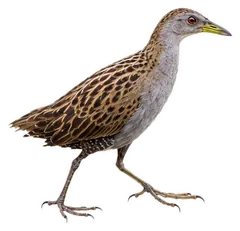 Ash-throated CrakeMustelirallus albicollis
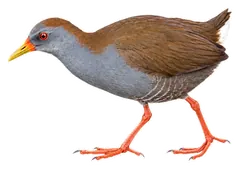 Zapata RailMustelirallus cerverai
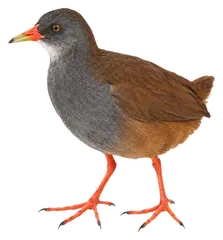 Colombian CrakeMustelirallus colombianus
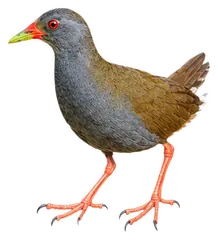 Paint-billed CrakeMustelirallus erythrops
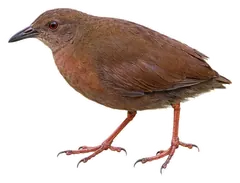 Uniform CrakeAmaurolimnas concolor
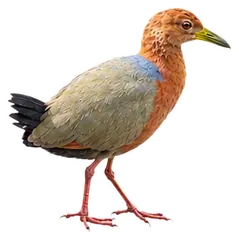 Rufous-necked Wood RailAramides axillaris
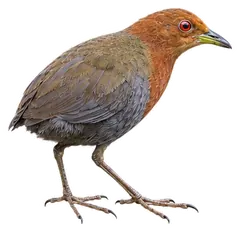
Download illustration
Free to use with credit: “Illustration: Bird Album (birdalbum.com)”. Drawn by AI from a reference photo by Marcia Morris. ↗
Heard it but can't see it? Mingji identifies birds by sound and photo, on your phone.
In other languages
- EnglishChestnut-headed Crake
- 简体中文栗头田鸡
- 繁體中文栗頭田雞
- 日本語ムネアカクイナ
- DeutschRotmaskenralle
- FrançaisRâle à masque rouge
- EspañolPolluela pituro
- Portuguêssanã-de-cabeça-castanha
- ItalianoRallo testacastana
- NederlandsKastanjekopral
- РусскийКаштановоголовый пастушок
- Svenskakortstjärtad rall
- DanskSkyggerikse
- Polskichruścielak kasztanowaty