 Bird Album
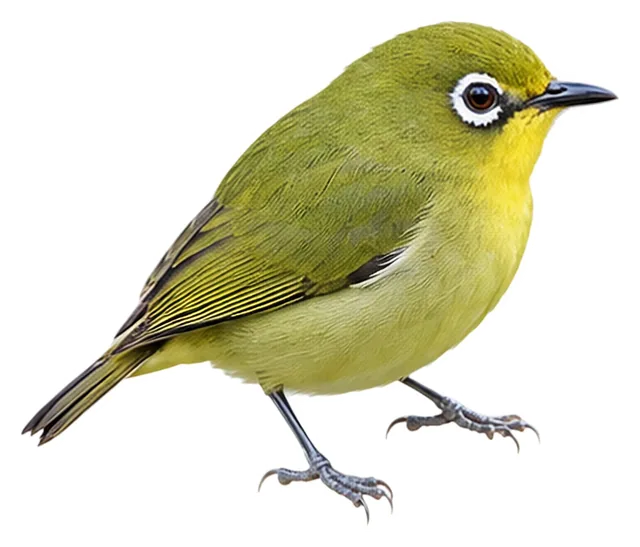
Citrine White-eye
Zosterops semperi Hartlaub, 1868
11 gWeight
The citrine white-eye (Zosterops semperi), or Caroline Islands white-eye, is a species of bird in the family Zosteropidae.
Busiest months: February and April–May · Most records: Palau, Micronesia
Where and when it's recorded
Busiest months: February and April–May · Most records: Palau, Micronesia

Citrine White-eye has been recorded at 18 of the 8,276 birding hotspots we track, in 2 countries and regions.
Records by month Northern Hemisphere
Where it's recorded most
- Ngchus St.1Palau145 records
- Ngchus St.2Palau115 records
- Euidelchol St.1Palau108 records
More places
- Jellyfish Lake St.1Palau95 records
- Ulong St.2Palau91 records
- Long Island Park & Conservation AreaPalau88 records
- Ngeanges St.1Palau83 records
- Ngeanges St.3Palau71 records
- Ulong St.1Palau69 records
- Ngeanges St.2Palau62 records
Countries and regions with the most records
eBird records via GBIF up to 2024-12-31. A record means someone listed it; more records partly mean more birders, not more birds.
About
The citrine white-eye (Zosterops semperi), or Caroline Islands white-eye, is a species of bird in the family Zosteropidae. It is found in Palau and the Federated States of Micronesia.
Excerpt from Wikipedia, CC BY-SA 4.0 · authors · Read more on Wikipedia
Questions
How big is the Citrine White-eye?
The Citrine White-eye weighs around 11 g.
Where does the Citrine White-eye live?
Its breeding range: Pacific Ocean: Palau, Truk and Pohnpei (Caroline Islands, western, central Micronesia). It is most often recorded in Palau and Micronesia.
When is the best time to see the Citrine White-eye?
At the hotspots we track, it is recorded most in February, April and May (Northern Hemisphere).
Is the Citrine White-eye endangered?
The IUCN Red List classifies the Citrine White-eye as Least Concern.
What does the Citrine White-eye eat?
Main food: Insects & other invertebrates.
What family is the Citrine White-eye in?
It belongs to the family White-eyes (Zosteropidae), order Passerines (Passeriformes).
At a glance
- Weight
- 11 g
- Habitat
- Forest
- Diet
- Insects & other invertebrates
- Lifestyle
- Perches in trees
- Migration
- Resident (barely migrates)
- Conservation
- Least Concern
More measurements
- Wing
- 56 mm
- Tail
- 38 mm
- Bill
- 13 mm
- Tarsus
- 17 mm
Averages from the AVONET dataset; length from field guides where available.
Range
Pacific Ocean: Palau, Truk and Pohnpei (Caroline Islands, western, central Micronesia)
Breeding range, IOC World Bird List 15.2
Classification
- Order
- Passerines Passeriformes
- Family
- White-eyes Zosteropidae
- Genus
- Zosterops
Other birds in the genus Zosterops
 Sri Lanka White-eyeZosterops ceylonensis
 Yellowish White-eyeZosterops nigrorum
 Black-capped White-eyeZosterops atricapilla
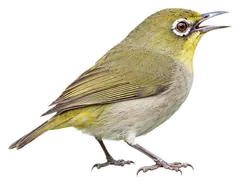 Abyssinian White-eyeZosterops abyssinicus
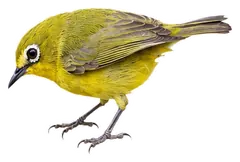 Pale White-eyeZosterops flavilateralis
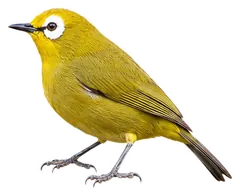 Mbulu White-eyeZosterops mbuluensis
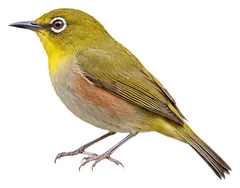 Chestnut-flanked White-eyeZosterops erythropleurus
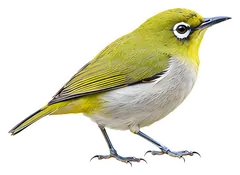 Swinhoe's White-eyeZosterops simplex
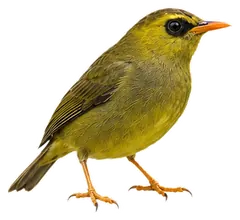 Mountain BlackeyeZosterops emiliae
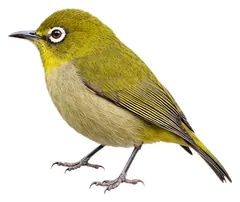 Warbling White-eyeZosterops japonicus
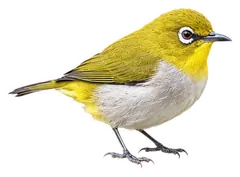 Indian White-eyeZosterops palpebrosus
 Lowland White-eyeZosterops meyeni
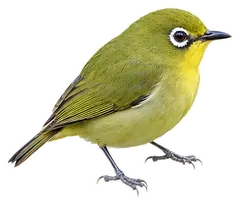
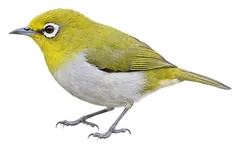
Download illustration
Free to use with credit: “Illustration: Bird Album (birdalbum.com)”. Drawn by AI from a reference photo by Thibaud Aronson. ↗
Heard it but can't see it? Mingji identifies birds by sound and photo, on your phone.
In other languages
- EnglishCitrine White-eye
- 简体中文卡岛绣眼鸟
- 繁體中文加羅林島繡眼
- 日本語カロリンメジロ
- DeutschSemperbrillenvogel
- FrançaisZostérops de Semper
- EspañolAnteojitos de las Carolinas
- Portuguêsolho-branco-das-carolinas
- ItalianoOcchialino delle Caroline
- NederlandsSempers Brilvogel
- РусскийЛимонная белоглазка
- Svenskakarolinerglasögonfågel
- DanskCaroliner Brillefugl
- Polskiszlarnik oliwkowy