 Bird Album
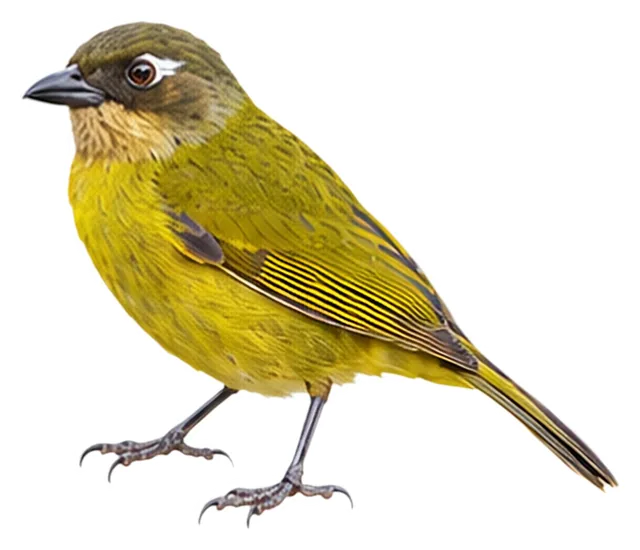
Common Chlorospingus
Chlorospingus flavopectus (Lafresnaye, 1840)
20 gWeight
The common chlorospingus (Chlorospingus flavopectus), also referred to as common bush tanager, is a small passerine bird.
Busiest months: January–March · Most records: Costa Rica, Guatemala, Colombia
Where and when it's recorded
Busiest months: January–March · Most records: Costa Rica, Guatemala, Colombia

Common Chlorospingus has been recorded at 241 of the 8,276 birding hotspots we track, in 13 countries and regions.
Records by month Northern Hemisphere
Where it's recorded most
- Reserva Biológica Bosque Nuboso MonteverdeCosta Rica5,477 records
- Curi-Cancha Refugio de Vida SilvestreCosta Rica4,281 records
- Galeria de Colibrí y Soda Cinchona - Mirador San FernandoCosta Rica3,785 records
More places
- Cabañas San IsidroEcuador3,581 records
- RNP Ranchitos del QuetzalGuatemala2,576 records
- Wilson Botanical GardenCosta Rica2,357 records
- PN Tapanti – Sector TapantiCosta Rica2,098 records
- Parque Ecológico El HayaMexico2,019 records
- La Paz Waterfall GardensCosta Rica1,579 records
- Hotel QuelitalesCosta Rica1,504 records
Countries and regions with the most records
eBird records via GBIF up to 2024-12-31. A record means someone listed it; more records partly mean more birders, not more birds.
About
The common chlorospingus (Chlorospingus flavopectus), also referred to as common bush tanager, is a small passerine bird. It is a resident breeder in the highlands from central Mexico south to Bolivia and northwest Argentina. C. flavopectus in the loose sense is a notorious cryptic species complex, and several of the up to 25 subspecies recognized in recent times are likely to be distinct species.
Excerpt from Wikipedia, CC BY-SA 4.0 · authors · Read more on Wikipedia
Questions
How big is the Common Chlorospingus?
The Common Chlorospingus weighs around 20 g.
Where does the Common Chlorospingus live?
Its breeding range: Middle America, South America: southwestern Mexico to northwestern Argentina. It is most often recorded in Costa Rica, Guatemala and Colombia.
When is the best time to see the Common Chlorospingus?
At the hotspots we track, it is recorded most in January, February and March (Northern Hemisphere).
Is the Common Chlorospingus endangered?
The IUCN Red List classifies the Common Chlorospingus as Least Concern.
What does the Common Chlorospingus eat?
Main food: Insects & other invertebrates.
What family is the Common Chlorospingus in?
It belongs to the family New World Sparrows (Passerellidae), order Passerines (Passeriformes).
At a glance
- Weight
- 20 g
- Habitat
- Forest
- Diet
- Insects & other invertebrates
- Lifestyle
- Perches in trees
- Migration
- Resident (barely migrates)
- Conservation
- Least Concern
More measurements
- Wing
- 67 mm
- Tail
- 64 mm
- Bill
- 15 mm
- Tarsus
- 21 mm
Averages from the AVONET dataset; length from field guides where available.
Range
Middle America, South America: southwestern Mexico to northwestern Argentina
Breeding range, IOC World Bird List 15.2
Classification
- Order
- Passerines Passeriformes
- Family
- New World Sparrows Passerellidae
- Genus
- Chlorospingus
Other birds in the genus Chlorospingus
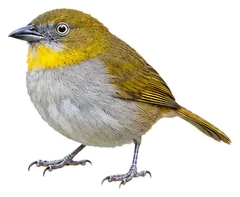 Yellow-throated ChlorospingusChlorospingus flavigularis
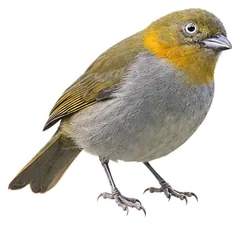 Yellow-whiskered ChlorospingusChlorospingus parvirostris
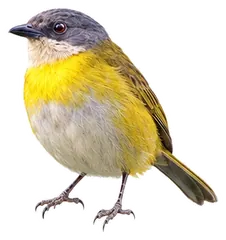 Ashy-throated ChlorospingusChlorospingus canigularis
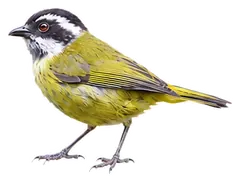 Sooty-capped ChlorospingusChlorospingus pileatus
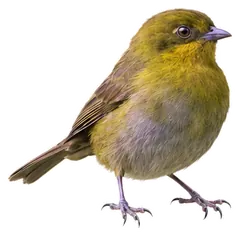 Tacarcuna ChlorospingusChlorospingus tacarcunae
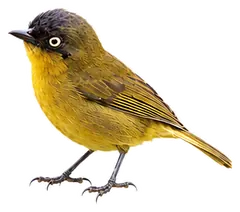 Pirre ChlorospingusChlorospingus inornatus
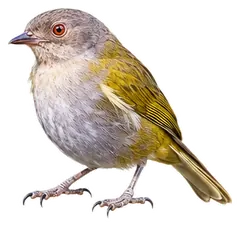 Dusky ChlorospingusChlorospingus semifuscus
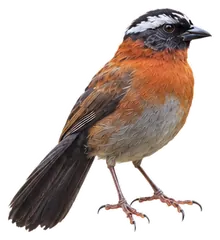 Tanager FinchOreothraupis arremonops
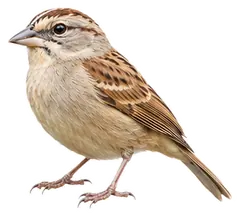 Tumbes SparrowRhynchospiza stolzmanni
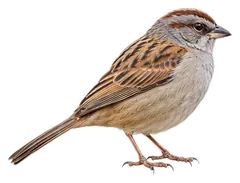 Yungas SparrowRhynchospiza dabbenei
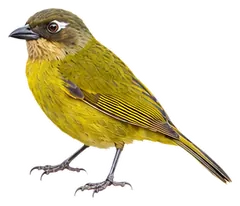
Download illustration
Free to use with credit: “Illustration: Bird Album (birdalbum.com)”. Drawn by AI from a reference photo by Ad Konings. ↗
Heard it but can't see it? Mingji identifies birds by sound and photo, on your phone.