 Bird Album
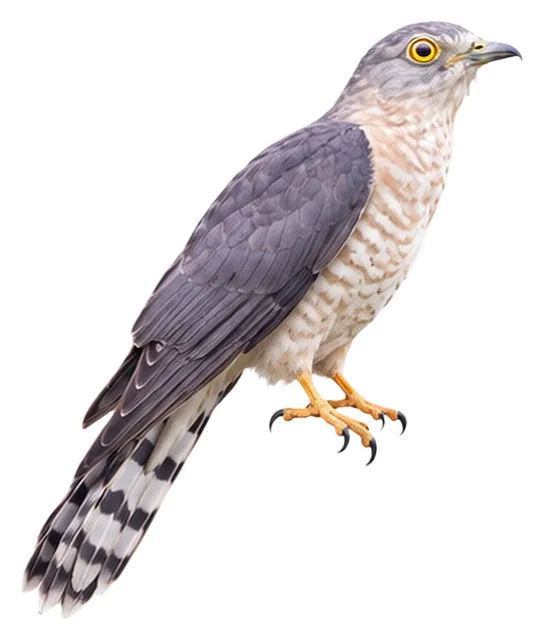
Common Hawk-Cuckoo
Hierococcyx varius (Vahl, 1797)
≈32 cmLength103 gWeight
It has a gray back and yellow eye-ring, and alternates wingbeats with gliding in flight.
Busiest months: February–May · Most records: India, Nepal, Bangladesh
How to identify
Field marks
- Eye-ring yellow
- Upperparts gray
- Underparts whitish, with brown barring
- Tail with broad barring
Male, female and young
Sexes similar in plumage, but the male is often larger; immatures have streaks on the breast and large brown V-shaped markings on the belly.
Voice
In summer the male repeatedly gives three loud notes, the second longer and higher; the calls gradually build in intensity, then stop abruptly.
Where and when it's recorded

Common Hawk-Cuckoo has been recorded at 314 of the 8,171 birding hotspots we track, in 7 countries and regions.
Records by month Northern Hemisphere
Where it's recorded most
- Kanha NP – Mukki ZoneIndia4,559 records
- Kanha Tiger Reserve – Mukki GateIndia1,649 records
- Salim Ali Centre for Ornithology and Natural HistoryIndia1,237 records
More places
- Kanha NP – Kanha ZoneIndia1,174 records
- Sultanpur National ParkIndia1,050 records
- Valley SchoolIndia1,035 records
- Kerala Agricultural UniversityIndia998 records
- Bharatpur – Keoladeo Ghana NPIndia916 records
- Thrissur Government Medical CollegeIndia905 records
- IIT MadrasIndia896 records
Countries and regions with the most records
eBird records via GBIF up to 2024-12-31. A record means someone listed it; more records partly mean more birders, not more birds.
About
The common hawk-cuckoo (Hierococcyx varius), popularly known as the brainfever bird, is a medium-sized cuckoo resident in the Indian subcontinent. It bears a close resemblance to the shikra, even in its style of flying and landing on a perch. The resemblance to hawks gives this group the generic name of hawk-cuckoo; like many other cuckoos, these are brood parasites, laying their eggs in the nests of babblers.
Excerpt from Wikipedia, CC BY-SA 4.0 · authors · Read more on Wikipedia
Questions
How big is the Common Hawk-Cuckoo?
The Common Hawk-Cuckoo is about ≈32 cm long and weighs around 103 g.
Where does the Common Hawk-Cuckoo live?
Its breeding range: Oriental: India to Myanmar. It is most often recorded in India, Nepal and Bangladesh.
When is the best time to see the Common Hawk-Cuckoo?
At the hotspots we track, it is recorded most in February, March, April and May (Northern Hemisphere).
Is the Common Hawk-Cuckoo endangered?
The IUCN Red List classifies the Common Hawk-Cuckoo as Least Concern.
What does the Common Hawk-Cuckoo eat?
Main food: Insects & other invertebrates.
What family is the Common Hawk-Cuckoo in?
It belongs to the family Cuckoos (Cuculidae), order Cuculiformes.
At a glance
- Length
- ≈32 cm
- Weight
- 103 g
- Habitat
- Woodland
- Diet
- Insects & other invertebrates
- Lifestyle
- Perches in trees
- Migration
- Resident (barely migrates)
- Conservation
- Least Concern
More measurements
- Wing
- 191 mm
- Tail
- 161 mm
- Bill
- 26 mm
- Tarsus
- 24 mm
Averages from the AVONET dataset; length from field guides where available.
Range
Oriental: India to Myanmar
Breeding range, IOC World Bird List 15.2
Classification
- Order
- Cuculiformes
- Family
- Cuckoos Cuculidae
- Genus
- Hierococcyx
Other birds in the genus Hierococcyx
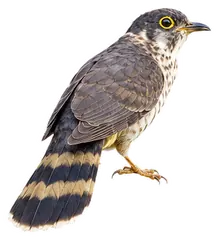 Moustached Hawk-CuckooHierococcyx vagans
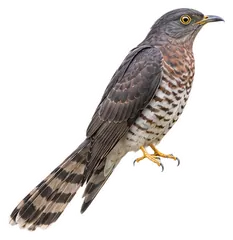 Large Hawk-CuckooHierococcyx sparverioides
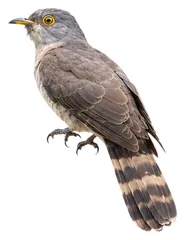 Dark Hawk-CuckooHierococcyx bocki
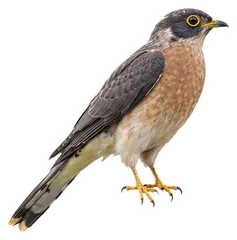 Northern Hawk-CuckooHierococcyx hyperythrus
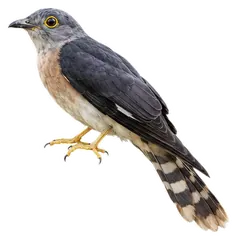 Philippine Hawk-CuckooHierococcyx pectoralis
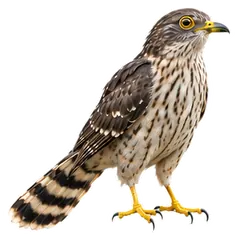 Malaysian Hawk-CuckooHierococcyx fugax
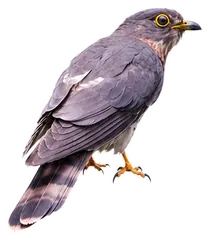 Hodgson's Hawk-CuckooHierococcyx nisicolor
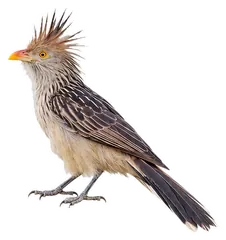 Guira CuckooGuira guira
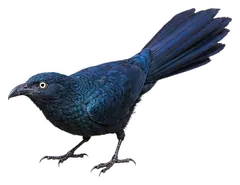 Greater AniCrotophaga major
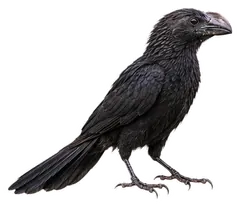 Smooth-billed AniCrotophaga ani
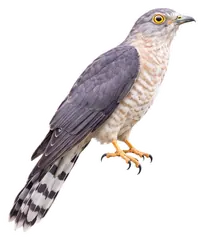
Download illustration
Free to use with credit: “Illustration: Bird Album (birdalbum.com)”. Drawn by AI from a reference photo by dr ashok. ↗
Heard it but can't see it? Mingji identifies birds by sound and photo, on your phone.