 Bird Album
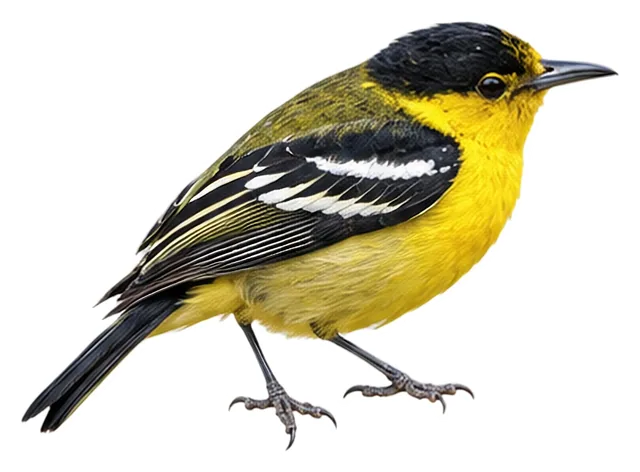
Common Iora
Aegithina tiphia (Linnaeus, 1758)
≈13 cmLength12 gWeight
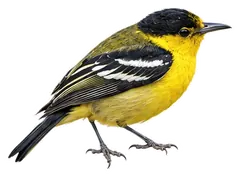
It is a small bird with a yellow belly, and the male has a black cap and back during the breeding season and two white bars on the wings.
Busiest months: February · Most records: India, Singapore, Thailand
How to identify
Field marks
- Yellow underparts
- Male may have a black cap during the breeding season; back black or olive depending on subspecies
- Male has two white bars on the wings
- Male has black wings and tail throughout the year
Male, female and young
Female has greenish wings and an olive tail; male has a black cap and back during the breeding season, and black wings and tail throughout the year.
Voice
A mixture of “churr” notes, twitters and whistles; song is a trilled “wheeeee-tee”.
Where and when it's recorded

Common Iora has been recorded at 823 of the 8,171 birding hotspots we track, in 16 countries and regions.
Records by month Northern Hemisphere
Where it's recorded most
- Salim Ali Centre for Ornithology and Natural HistoryIndia3,218 records
- Rishi Valley – School CampusIndia2,178 records
- Valley SchoolIndia2,048 records
More places
- Thrissur Government Medical CollegeIndia1,860 records
- Bhusawal Thermal Power Station (BTPS) – Ganesh Mandir & EM Building AreaIndia1,744 records
- Sungei Buloh Wetland ReserveSingapore1,703 records
- Singapore Botanic GardensSingapore1,336 records
- Kerala Agricultural UniversityIndia1,157 records
- Kranji MarshSingapore1,066 records
- Bondla Wildlife SanctuaryIndia1,045 records
Countries and regions with the most records
eBird records via GBIF up to 2024-12-31. A record means someone listed it; more records partly mean more birders, not more birds.
About
The common iora (Aegithina tiphia) is a small passerine bird found across the tropical Indian subcontinent and Southeast Asia, with populations showing plumage variations, some of which are designated as subspecies. A species found in scrub and forest, it is easily detected from its loud whistles and the bright colours.
Excerpt from Wikipedia, CC BY-SA 4.0 · authors · Read more on Wikipedia
Questions
How big is the Common Iora?
The Common Iora is about ≈13 cm long and weighs around 12 g.
Where does the Common Iora live?
Its breeding range: Oriental: widespread. It is most often recorded in India, Singapore and Thailand.
When is the best time to see the Common Iora?
At the hotspots we track, it is recorded most in February (Northern Hemisphere).
Is the Common Iora endangered?
The IUCN Red List classifies the Common Iora as Least Concern.
What does the Common Iora eat?
Main food: Insects & other invertebrates.
What family is the Common Iora in?
It belongs to the family Ioras (Aegithinidae), order Passerines (Passeriformes).
At a glance
- Length
- ≈13 cm
- Weight
- 12 g
- Habitat
- Forest
- Diet
- Insects & other invertebrates
- Lifestyle
- Perches in trees
- Migration
- Resident (barely migrates)
- Conservation
- Least Concern
More measurements
- Wing
- 62 mm
- Tail
- 48 mm
- Bill
- 17 mm
- Tarsus
- 20 mm
Averages from the AVONET dataset; length from field guides where available.
Range
Oriental: widespread
Breeding range, IOC World Bird List 15.2
Subspecies · 1
- Aegithina tiphia philipi sc China, e Myanmar, n Thailand and n, c Indochina
Classification
- Order
- Passerines Passeriformes
- Family
- Ioras Aegithinidae
- Genus
- Aegithina
Other birds in the genus Aegithina
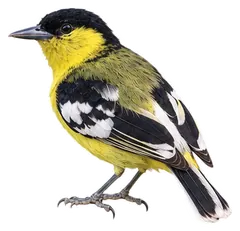 Marshall's IoraAegithina nigrolutea
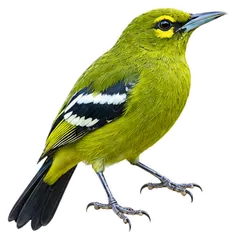 Green IoraAegithina viridissima
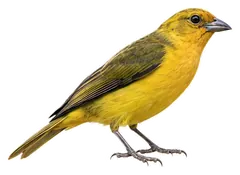 Great IoraAegithina lafresnayei
Download illustration
Free to use with credit: “Illustration: Bird Album (birdalbum.com)”. Drawn by AI from a reference photo by wingwatcher48. ↗
Heard it but can't see it? Mingji identifies birds by sound and photo, on your phone.