 Bird Album
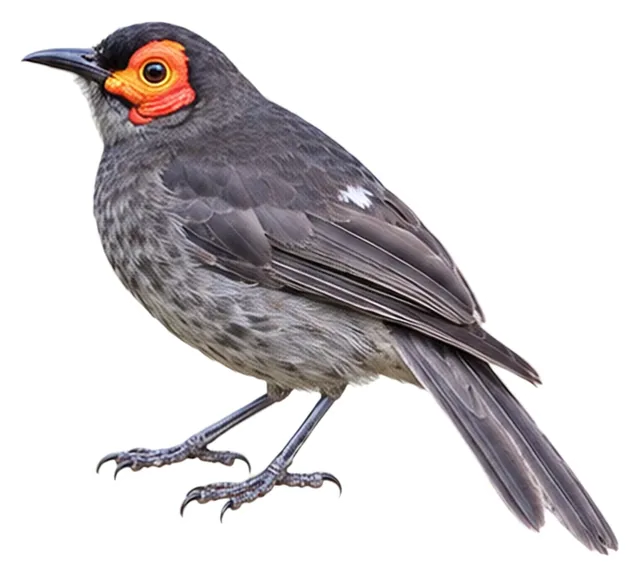
Common Smoky Honeyeater
Melipotes fumigatus Meyer, AB, 1886
59 gWeight
The common smoky honeyeater (Melipotes fumigatus) is a medium-sized bird found in central Papua New Guinea and Eastern Indonesia.
Busiest months: July · Most records: Papua New Guinea
Where and when it's recorded
Busiest months: July · Most records: Papua New Guinea

Common Smoky Honeyeater has been recorded at 15 of the 8,276 birding hotspots we track, in 1 country or region.
Records by month Southern Hemisphere
Where it's recorded most
- Kumul LodgePapua New Guinea1,009 records
- Ambua LodgePapua New Guinea331 records
- Rondon Ridge LodgePapua New Guinea301 records
More places
- Tomba & Murmur Pass [2400-2800m]Papua New Guinea293 records
- Rondon RidgePapua New Guinea268 records
- Mt Komonge RidgePapua New Guinea196 records
- Highlands Hwy – above Ambua Lodge to Tari GapPapua New Guinea178 records
- Tari GapPapua New Guinea168 records
- Tonga TrailPapua New Guinea145 records
- Tabubil AreaPapua New Guinea35 records
Countries and regions with the most records
eBird records via GBIF up to 2024-12-31. A record means someone listed it; more records partly mean more birders, not more birds.
About
The common smoky honeyeater (Melipotes fumigatus) is a medium-sized bird found in central Papua New Guinea and Eastern Indonesia. It is one of four species in the Melipotes genus. The common smoky honeyeater can be identified by its charcoal-colored body and blotchy neon orange circle around its eyes..
Excerpt from Wikipedia, CC BY-SA 4.0 · authors · Read more on Wikipedia
Questions
How big is the Common Smoky Honeyeater?
The Common Smoky Honeyeater weighs around 59 g.
Where does the Common Smoky Honeyeater live?
Its breeding range: Australasia: montane west-central to southeastern New Guinea. It is most often recorded in Papua New Guinea.
When is the best time to see the Common Smoky Honeyeater?
At the hotspots we track, it is recorded most in July (Southern Hemisphere).
Is the Common Smoky Honeyeater endangered?
The IUCN Red List classifies the Common Smoky Honeyeater as Least Concern.
What does the Common Smoky Honeyeater eat?
Main food: Fruit.
What family is the Common Smoky Honeyeater in?
It belongs to the family Honeyeaters (Meliphagidae), order Passerines (Passeriformes).
At a glance
- Weight
- 59 g
- Habitat
- Forest
- Diet
- Fruit
- Lifestyle
- Perches in trees
- Migration
- Resident (barely migrates)
- Conservation
- Least Concern
More measurements
- Wing
- 107 mm
- Tail
- 100 mm
- Bill
- 23 mm
- Tarsus
- 30 mm
Averages from the AVONET dataset; length from field guides where available.
Range
Australasia: montane west-central to southeastern New Guinea
Breeding range, IOC World Bird List 15.2
Classification
- Order
- Passerines Passeriformes
- Family
- Honeyeaters Meliphagidae
- Genus
- Melipotes
Other birds in the genus Melipotes
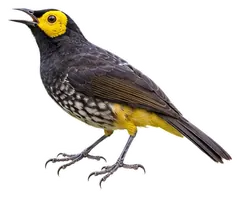 Arfak HoneyeaterMelipotes gymnops
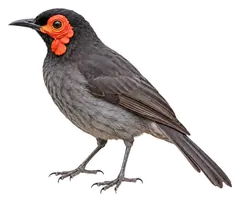 Wattled Smoky HoneyeaterMelipotes carolae
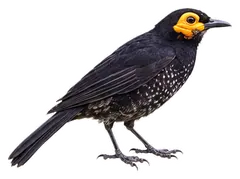 Spangled HoneyeaterMelipotes ater
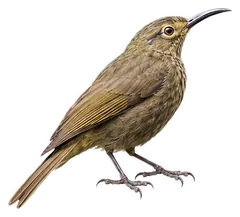 Dark-eared MyzaMyza celebensis
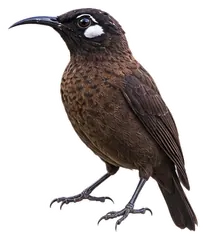 White-eared MyzaMyza sarasinorum
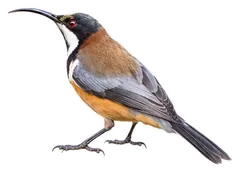 Eastern SpinebillAcanthorhynchus tenuirostris
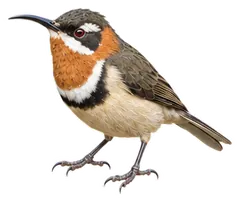 Western SpinebillAcanthorhynchus superciliosus
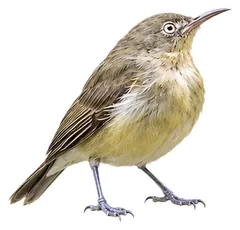 Green-backed HoneyeaterGlycichaera fallax
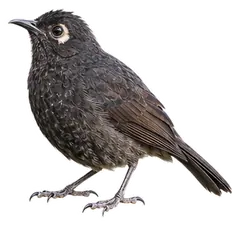 Sooty HoneyeaterMelionyx fuscus
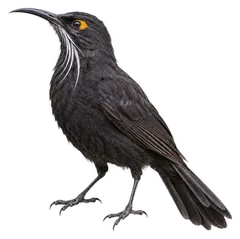 Long-bearded HoneyeaterMelionyx princeps
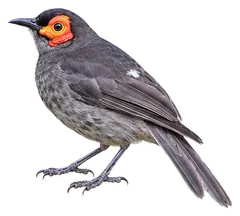
Download illustration
Free to use with credit: “Illustration: Bird Album (birdalbum.com)”. Drawn by AI from a reference photo by Jay Pruett. ↗
Heard it but can't see it? Mingji identifies birds by sound and photo, on your phone.
In other languages
- EnglishCommon Smoky Honeyeater
- 简体中文烟色饮蜜鸟
- 繁體中文普通飲蜜鳥
- 日本語キホオミツスイ
- DeutschAschbrust-Honigfresser
- FrançaisMéliphage enfumé
- EspañolMielero ahumado
- Portuguêspapa-mel-esfumado
- ItalianoSucciamiele grigiofumo
- NederlandsGeelwanghoningeter
- РусскийПепельный нектаролюб
- Svenskarökfärgad honungsfågel
- DanskSignalhonningæder
- Polskidziwoliczek zmienny