 Bird Album
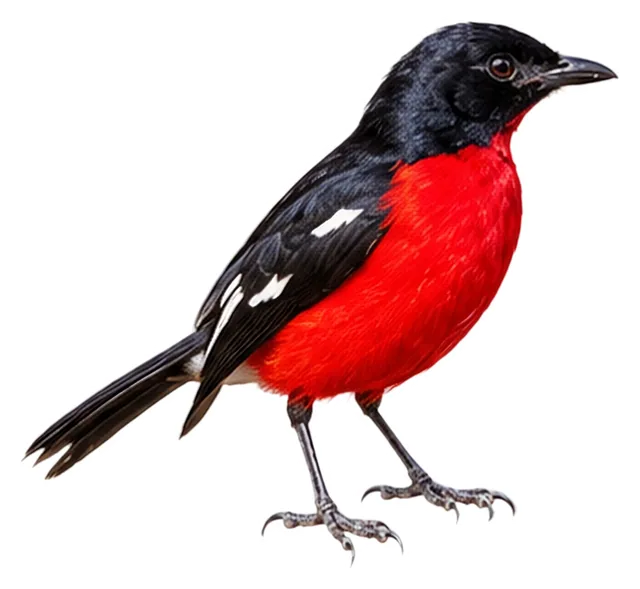
Crimson-breasted Shrike
Laniarius atrococcineus (Burchell, 1822)
49 gWeight
The crimson-breasted shrike (Laniarius atrococcineus) or the crimson-breasted gonolek, ('gonolek' - supposedly imitative of its call), or the crimson-breasted boubou, is a southern African bird.
Busiest months: November · Most records: Namibia, South Africa, Botswana
Where and when it's recorded
Busiest months: November · Most records: Namibia, South Africa, Botswana

Crimson-breasted Shrike has been recorded at 78 of the 8,276 birding hotspots we track, in 5 countries and regions.
Records by month Southern Hemisphere
Where it's recorded most
- Zaagkuildrift RdSouth Africa509 records
- Etosha NP – Okaukuejo CampNamibia503 records
- Bwabwata NP – Mahango riverside loopNamibia437 records
More places
- Rietvlei NRSouth Africa394 records
- Avis DamNamibia366 records
- Polokwane GRSouth Africa343 records
- Pilanesberg NPSouth Africa293 records
- Madikwe GRSouth Africa276 records
- Okonjima Nature ReserveNamibia230 records
- Waterberg ResortNamibia216 records
Countries and regions with the most records
eBird records via GBIF up to 2024-12-31. A record means someone listed it; more records partly mean more birders, not more birds.
About
The crimson-breasted shrike (Laniarius atrococcineus) or the crimson-breasted gonolek, ('gonolek' - supposedly imitative of its call), or the crimson-breasted boubou, is a southern African bird. It has black upper parts with a white flash on the wing, and bright scarlet underparts. The International Union for Conservation of Nature has rated it as a "least-concern species".
Excerpt from Wikipedia, CC BY-SA 4.0 · authors · Read more on Wikipedia
Questions
How big is the Crimson-breasted Shrike?
The Crimson-breasted Shrike weighs around 49 g.
Where does the Crimson-breasted Shrike live?
Its breeding range: Africa: Angola, Zambia and Zimbabwe to central South Africa. It is most often recorded in Namibia, South Africa and Botswana.
When is the best time to see the Crimson-breasted Shrike?
At the hotspots we track, it is recorded most in November (Southern Hemisphere).
Is the Crimson-breasted Shrike endangered?
The IUCN Red List classifies the Crimson-breasted Shrike as Least Concern.
What does the Crimson-breasted Shrike eat?
Main food: Insects & other invertebrates.
What family is the Crimson-breasted Shrike in?
It belongs to the family Bushshrikes (Malaconotidae), order Passerines (Passeriformes).
At a glance
- Weight
- 49 g
- Habitat
- Woodland
- Diet
- Insects & other invertebrates
- Lifestyle
- Perches in trees
- Migration
- Resident (barely migrates)
- Conservation
- Least Concern
More measurements
- Wing
- 100 mm
- Tail
- 102 mm
- Bill
- 24 mm
- Tarsus
- 34 mm
Averages from the AVONET dataset; length from field guides where available.
Range
Africa: Angola, Zambia and Zimbabwe to central South Africa
Breeding range, IOC World Bird List 15.2
Classification
- Order
- Passerines Passeriformes
- Family
- Bushshrikes Malaconotidae
- Genus
- Laniarius
Other birds in the genus Laniarius
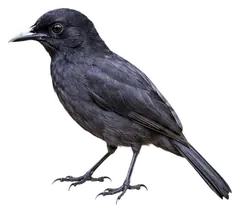 Lowland Sooty BoubouLaniarius leucorhynchus
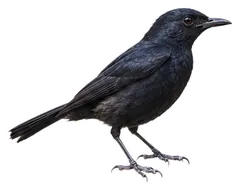 Mountain Sooty BoubouLaniarius poensis
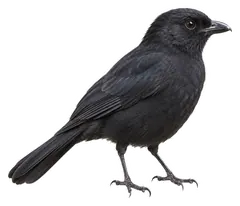 Albertine Sooty BoubouLaniarius holomelas
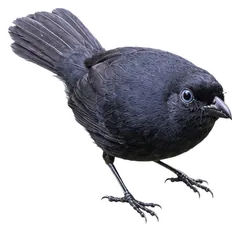 Willard's Sooty BoubouLaniarius willardi
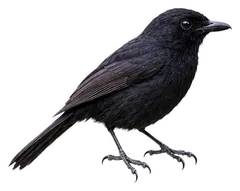 Fülleborn's BoubouLaniarius fuelleborni
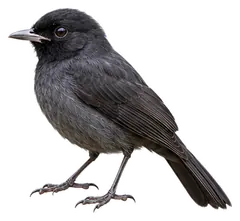 Slate-colored BoubouLaniarius funebris
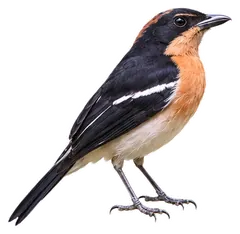 Lühder's BushshrikeLaniarius luehderi
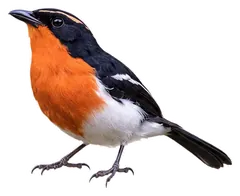 Braun's BushshrikeLaniarius brauni
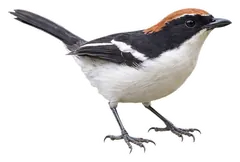 Gabela BushshrikeLaniarius amboimensis
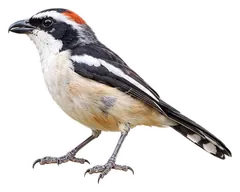 Red-naped BushshrikeLaniarius ruficeps
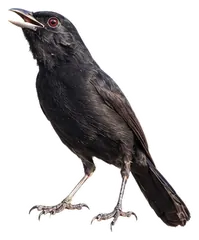 Black BoubouLaniarius nigerrimus
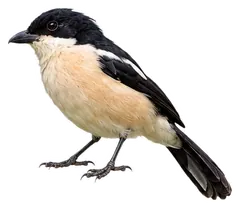 Ethiopian BoubouLaniarius aethiopicus
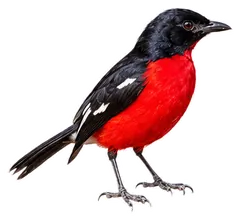
Download illustration
Free to use with credit: “Illustration: Bird Album (birdalbum.com)”. Drawn by AI from a reference photo by Steve Murray. ↗
Heard it but can't see it? Mingji identifies birds by sound and photo, on your phone.
In other languages
- EnglishCrimson-breasted Shrike
- 简体中文红胸黑鵙
- 繁體中文緋紅胸黑伯勞
- 日本語ハジロアカハラヤブモズ
- DeutschRotbauchwürger
- FrançaisGonolek rouge et noir
- EspañolBubú pechirrojo
- Portuguêspicanço-preto-e-vermelho
- ItalianoGonolek pettocremisi
- NederlandsBurchells Fiskaal
- РусскийБелокрылый гонолек
- Svenskarödbröstad busktörnskata
- DanskHvidbåndet Gonolek
- Polskidzierzyk purpurowy