 Bird Album
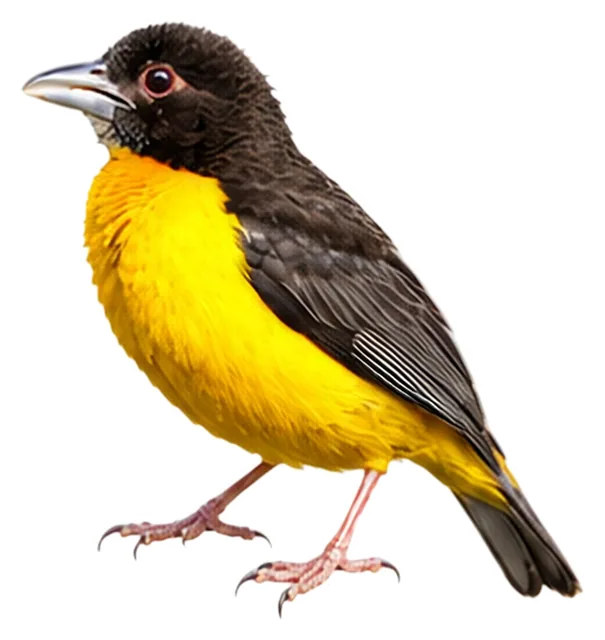
Dark-backed Weaver
Ploceus bicolor Vieillot, 1819
34 gWeight
The dark-backed weaver (Ploceus bicolor), also known as the forest weaver, is a species of bird in the family Ploceidae.
Busiest months: October–November · Most records: South Africa, Kenya, Zimbabwe
Where and when it's recorded
Busiest months: October–November · Most records: South Africa, Kenya, Zimbabwe

Dark-backed Weaver has been recorded at 89 of the 8,276 birding hotspots we track, in 16 countries and regions.
Records by month Southern Hemisphere
Where it's recorded most
- St Lucia – iGwalagwala TrailSouth Africa558 records
- Arabuko-Sokoke Forest NRKenya484 records
- Kakamega Forest NR – Rondo Retreat CentreKenya456 records
More places
- Kakamega Forest NRKenya423 records
- Eshowe – Dlinza ForestSouth Africa333 records
- Mkhuze GRSouth Africa287 records
- Kakamega Forest NR – Zimmerman Plot/Isecheno Forest StationKenya211 records
- iSimangaliso WP – Eastern ShoresSouth Africa201 records
- Aberfoyle LodgeZimbabwe194 records
- Kakamega Forest NR – Ikuywa RiverKenya180 records
Countries and regions with the most records
eBird records via GBIF up to 2024-12-31. A record means someone listed it; more records partly mean more birders, not more birds.
About
The dark-backed weaver (Ploceus bicolor), also known as the forest weaver, is a species of bird in the family Ploceidae.
Excerpt from Wikipedia, CC BY-SA 4.0 · authors · Read more on Wikipedia
Questions
How big is the Dark-backed Weaver?
The Dark-backed Weaver weighs around 34 g.
Where does the Dark-backed Weaver live?
Its breeding range: Africa: widespread. It is most often recorded in South Africa, Kenya and Zimbabwe.
When is the best time to see the Dark-backed Weaver?
At the hotspots we track, it is recorded most in October and November (Southern Hemisphere).
Is the Dark-backed Weaver endangered?
The IUCN Red List classifies the Dark-backed Weaver as Least Concern.
What does the Dark-backed Weaver eat?
Main food: Insects & other invertebrates.
What family is the Dark-backed Weaver in?
It belongs to the family Weavers, Widowbirds (Ploceidae), order Passerines (Passeriformes).
At a glance
- Weight
- 34 g
- Habitat
- Forest
- Diet
- Insects & other invertebrates
- Lifestyle
- Perches in trees
- Migration
- Resident (barely migrates)
- Conservation
- Least Concern
More measurements
- Wing
- 84 mm
- Tail
- 54 mm
- Bill
- 21 mm
- Tarsus
- 23 mm
Averages from the AVONET dataset; length from field guides where available.
Range
Africa: widespread
Breeding range, IOC World Bird List 15.2
Classification
- Order
- Passerines Passeriformes
- Family
- Weavers, Widowbirds Ploceidae
- Genus
- Ploceus
Other birds in the genus Ploceus
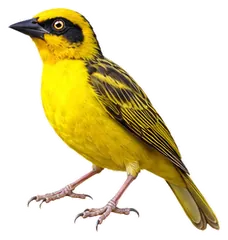 Baglafecht WeaverPloceus baglafecht
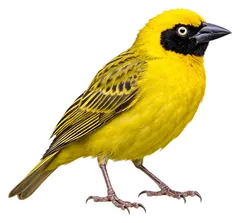 Bannerman's WeaverPloceus bannermani
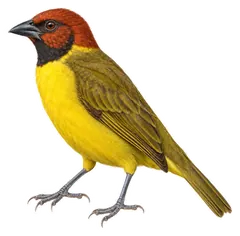 Bates's WeaverPloceus batesi
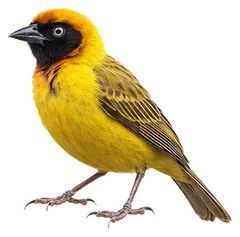 Black-chinned WeaverPloceus nigrimentus
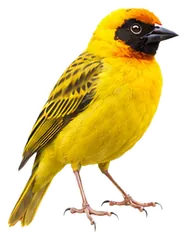 Bertram's WeaverPloceus bertrandi
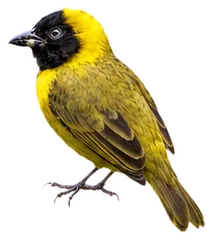 Slender-billed WeaverPloceus pelzelni
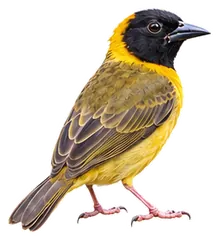 Loango WeaverPloceus subpersonatus
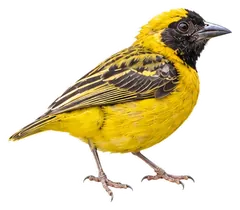 Little WeaverPloceus luteolus
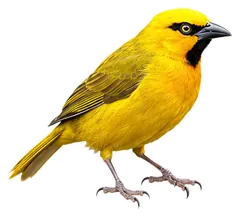 Spectacled WeaverPloceus ocularis
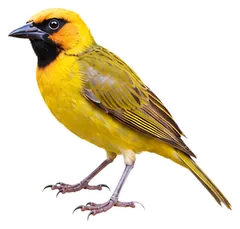 Olive-naped WeaverPloceus brachypterus
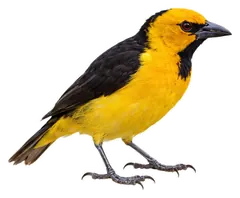 Black-necked WeaverPloceus nigricollis
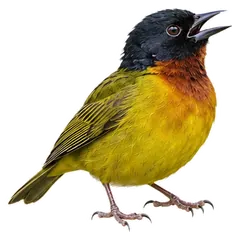 Strange WeaverPloceus alienus
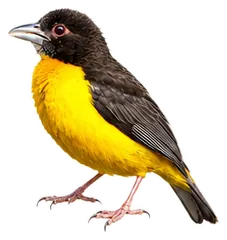
Download illustration
Free to use with credit: “Illustration: Bird Album (birdalbum.com)”. Drawn by AI from a reference photo by Derek Keats. ↗
Heard it but can't see it? Mingji identifies birds by sound and photo, on your phone.