 Bird Album
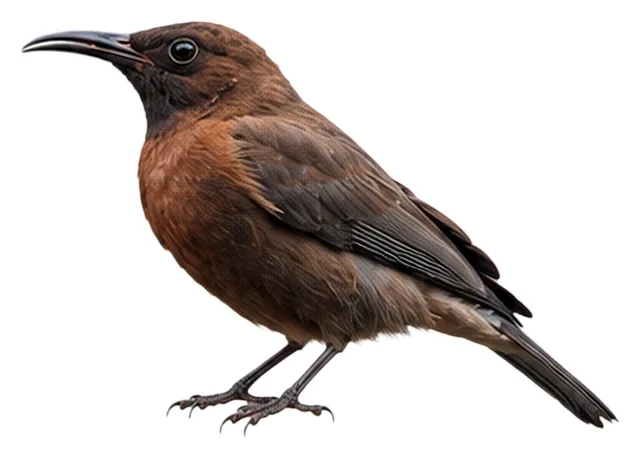
Dusky Myzomela
Myzomela obscura Gould, 1843
12–15 cmLength12 gWeight
Busiest months: October · Most records: Australia, Papua New Guinea, Indonesia
Where and when it's recorded

Dusky Myzomela has been recorded at 50 of the 8,171 birding hotspots we track, in 3 countries and regions.
Records by month Southern Hemisphere
Where it's recorded most
- Kingfisher Park Birdwatchers LodgeAustralia1,247 records
- Keatings Lagoon Conservation ParkAustralia881 records
- Kingfisher Park Birdwatchers Lodge – Morning WalkAustralia875 records
More places
- Cattana WetlandsAustralia777 records
- Crater Lakes National Park – Lake BarrineAustralia696 records
- Abattoir Swamp, JulattenAustralia677 records
- Cairns Botanical Gardens and Centenary LakesAustralia615 records
- George Brown Darwin Botanic GardensAustralia591 records
- Daintree Village Boat CruiseAustralia526 records
- Fogg Dam Conservation ReserveAustralia505 records
Countries and regions with the most records
eBird records via GBIF up to 2024-12-31. A record means someone listed it; more records partly mean more birders, not more birds.
About
The dusky myzomela or dusky honeyeater (Myzomela obscura) is a small, brown bird that is a common resident of the Aru Islands, southern New Guinea and northern and eastern Australia, where there are two separated populations, one in the Top End, another from Cape York Peninsula along the east coast as far south as the New South Wales border, though the species is rare south of Rockhampton. The Moluccan myzomela (M. simplex), red-tinged myzomela (M. rubrotincta), and Biak myzomela (M. rubrobrunnea) were formerly considered conspecific, but was split as distinct species by the IOC in 2021.
Excerpt from Wikipedia, CC BY-SA 4.0 · authors · Read more on Wikipedia
Questions
How big is the Dusky Myzomela?
The Dusky Myzomela is about 12–15 cm long and weighs around 12 g.
Where does the Dusky Myzomela live?
Its breeding range: Australasia: southern New Guinea and northern, northeastern Australia. It is most often recorded in Australia, Papua New Guinea and Indonesia.
When is the best time to see the Dusky Myzomela?
At the hotspots we track, it is recorded most in October (Southern Hemisphere).
Is the Dusky Myzomela endangered?
The IUCN Red List classifies the Dusky Myzomela as Least Concern.
What does the Dusky Myzomela eat?
Main food: Nectar.
What family is the Dusky Myzomela in?
It belongs to the family Honeyeaters (Meliphagidae), order Passerines (Passeriformes).
At a glance
- Length
- 12–15 cm
- Weight
- 12 g
- Habitat
- Forest
- Diet
- Nectar
- Lifestyle
- Perches in trees
- Migration
- Resident (barely migrates)
- Conservation
- Least Concern
More measurements
- Wing
- 68 mm
- Tail
- 52 mm
- Bill
- 20 mm
- Tarsus
- 17 mm
Averages from the AVONET dataset; length from field guides where available.
Range
Australasia: southern New Guinea and northern, northeastern Australia
Breeding range, IOC World Bird List 15.2
Classification
- Order
- Passerines Passeriformes
- Family
- Honeyeaters Meliphagidae
- Genus
- Myzomela
Other birds in the genus Myzomela
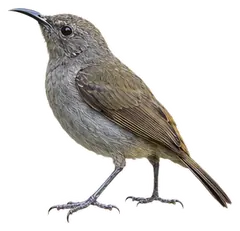 Drab MyzomelaMyzomela blasii
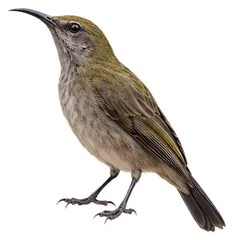 White-chinned MyzomelaMyzomela albigula
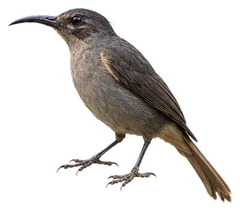 Ashy MyzomelaMyzomela cineracea
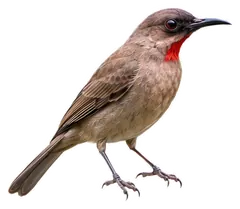 Ruby-throated MyzomelaMyzomela eques
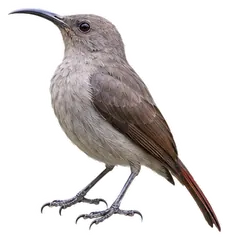 Moluccan MyzomelaMyzomela simplex
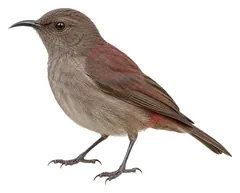 Red-tinged MyzomelaMyzomela rubrotincta
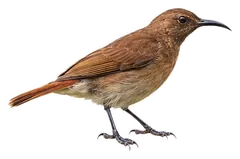 Biak MyzomelaMyzomela rubrobrunnea
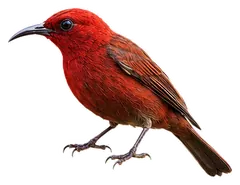 Red MyzomelaMyzomela cruentata
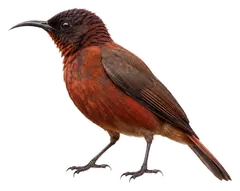 Reddish MyzomelaMyzomela erythrina
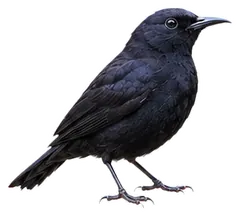 Papuan Black MyzomelaMyzomela nigrita
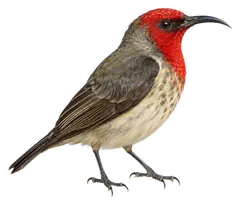 New Ireland MyzomelaMyzomela pulchella
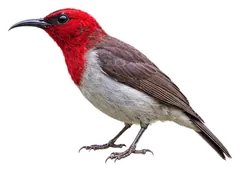 Wetar MyzomelaMyzomela kuehni
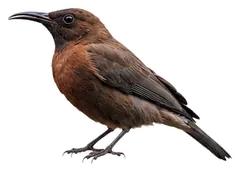
Download illustration
Free to use with credit: “Illustration: Bird Album (birdalbum.com)”. Drawn by AI from a reference photo by Allan Lugg. ↗
Heard it but can't see it? Mingji identifies birds by sound and photo, on your phone.