 Bird Album
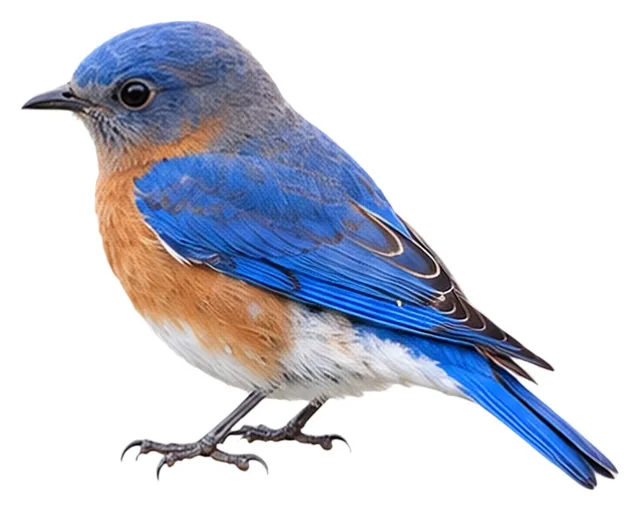
Eastern Bluebird
Sialia sialis (Linnaeus, 1758)
16–21 cmLength25–32 cmWingspan28 gWeight
The male in breeding plumage is bright blue with a reddish-brown breast.
Busiest months: May · Most records: United States, Canada, Bermuda
How to identify
Field marks
- Male in breeding plumage bright blue
- Male has a reddish-brown breast
- Female has a gray head and back, with blue on the wings and tail
- Fledged juvenile grayish, with spots on the breast
Male, female and young
Female has a gray head and back, with a breast usually paler than the male's and orange-tinged; fledged juvenile grayish, with spots on the breast.
Voice
Male sometimes sings soft “jeew” or “chir-wi” notes, as well as melodious phrases.
Where and when it's recorded

Eastern Bluebird has been recorded at 589 of the 8,171 birding hotspots we track, in 11 countries and regions.
Records by month Northern Hemisphere
Where it's recorded most
- HUNTLEY MEADOWS PARKUnited States11,683 records
- Middle Creek WMA (IBA)United States8,261 records
- Hagerman NWRUnited States8,003 records
More places
- Cromwell Valley ParkUnited States7,781 records
- Mount Pleasant Farm - Howard County ConservancyUnited States7,639 records
- Hughes Hollow - McKee Beshers WMAUnited States7,578 records
- Commons Ford Ranch Metro ParkUnited States7,242 records
- Conestee Nature PreserveUnited States6,961 records
- Mid Pines Rd.United States6,818 records
- Bear Creek ParkUnited States6,752 records
Countries and regions with the most records
eBird records via GBIF up to 2024-12-31. A record means someone listed it; more records partly mean more birders, not more birds.
About
The eastern bluebird (Sialia sialis) is a small North American migratory thrush found in open woodlands, farmlands, and orchards.
Excerpt from Wikipedia, CC BY-SA 4.0 · authors · Read more on Wikipedia
Questions
How big is the Eastern Bluebird?
The Eastern Bluebird is about 16–21 cm long, with a wingspan of 25–32 cm and weighs around 28 g.
Where does the Eastern Bluebird live?
Its breeding range: North America, Middle America: eastern, central North America to Nicaragua. It is most often recorded in United States, Canada and Bermuda.
When is the best time to see the Eastern Bluebird?
At the hotspots we track, it is recorded most in May (Northern Hemisphere).
Is the Eastern Bluebird endangered?
The IUCN Red List classifies the Eastern Bluebird as Least Concern.
What does the Eastern Bluebird eat?
Main food: Insects & other invertebrates.
What family is the Eastern Bluebird in?
It belongs to the family Thrushes (Turdidae), order Passerines (Passeriformes).
At a glance
- Length
- 16–21 cm
- Wingspan
- 25–32 cm
- Weight
- 28 g
- Habitat
- Woodland
- Diet
- Insects & other invertebrates
- Lifestyle
- Perches in trees
- Migration
- Partial migrant
- Conservation
- Least Concern
More measurements
- Wing
- 96 mm
- Tail
- 62 mm
- Bill
- 15 mm
- Tarsus
- 20 mm
Averages from the AVONET dataset; length from field guides where available.
Range
North America, Middle America: eastern, central North America to Nicaragua
Breeding range, IOC World Bird List 15.2
Classification
- Order
- Passerines Passeriformes
- Family
- Thrushes Turdidae
- Genus
- Sialia
Other birds in the genus Sialia
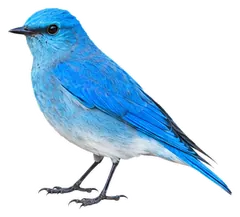 Mountain BluebirdSialia currucoides
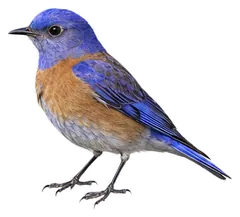 Western BluebirdSialia mexicana
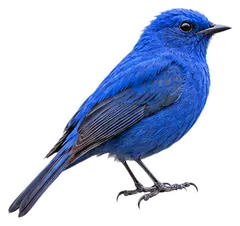 GrandalaGrandala coelicolor
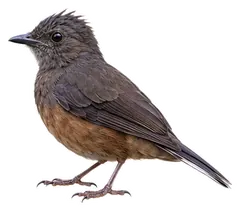 Finsch's Rufous ThrushStizorhina finschi
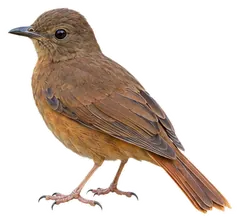 Fraser's Rufous ThrushStizorhina fraseri
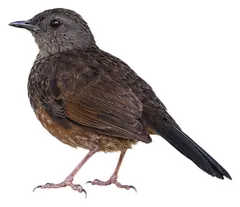 White-tailed Ant ThrushNeocossyphus poensis
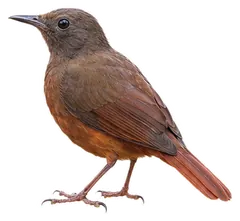 Red-tailed Ant ThrushNeocossyphus rufus
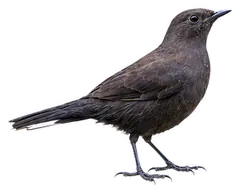 Boulder ChatPinarornis plumosus
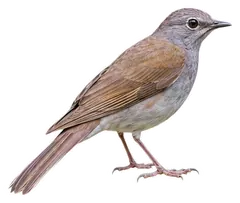 Brown-backed SolitaireMyadestes occidentalis
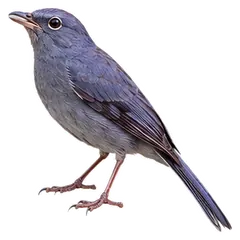 Slate-colored SolitaireMyadestes unicolor
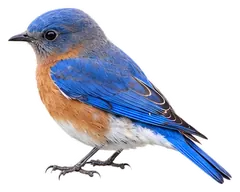
Download illustration
Free to use with credit: “Illustration: Bird Album (birdalbum.com)”. Drawn by AI from a reference photo by Craig K. Hunt. ↗
Heard it but can't see it? Mingji identifies birds by sound and photo, on your phone.