 Bird Album
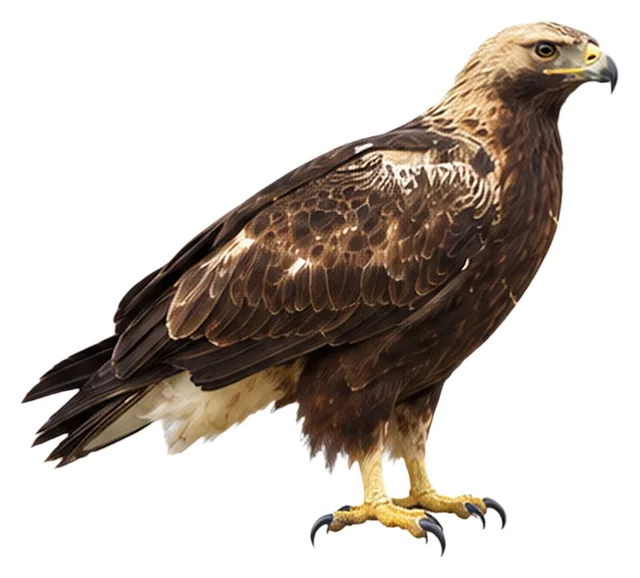
Eastern Imperial Eagle
Aquila heliaca Savigny, 1809
80 cmLength200 cmWingspan3.1 kgWeight
The dark brown adult has two bright white epaulette-like patches on its scapulars.
Busiest months: November–February · Most records: India, China, Iran
Looks like Golden Eagle
How to identify
Field marks
- Adult has conspicuous white patches on scapulars
- Adult mostly blackish-brown
- Adult crown and nape creamy-white to golden yellowish-brown
- Adult has a broad black band near the tail tip
Male, female and young
Female usually larger; juvenile mostly pale yellowish-brown to sandy-yellow, with dark brown streaks on throat and breast.
Similar species
Where and when it's recorded

Eastern Imperial Eagle has been recorded at 353 of the 8,171 birding hotspots we track, in 48 countries and regions.
Records by month Northern Hemisphere
To protect this bird from disturbance, we don't list exact sites.
Countries and regions with the most records
eBird records via GBIF up to 2024-12-31. A record means someone listed it; more records partly mean more birders, not more birds.
About
The eastern imperial eagle (Aquila heliaca) is a large bird of prey that breeds in southeastern Europe and extensively through West and Central Asia. Most populations are migratory and winter in northeastern Africa, the Middle East and South and East Asia. Like all eagles, the eastern imperial eagle is a member of the family Accipitridae.
Excerpt from Wikipedia, CC BY-SA 4.0 · authors · Read more on Wikipedia
Questions
How big is the Eastern Imperial Eagle?
The Eastern Imperial Eagle is about 80 cm long, with a wingspan of 200 cm and weighs around 3.1 kg.
Where does the Eastern Imperial Eagle live?
Its breeding range: Palearctic: southeastern Europe to central Siberia. It is most often recorded in India, China and Iran.
When is the best time to see the Eastern Imperial Eagle?
At the hotspots we track, it is recorded most in January, February, November and December (Northern Hemisphere).
Is the Eastern Imperial Eagle endangered?
The IUCN Red List classifies the Eastern Imperial Eagle as Vulnerable.
What does the Eastern Imperial Eagle eat?
Main food: Vertebrate prey.
What family is the Eastern Imperial Eagle in?
It belongs to the family Kites, Hawks, Eagles (Accipitridae), order Accipitriformes.
At a glance
- Length
- 80 cm
- Wingspan
- 200 cm
- Weight
- 3.1 kg
- Habitat
- Woodland
- Diet
- Vertebrate prey
- Lifestyle
- Varied
- Migration
- Migratory
- Conservation
- Vulnerable
More measurements
- Wing
- 582 mm
- Tail
- 316 mm
- Bill
- 59 mm
- Tarsus
- 94 mm
Averages from the AVONET dataset; length from field guides where available.
Range
Palearctic: southeastern Europe to central Siberia
Breeding range, IOC World Bird List 15.2
Classification
- Order
- Accipitriformes
- Family
- Kites, Hawks, Eagles Accipitridae
- Genus
- Aquila
Other birds in the genus Aquila
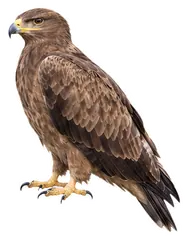 Steppe EagleAquila nipalensis
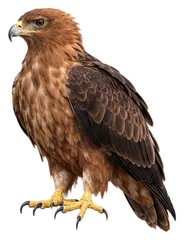 Tawny EagleAquila rapax
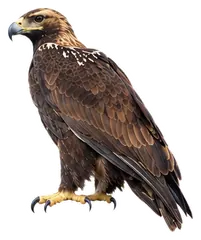 Spanish Imperial EagleAquila adalberti
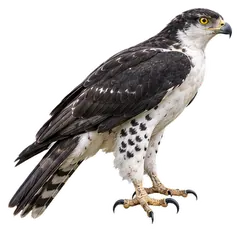 Cassin's Hawk-EagleAquila africana
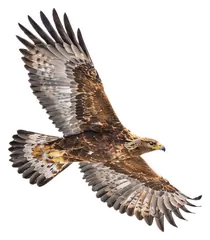 Golden EagleAquila chrysaetos
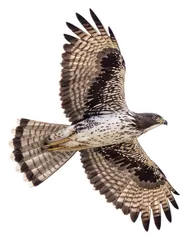 Bonelli's EagleAquila fasciata
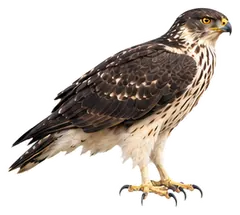 African Hawk-EagleAquila spilogaster
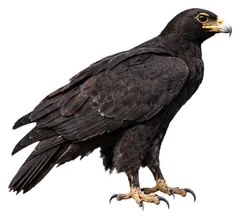 Verreaux's EagleAquila verreauxii
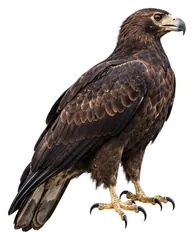 Gurney's EagleAquila gurneyi
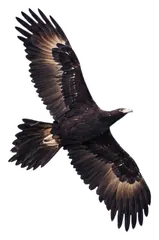 Wedge-tailed EagleAquila audax
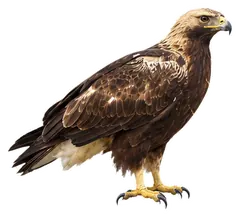
Download illustration
Free to use with credit: “Illustration: Bird Album (birdalbum.com)”. Drawn by AI from a reference photo by PJeganathan. ↗

Heard it but can't see it? Mingji identifies birds by sound and photo, on your phone.