 Bird Album
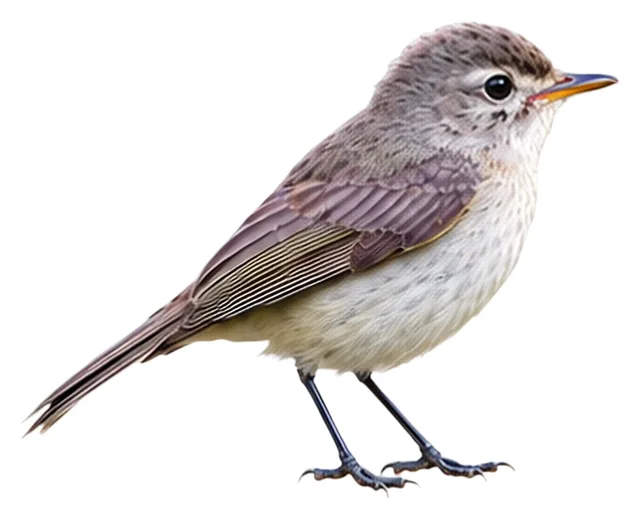
Eastern Warbling Vireo
Vireo gilvus (Vieillot, 1808)
12–13 cmLength13 gWeight
The warbling vireo (Vireo gilvus) is a small North American songbird.
Busiest months: May · Most records: United States, Canada, Mexico
Where and when it's recorded

Eastern Warbling Vireo has been recorded at 833 of the 8,171 birding hotspots we track, in 12 countries and regions.
Records by month Northern Hemisphere
Where it's recorded most
- Magee Marsh – BoardwalkUnited States30,759 records
- Montrose Point Bird Sanctuary, Lincoln Park, ChicagoUnited States15,677 records
- Point Pelee National ParkCanada14,414 records
More places
- Prospect ParkUnited States10,289 records
- Mount Auburn CemeteryUnited States8,408 records
- Central ParkUnited States7,866 records
- Tawas Point SPUnited States7,251 records
- John Heinz NWR – impoundmentUnited States6,752 records
- Great Meadows NWR – Concord UnitUnited States6,469 records
- Toronto – Colonel Samuel Smith ParkCanada5,858 records
Countries and regions with the most records
eBird records via GBIF up to 2024-12-31. A record means someone listed it; more records partly mean more birders, not more birds.
About
The warbling vireo (Vireo gilvus) is a small North American songbird.
Excerpt from Wikipedia, CC BY-SA 4.0 · authors · Read more on Wikipedia
Questions
How big is the Eastern Warbling Vireo?
The Eastern Warbling Vireo is about 12–13 cm long and weighs around 13 g.
Where does the Eastern Warbling Vireo live?
Its breeding range: North America, Middle America: south-central, southeastern Canada and central, southern and northeastern USA. It is most often recorded in United States, Canada and Mexico.
When is the best time to see the Eastern Warbling Vireo?
At the hotspots we track, it is recorded most in May (Northern Hemisphere).
Is the Eastern Warbling Vireo endangered?
The IUCN Red List classifies the Eastern Warbling Vireo as Least Concern.
What does the Eastern Warbling Vireo eat?
Main food: Insects & other invertebrates.
What family is the Eastern Warbling Vireo in?
It belongs to the family Vireos, Greenlets, Shrike-babblers (Vireonidae), order Passerines (Passeriformes).
At a glance
- Length
- 12–13 cm
- Weight
- 13 g
- Habitat
- Forest
- Diet
- Insects & other invertebrates
- Lifestyle
- Perches in trees
- Migration
- Migratory
- Conservation
- Least Concern
More measurements
- Wing
- 70 mm
- Tail
- 51 mm
- Bill
- 14 mm
- Tarsus
- 18 mm
Averages from the AVONET dataset; length from field guides where available.
Range
North America, Middle America: south-central, southeastern Canada and central, southern and northeastern USA
Breeding range, IOC World Bird List 15.2
Classification
- Order
- Passerines Passeriformes
- Family
- Vireos, Greenlets, Shrike-babblers Vireonidae
- Genus
- Vireo
Other birds in the genus Vireo
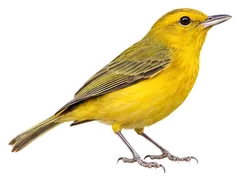 Golden VireoVireo hypochryseus
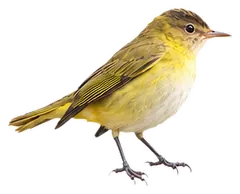 Yellow-green VireoVireo flavoviridis
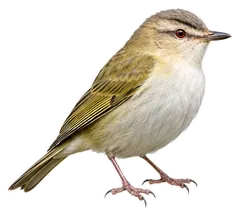 Red-eyed VireoVireo olivaceus
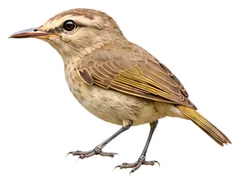 Yucatan VireoVireo magister
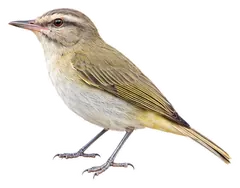 Black-whiskered VireoVireo altiloquus
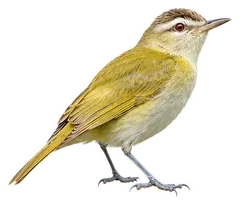 Chivi VireoVireo chivi
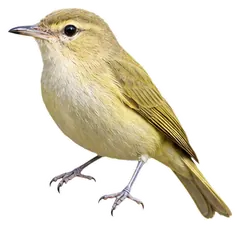 Noronha VireoVireo gracilirostris
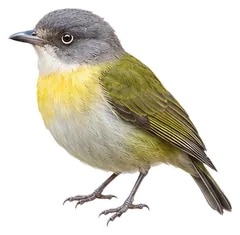 Tepui VireoVireo sclateri
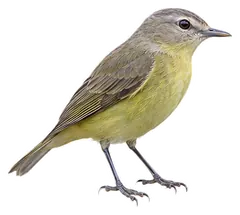 Philadelphia VireoVireo philadelphicus
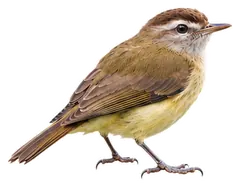 Brown-capped VireoVireo leucophrys
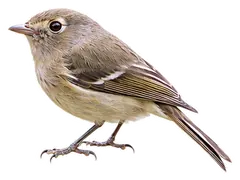 Hutton's VireoVireo huttoni
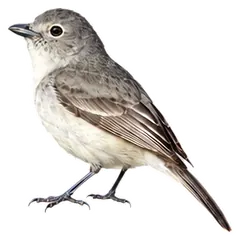 Grey VireoVireo vicinior
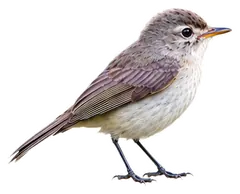
Download illustration
Free to use with credit: “Illustration: Bird Album (birdalbum.com)”. Drawn by AI from a reference photo by Daniel Onea. ↗
Heard it but can't see it? Mingji identifies birds by sound and photo, on your phone.