 Bird Album
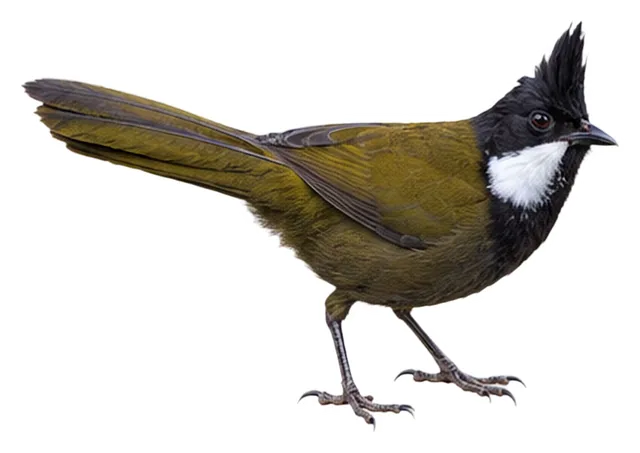
Eastern Whipbird
Psophodes olivaceus (Latham, 1801)
26–30 cmLength62 gWeight
The eastern whipbird (Psophodes olivaceus) is an insectivorous passerine bird native to the east coast of Australia.
Busiest months: October · Most records: Australia
Where and when it's recorded
Busiest months: October · Most records: Australia

Eastern Whipbird has been recorded at 102 of the 8,276 birding hotspots we track, in 1 country or region.
Records by month Southern Hemisphere
Where it's recorded most
- O'Reilly's Rainforest RetreatAustralia3,832 records
- Oxley Creek CommonAustralia3,403 records
- Lake Samsonvale – Golds Scrub LaneAustralia2,787 records
More places
- Coachwood ParkAustralia2,672 records
- Gold Creek ReservoirAustralia2,426 records
- Kumbartcho SanctuaryAustralia1,653 records
- Warriewood WetlandsAustralia1,252 records
- Mary Cairncross ReserveAustralia1,205 records
- Crater Lakes National Park – Chambers Rainforest LodgeAustralia1,188 records
- Lake WollumboolaAustralia1,176 records
Countries and regions with the most records
eBird records via GBIF up to 2024-12-31. A record means someone listed it; more records partly mean more birders, not more birds.
About
The eastern whipbird (Psophodes olivaceus) is an insectivorous passerine bird native to the east coast of Australia. Its whip-crack song is a familiar sound in forests of eastern Australia. Two subspecies are recognised.
Excerpt from Wikipedia, CC BY-SA 4.0 · authors · Read more on Wikipedia
Questions
How big is the Eastern Whipbird?
The Eastern Whipbird is about 26–30 cm long and weighs around 62 g.
Where does the Eastern Whipbird live?
Its breeding range: Australasia: eastern Australia. It is most often recorded in Australia.
When is the best time to see the Eastern Whipbird?
At the hotspots we track, it is recorded most in October (Southern Hemisphere).
Is the Eastern Whipbird endangered?
The IUCN Red List classifies the Eastern Whipbird as Least Concern.
What does the Eastern Whipbird eat?
Main food: Insects & other invertebrates.
What family is the Eastern Whipbird in?
It belongs to the family Whipbirds (Psophodidae), order Passerines (Passeriformes).
At a glance
- Length
- 26–30 cm
- Weight
- 62 g
- Habitat
- Forest
- Diet
- Insects & other invertebrates
- Lifestyle
- Varied
- Migration
- Resident (barely migrates)
- Conservation
- Least Concern
More measurements
- Wing
- 95 mm
- Tail
- 134 mm
- Bill
- 23 mm
- Tarsus
- 32 mm
Averages from the AVONET dataset; length from field guides where available.
Range
Australasia: eastern Australia
Breeding range, IOC World Bird List 15.2
Classification
- Order
- Passerines Passeriformes
- Family
- Whipbirds Psophodidae
- Genus
- Psophodes
Other birds in the genus Psophodes
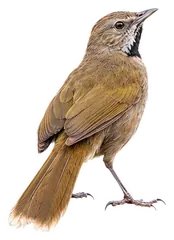 Western WhipbirdPsophodes nigrogularis
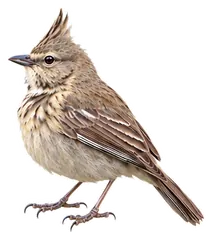 Chirruping WedgebillPsophodes cristatus
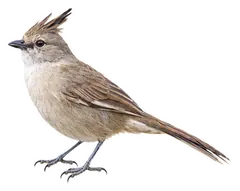 Chiming WedgebillPsophodes occidentalis
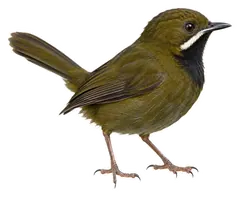 Papuan WhipbirdAndrophobus viridis
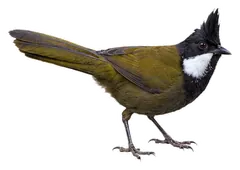
Download illustration
Free to use with credit: “Illustration: Bird Album (birdalbum.com)”. Drawn by AI from a reference photo by Judd Patterson. ↗
Heard it but can't see it? Mingji identifies birds by sound and photo, on your phone.
In other languages
- EnglishEastern Whipbird
- 简体中文绿啸冠鸫
- 繁體中文綠鞭鳥
- 日本語ムナグロシラヒゲドリ
- DeutschSchwarzschopfflöter
- FrançaisPsophode à tête noire
- EspañolZordala crestada oriental
- Portuguêschicoteador-oriental
- ItalianoUccello frustino orientale
- NederlandsZwartkopzwiepfluiter
- РусскийБелогорлая птица-бич
- Svenskasvarttofsad snärtfågel
- DanskGrønrygget Piskedrossel
- Polskitrzaskacz czarnoczuby