 Bird Album
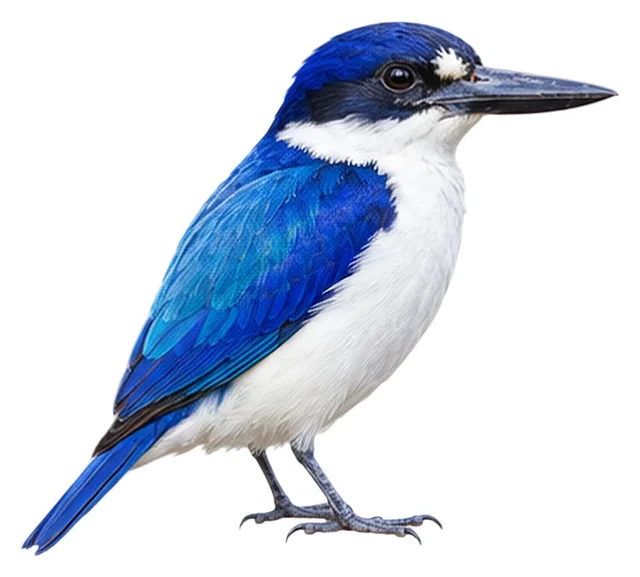
Forest Kingfisher
Todiramphus macleayii (Jardine & Selby, 1830)
22–26 cmLength37 gWeight
The forest kingfisher (Todiramphus macleayii), also known as Macleay's or the blue kingfisher, is a species of kingfisher in the subfamily Halcyoninae, also known as tree kingfishers.
Busiest months: July–October · Most records: Australia, Papua New Guinea
Where and when it's recorded

Forest Kingfisher has been recorded at 97 of the 8,171 birding hotspots we track, in 2 countries and regions.
Records by month Southern Hemisphere
Where it's recorded most
- Townsville Town Common Conservation ParkAustralia1,893 records
- Sandy Camp Road WetlandsAustralia1,623 records
- Fogg Dam Conservation ReserveAustralia1,350 records
More places
- Tyto WetlandsAustralia1,278 records
- Kingfisher Park Birdwatchers LodgeAustralia1,042 records
- Hasties Swamp National ParkAustralia970 records
- Muirhead bushlandAustralia961 records
- Kingfisher Park Birdwatchers Lodge – Morning WalkAustralia934 records
- Kakadu National Park – Yellow WaterAustralia857 records
- Daintree Village Boat CruiseAustralia844 records
Countries and regions with the most records
eBird records via GBIF up to 2024-12-31. A record means someone listed it; more records partly mean more birders, not more birds.
About
The forest kingfisher (Todiramphus macleayii), also known as Macleay's or the blue kingfisher, is a species of kingfisher in the subfamily Halcyoninae, also known as tree kingfishers. It is a predominantly a blue and white bird. It is found in Indonesia, New Guinea and coastal eastern and Northern Australia.
Excerpt from Wikipedia, CC BY-SA 4.0 · authors · Read more on Wikipedia
Questions
How big is the Forest Kingfisher?
The Forest Kingfisher is about 22–26 cm long and weighs around 37 g.
Where does the Forest Kingfisher live?
Its breeding range: Australasia: southeastern New Guinea and north-central, eastern Australia. It is most often recorded in Australia and Papua New Guinea.
When is the best time to see the Forest Kingfisher?
At the hotspots we track, it is recorded most in July, August, September and October (Southern Hemisphere).
Is the Forest Kingfisher endangered?
The IUCN Red List classifies the Forest Kingfisher as Least Concern.
What does the Forest Kingfisher eat?
Main food: Insects & other invertebrates.
What family is the Forest Kingfisher in?
It belongs to the family Kingfishers (Alcedinidae), order Coraciiformes.
At a glance
- Length
- 22–26 cm
- Weight
- 37 g
- Habitat
- Rivers & streams
- Diet
- Insects & other invertebrates
- Lifestyle
- Perches in trees
- Migration
- Migratory
- Conservation
- Least Concern
More measurements
- Wing
- 88 mm
- Tail
- 56 mm
- Bill
- 40 mm
- Tarsus
- 13 mm
Averages from the AVONET dataset; length from field guides where available.
Range
Australasia: southeastern New Guinea and north-central, eastern Australia
Breeding range, IOC World Bird List 15.2
Classification
- Order
- Coraciiformes
- Family
- Kingfishers Alcedinidae
- Genus
- Todiramphus
Other birds in the genus Todiramphus
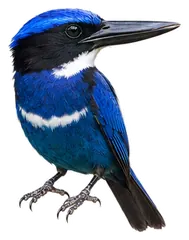 Blue-black KingfisherTodiramphus nigrocyaneus
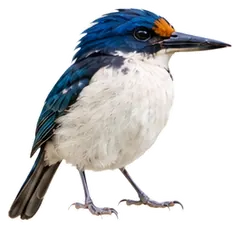 Rufous-lored KingfisherTodiramphus winchelli
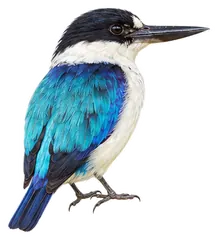 Blue-and-white KingfisherTodiramphus diops
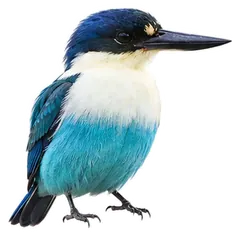 Lazuli KingfisherTodiramphus lazuli
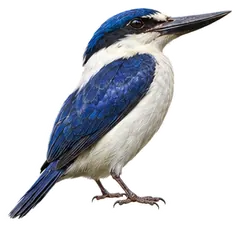 White-mantled KingfisherTodiramphus albonotatus
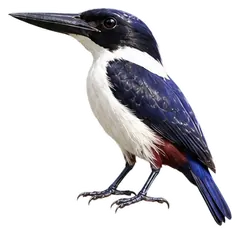 Ultramarine KingfisherTodiramphus leucopygius
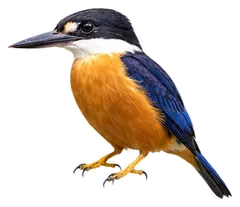 Vanuatu KingfisherTodiramphus farquhari
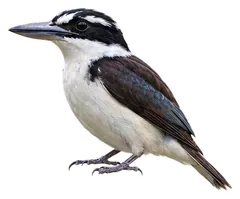 Sombre KingfisherTodiramphus funebris
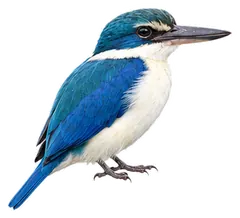 Collared KingfisherTodiramphus chloris
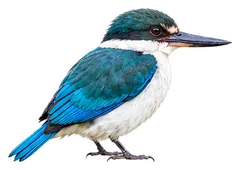 Torresian KingfisherTodiramphus sordidus
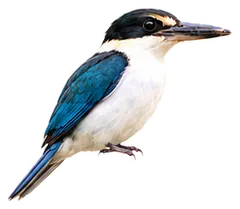 Islet KingfisherTodiramphus colonus
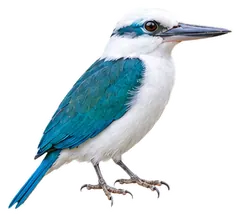 Mariana KingfisherTodiramphus albicilla
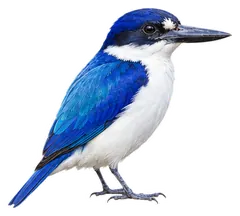
Download illustration
Free to use with credit: “Illustration: Bird Album (birdalbum.com)”. Drawn by AI from reference photos. ↗
Heard it but can't see it? Mingji identifies birds by sound and photo, on your phone.
In other languages
- EnglishForest Kingfisher
- 简体中文林翡翠
- 繁體中文林翡翠
- 日本語モリショウビン
- DeutschSpiegelliest
- FrançaisMartin-chasseur forestier
- EspañolAlción del Macleay
- Portuguêsmartim-caçador-da-floresta
- ItalianoMartin pescatore di foresta
- NederlandsMacleays IJsvogel
- РусскийЛесная альциона
- Svenskaskogskungsfiskare
- DanskNymfeisfugl
- Polskiłowczyk leśny