 Bird Album
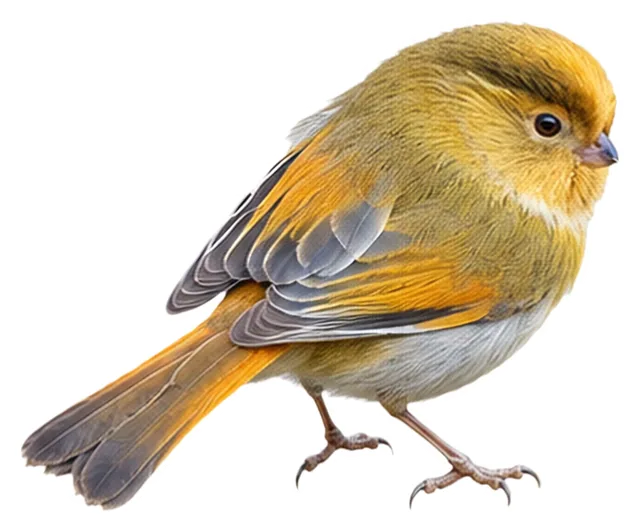
Fulvous Parrotbill
Suthora fulvifrons (Hodgson, 1845)
≈10 cmLength6.4 gWeight
This small bird inhabits dense bamboo and forms flocks in the non-breeding season.
Busiest months: May · Most records: China, Bhutan, Nepal
How to identify
Field marks
- Head rich buff in nominate subspecies
- Belly white in nominate subspecies
- Black stripe above the eye in nominate subspecies
Male, female and young
Sexes similar in the nominate subspecies; juveniles resemble adults but are darker, especially on the underparts.
Where and when it's recorded

Fulvous Parrotbill has been recorded at 40 of the 8,171 birding hotspots we track, in 3 countries and regions.
Records by month Northern Hemisphere
Where it's recorded most
- Wawu Mountain – Summit [2800m]China200 records
- Wawu Mountain [General Area]China106 records
- Labahe NNRChina58 records
More places
- Wawu Mountain – Upper LevelChina31 records
- Hailuogou Glacier Forest ParkChina14 records
- Tangjiahe NNRChina11 records
- Pianma Snow PassChina7 records
- ThrumsinglaBhutan6 records
- Foping NNR – Liangfengya [2100m]China5 records
- Baihualing [General Area]China5 records
Countries and regions with the most records
eBird records via GBIF up to 2024-12-31. A record means someone listed it; more records partly mean more birders, not more birds.
About
The fulvous parrotbill (Suthora fulvifrons) is a species of bird in the family Paradoxornithidae. The species is also known as the fulvous-fronted parrotbill, the fulvous-fronted suthora, and the fulvous-fronted crowtit. The species, along with several others from the genus Suthora, is sometimes placed in the genus Paradoxornis.
Excerpt from Wikipedia, CC BY-SA 4.0 · authors · Read more on Wikipedia
Questions
How big is the Fulvous Parrotbill?
The Fulvous Parrotbill is about ≈10 cm long and weighs around 6.4 g.
Where does the Fulvous Parrotbill live?
Its breeding range: Oriental: Himalayas, southwestern China. It is most often recorded in China, Bhutan and Nepal.
When is the best time to see the Fulvous Parrotbill?
At the hotspots we track, it is recorded most in May (Northern Hemisphere).
Is the Fulvous Parrotbill endangered?
The IUCN Red List classifies the Fulvous Parrotbill as Least Concern.
What does the Fulvous Parrotbill eat?
Main food: Omnivore.
What family is the Fulvous Parrotbill in?
It belongs to the family Parrotbills & Allies (Paradoxornithidae), order Passerines (Passeriformes).
At a glance
- Length
- ≈10 cm
- Weight
- 6.4 g
- Habitat
- Forest
- Diet
- Omnivore
- Lifestyle
- Perches in trees
- Migration
- Resident (barely migrates)
- Conservation
- Least Concern
More measurements
- Wing
- 54 mm
- Tail
- 65 mm
- Bill
- 8 mm
- Tarsus
- 18 mm
Averages from the AVONET dataset; length from field guides where available.
Range
Oriental: Himalayas, southwestern China
Breeding range, IOC World Bird List 15.2
Subspecies · 3
- Suthora fulvifrons chayulensis ne India and se Tibet
- Suthora fulvifrons albifacies n Myanmar and sw China
- Suthora fulvifrons cyanophrys c China
Classification
- Order
- Passerines Passeriformes
- Family
- Parrotbills & Allies Paradoxornithidae
- Genus
- Suthora
Other birds in the genus Suthora
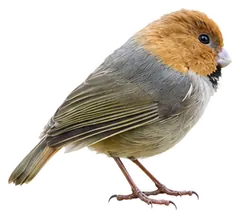 Short-tailed ParrotbillSuthora davidiana
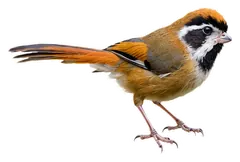 Black-throated ParrotbillSuthora nipalensis
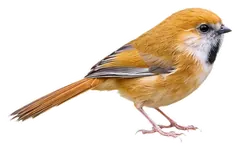 Golden ParrotbillSuthora verreauxi
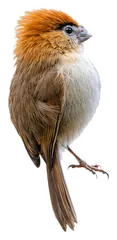 Pale-billed ParrotbillSuthora atrosuperciliaris
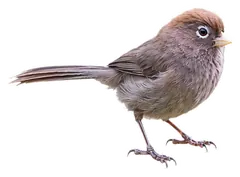 Spectacled ParrotbillSuthora conspicillata
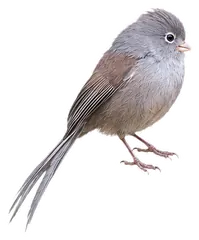 Grey-hooded ParrotbillSuthora zappeyi
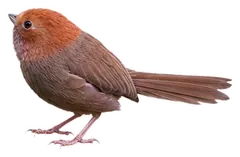 Brown-winged ParrotbillSuthora brunnea
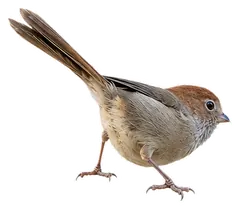 Eye-ringed ParrotbillSuthora ricketti
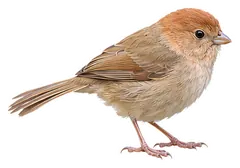 Vinous-throated ParrotbillSuthora webbiana
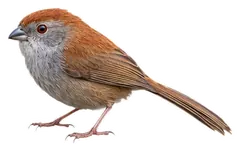 Ashy-throated ParrotbillSuthora alphonsiana
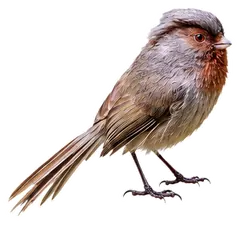 Przevalski's ParrotbillSuthora przewalskii
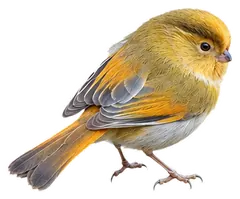
Download illustration
Free to use with credit: “Illustration: Bird Album (birdalbum.com)”. Drawn by AI from a reference photo by Rozan Dhungel. ↗
Heard it but can't see it? Mingji identifies birds by sound and photo, on your phone.
In other languages
- EnglishFulvous Parrotbill
- 简体中文黄额鸦雀
- 繁體中文黃額鴉雀
- 日本語アカバネダルマエナガ
- DeutschGelbstirn-Papageimeise
- FrançaisParadoxornis à front fauve
- EspañolPicoloro leonado
- Portuguêsbico-adunco-alourado
- ItalianoPsittorinco fulvo
- NederlandsGeelkopdiksnavelmees
- РусскийЖелтолобая сутора
- Svenskagulbrun papegojnäbb
- DanskLyspandet Papegøjenæb
- Polskiogoniatka bambusowa